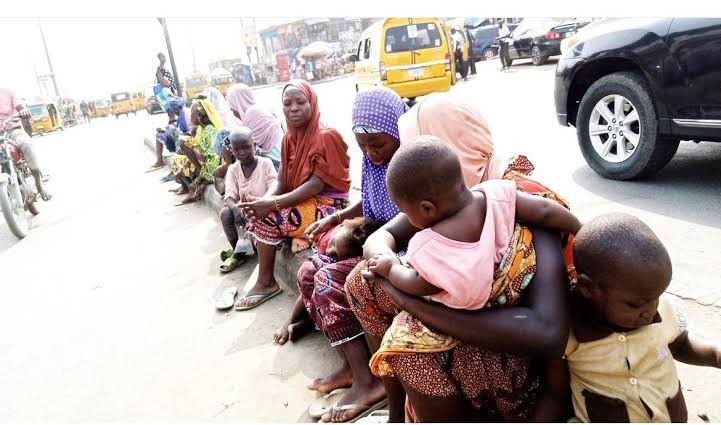
On Tuesday morning, enforcement officers fanned out across Lagos and came back with numbers.
By noon, they had arrested 86 beggars, 9 children, and 12 miscreants — first in Agege, then in Ketu. Tokunbo Wahab, the state’s Commissioner for Environment and Water Resources, announced the operation on his X, framing it as part of a broader effort to discourage street begging, protect vulnerable persons, and maintain public order.
During our ongoing monitoring and enforcement patrol today, 25 beggars were arrested in Agege as part of efforts to address street begging and restore order in public spaces.
The patrol team has since moved to Ketu, and as of 1200hrs, a total of 86 beggars, 9 children and 12… pic.twitter.com/ntHcn8fwdl
— Tokunbo Wahab (@tokunbo_wahab) March 10, 2026
EDITOR’S PICKS
It was a busy morning. But it was not a sustainable solution.
Why Arrests Keep Failing
Lagos has been here before. Periodic sweeps of beggars from the streets are not new; they date back decades. The pattern is always the same: a crackdown is announced, people are arrested and weeks later, the same faces return to the same intersections. Nothing changes because nothing upstream has changed.
Street begging in Lagos is not random. It is, in large part, organised. Many beggars, including children, are brought into the city by networks that profit from their presence on the street. Arrests disrupt these networks only briefly. When those arrested are “profiled and handed to appropriate agencies,” as Wahab’s statement promises, what those agencies do next matters enormously. If the answer is: not much, the cycle continues.
There is also the harder truth that some people on Lagos streets are genuinely destitute — not organised, not trafficked, just poor and without options. Arresting them does not address poverty. It moves it out of sight, temporarily.
The Gap Between Arrest and Intervention
Wahab’s statement mentions “social intervention protocols.” This is the right language. The question is whether the infrastructure to back it up exists.

Lagos has the Lagos State Office for Disability Affairs, the Ministry of Youth and Social Development, and a network of rehabilitation centres on paper. In practice, these institutions are chronically underfunded and struggle to absorb the scale of the problem.
Tuesday’s operation apprehended over 100 people in a single morning in two local government areas. Lagos has 20 LGAs and 37 LCDAs. Scaling that figure across the state gives a rough sense of how large the population in need of intervention actually is and how poorly matched current capacity is to meet it.
Nine children were among those arrested. Their presence is the sharpest indictment of the system’s failure. Children on the street begging are not a law enforcement problem. They are a child welfare emergency, and they require a child welfare response — caseworkers, shelter, education, family tracing — not a patrol van.
What a Real Fix Requires
A sustainable approach to street begging in Lagos has to work on at least three levels simultaneously.
First, it must address the organised networks that traffic beggars, including children, into the city. This is a law enforcement function, but a targeted one: prosecuting traffickers, not sweeping up victims.
Second, it must invest seriously in the social infrastructure that absorbs people once they are off the street. Rehabilitation without resettlement is just a temporary shelter. The state needs livelihood programmes, mental health support, and coordination with federal agencies, particularly for the significant number of beggars who migrated from other states or countries.
FURTHER READING
Third, and least glamorously, it requires sustained political will over the long term. Enforcement operations make for good press statements. Building functional welfare systems does not. But Lagos has for too long chosen the visible over the effective. Tuesday’s arrests produced a number for the press release. They will not produce empty streets. Not for long, at least.
Philip Ibitoye is a Special Correspondent with EKO HOT BLOG. Click here to find daily analysis and critical insight on trending issues in Lagos and other parts of Nigeria.
Click to watch the video of the week below: