- Lagos Moves to Bridge N100bn Healthcare Funding Gap
- Unveils Sweeping Healthcare Financing Reforms
- Pushes Mandatory Health Insurance for Residents
The Lagos State Ministry of Health has unveiled major healthcare financing, workforce and infrastructure reforms aimed at improving medical services, expanding health insurance coverage and positioning Lagos as one of Africa’s leading healthcare destinations.
Eko Hot Blog gathered that the 2026 Ministerial Press Briefing held at the Bagauda Kaltho Press Centre in Alausa, Ikeja, Lagos State Commissioner for Health, Akin Abayomi, disclosed that the state was currently battling an estimated N100 billion healthcare funding gap.
EDITOR’S PICK
- Fresh Details Emerge on Death of Odomola Monarch, Oba Adebowale Adeshina
- Sanwo-Olu Applauds LASU’s Academic Excellence After JAMB Ranking
- NRC Moves 176,820 Tonnes Of Cargo Through Lagos Ports In Q1
According to him, the gap represents the difference between the state’s current healthcare budget and the resources needed to adequately meet the growing medical demands of Lagos residents.
Abayomi explained that Lagos presently allocates about eight per cent of its annual budget to healthcare, which falls below the 15 per cent benchmark recommended under the Abuja Declaration.
He noted that the increasing population and healthcare needs of Lagos as a megacity have made alternative funding sources necessary.
“The difference is at least N100 billion. The answer for us is health insurance and public-private partnerships,” he stated.
The commissioner revealed that Governor Babajide Sanwo-Olu had already signed an Executive Order domesticating the National Health Insurance Authority Act, making health insurance compulsory for all Lagos residents.
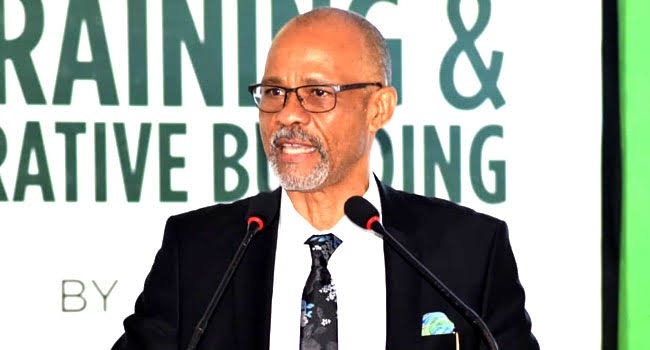
He added that Ministries, Departments and Agencies across the state had begun implementing policies requiring residents seeking government services to present proof of accredited health insurance coverage.
Abayomi disclosed that over 1.46 million residents had already enrolled in the Ilera-Eko health insurance scheme managed by the Lagos State Health Management Agency.
He described health insurance as a collective social support system capable of helping vulnerable residents access affordable healthcare services.
“Health insurance is the umbrella through which the healthy take care of the sick and the rich support the poor,” he said.
The commissioner also expressed concern over Nigeria’s heavy dependence on out-of-pocket healthcare spending, noting that about 77 per cent of medical expenses are currently paid directly by citizens, while only two per cent comes through insurance coverage.
On long-term plans, Abayomi said the Lagos Development Plan 2052 aims to make Lagos one of the top three healthcare destinations in Africa within the next decade.
He explained that the government was working to reduce maternal mortality, strengthen primary healthcare, improve child nutrition and discourage outbound medical tourism.
“We do not want Lagosians travelling abroad to seek medical care in Dubai, London, India, or South Africa. We want every specialty and subspecialty available right here in Lagos,” he added.
Abayomi further announced approval for a standalone University of Medicine and Health Sciences in Lagos to increase the production of doctors, nurses, pharmacists and other healthcare professionals amid rising migration of medical workers abroad.
He also stressed the importance of regulating informal healthcare providers and integrating them into the broader healthcare system, noting that over 3,500 registered private health facilities currently operate across the state.
Also speaking, Special Adviser to the Governor on Health, Kemi Ogunyemi, urged residents to avoid unaccredited healthcare facilities and report substandard medical practices to authorities.
FURTHER READING
- Tinubu Calls For Africa’s Shift From Sea Blindness To Ocean Sovereignty
- Nigeria, Germany Finalise New Bilateral Cooperation Framework
- LASG Funds 80 Researchers, 75 Startups With N900m
Click here to watch video of the week