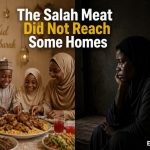
- Core traditions of Eid al-Adha, including sacrificial livestock, new apparel, and festive baking, are completely out of reach for Gaza’s 2.1 million residents due to extreme poverty and severe market scarcity.
- The price of a single sacrificial sheep has experienced a massive surge, skyrocketing from a pre-war average of 1,000 shekels to between 11,000 and 15,000 shekels as a direct consequence of a total border blockade on livestock imports.
- The United Nations Food and Agriculture Organization (FAO) reports that three-quarters of the enclave’s livestock population has been entirely eradicated, leaving only 15,000 animals left across the war-torn territory.
A perfect storm of closed borders, total economic isolation, and severe supply shortages has turned this year’s Eid al-Adha into a period of quiet grief for the 2.1 million residents of the Gaza Strip.
Eko Hot Blog reports that despite the formal implementation of a United States-backed truce in late 2025, the material conditions on the ground have continued to deteriorate.
EDITOR’S PICK
- Fresh Details Emerge on Death of Odomola Monarch, Oba Adebowale Adeshina
- Sanwo-Olu Applauds LASU’s Academic Excellence After JAMB Ranking
- NRC Moves 176,820 Tonnes Of Cargo Through Lagos Ports In Q1
Local markets, which usually bust with activity during the holy season, are virtually empty as families find themselves completely priced out of basic commodities.
Displaced residents, many of whom have been living in temporary shelters for over two years, report that the total collapse of purchasing power has made it impossible to provide even simple holiday essentials or new clothes for their children.
The starkest manifestation of this crisis is the near-total disappearance of livestock across the enclave.
Data verified by the United Nations Food and Agriculture Organization (FAO) reveals that a staggering 75 percent of Gaza’s pre-war sheep and goat population has been wiped out, leaving a mere 15,000 animals for the entire population.
With the local agricultural ministry confirming that all external borders remain strictly blockaded against livestock imports, the cost of breeding, feed, and transportation has skyrocketed.
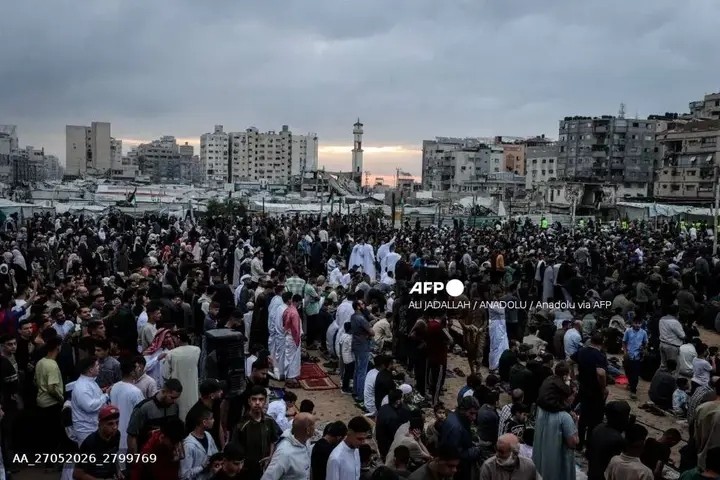
As a result, a single sacrificial animal, which traditionally traded for around 1,000 shekels, is now commanding astronomical prices between 11,000 and 15,000 shekels ($3,860 to $5,270 USD), a sum that is completely unfeasible for all but a tiny fraction of the population.
This hyperinflation has completely broken the communal traditions that define the holiday.
For generations, the sacrifice of an animal was a cornerstone of Islamic charity, designed to ensure that even the poorest families could enjoy fresh meat.
Now, even well-to-do families who historically managed annual sacrifices are entirely locked out of the market, unable to purchase even a single kilogram of meat for their households.
While a few individuals with deep financial reserves have pooled resources to secure livestock, the vast majority of the population views the ongoing diplomatic ceasefire as a hollow arrangement that has failed to ease the crushing blockades maintained at regional entry checkpoints.
The systemic scarcity extends directly into domestic holiday traditions as well. A severe lack of cooking gas has made traditional home baking an absolute impossibility for most displaced families.
Instead of the bustling kitchen preparations that typically mark the season, families are forced to rely on makeshift workarounds.
In the ruins of Khan Yunis, some residents have resorted to building rudimentary clay ovens on the bare ground beneath UNICEF tarps just to prepare basic holiday pastries.
For the millions trapped in the sprawling tent cities of Deir al-Balah and beyond, the holy season has brought no relief from the daily cycle of displacement, leaving an exhausted population navigating a holiday stripped of its usual joy.