It is currently a few minute close to 11am in Nigeria as I write this piece.
EDITOR’S PICK
- Fresh Details Emerge on Death of Odomola Monarch, Oba Adebowale Adeshina
- Sanwo-Olu Applauds LASU’s Academic Excellence After JAMB Ranking
- NRC Moves 176,820 Tonnes Of Cargo Through Lagos Ports In Q1
Nylon bags are moving from one compound to another. Neighbours are greeting neighbours. Plates are exchanging hands.
And somehow, in the middle of all this celebration, I keep thinking about families who are not celebrating anything today. Because while many Nigerians are sharing Salah meat and taking family pictures, some people are still searching for their children.
That thought has refused to leave my head.
Maybe because insecurity in Nigeria no longer feels far away anymore. It no longer feels like one of those stories that only happen in distant villages before disappearing from the news cycle.
Now it feels dangerously close, too dang close.
You hear about a kidnapping in Kaduna and suddenly parents in Lagos begin checking school buses more carefully.
A school attack happens in Borno and mothers elsewhere start praying harder before their children leave home in the morning. Somebody disappears in Abuja and everybody quietly double-checks their gate before sleeping.
Fear travels fast in Nigeria now, and the painful thing is that today is supposed to be a happy day.
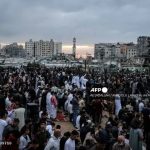
Muslims across Nigeria are celebrating Eid al-Adha. There were prayers this morning. Families gathered. Meat was shared. Roads became busy. Tailors delivered clothes at the last minute as usual. Children smiled over things adults have become too tired to notice.
For many families, today was beautiful, but not every home feels like celebration.
Some homes are carrying fear quietly, some homes are pretending to celebrate because life somehow must continue.
According to multiple reports over the past year, children have continued to fall victim to abductions and attacks linked to insecurity across parts of Nigeria.
Earlier this year, the abduction of schoolchildren in Kuriga, Kaduna State shocked the country and reopened old fears many Nigerians never truly recovered from.
For days, parents across the country watched the news with the kind of fear that only mothers and fathers can fully understand. Because once children become targets, every parent begins to imagine the worst.
And honestly, sometimes I wonder if Nigerians are slowly becoming too used to terrible news.
A kidnapping happens, people panic online, everybody talks about insecurity, politicians release statements, hashtags trend for two days, then poof, another tragedy arrives.
And the previous victims quietly disappear from public attention.
But the families involved do not move on that quickly.
A mother whose child has been kidnapped does not simply “continue life” because the news cycle has changed.
Some families sell land to pay ransom.
Some borrow money they may never recover from.
Some return home with rescued loved ones who are emotionally broken.
And some never see their children again.
Yet, the rest of the country keeps moving.
You see, markets reopen, music plays again, people go back to work, football conversations continue online, somebody somewhere still throws a party.
Nigeria has become a country where joy and grief now live side by side without even acknowledging each other.
One house is sharing meat, another house is sharing ransom updates.
One family is taking Salah photographs, another family is printing missing-person posters.
And somehow, all of this is happening at the same time.
What makes it even more painful is that children are increasingly becoming part of these stories.
Not politicians, not billionaires surrounded by security, they are…children.
Children who should be worrying about homework, cartoons, or which clothes to wear for Salah.
Instead, many Nigerian children are growing up inside fear.
Some schools now operate like guarded facilities.
Some parents no longer allow their children travel alone.
Some children have already learned how to stay silent during gunshots before even understanding multiplication properly.
That should disturb all of us more than it currently does.
Because insecurity does not only kill people physically. Sometimes it slowly destroys peace, innocence, and normal life long before it destroys anything else.
You can see it in how Nigerians now think.
Every unfamiliar bike looks suspicious.
Every unknown phone number causes anxiety.
Every knock on the gate late at night immediately changes the mood inside a house.

Believe me, people are tired.
And still, somehow, Nigerians continue trying to create joy for themselves.
That resilience is beautiful, but sometimes I worry that survival has forced Nigerians into emotional exhaustion. We recover too quickly because we have no choice. We adjust too quickly because life in this country rarely pauses long enough for grief.
It hurts me deeply to see that some people are only pretending to be okay because there are children around watching them.
I keep thinking especially about mothers this morning.
Mothers cooking for ten people while secretly wondering if their missing child has eaten at all.
Mothers answering “we thank God” even when their hearts are heavy.
Mothers trying not to cry because visitors are present.
Maybe that is the saddest thing about Nigeria today.
The country is not completely at peace, even during celebration.
And until Nigerians can celebrate without fear constantly sitting somewhere in the background, there will always be homes where the Salah meat never truly arrives.