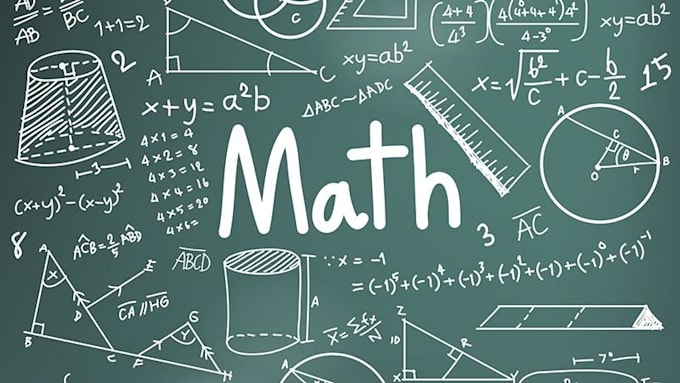
When the Federal Ministry of Education announced that Mathematics would no longer be compulsory for candidates seeking admission into the Faculties of Arts in Nigerian universities, social media lit up with outrage.
Many media outlets reported the development as if it was a fresh change. Many Nigerians also questioned the rationale behind such a decision, arguing that every student, regardless of discipline, needs a foundation in Mathematics.
EDITOR’S PICKS
But beyond the uproar lies an important truth: the exemption of Mathematics for Arts students is not new.
In fact, several Nigerian universities have long operated under similar admission frameworks, where courses such as English, History, Theatre Arts, Linguistics, and Philosophy only required credit passes in English and other Arts or Social Science subjects, not Mathematics.
A Policy Clarification, Not a Radical Change
According to the Ministry of Education’s spokesperson, Folasade Boriowo, the new National Guidelines for Entry Requirements into Nigerian Tertiary Institutions were released to “remove barriers, democratise access to tertiary education, and empower Nigerian youths.”
The document, unveiled on Tuesday, standardises entry requirements across universities, polytechnics, colleges of education, and Innovation Enterprise Academies (IEAs). It also replaces the National Industrial Diploma (NID) with the National Diploma (ND) for uniformity and progression opportunities.
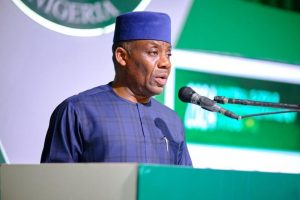
Education Minister, Dr. Tunji Alausa, explained that the revision became necessary after years of restricted access that left many qualified candidates stranded despite meeting the core requirements for their disciplines.
“Every year, over two million candidates sit for the Unified Tertiary Matriculation Examination (UTME), yet only about 700,000 gain admission,” he said. “This imbalance is not due to lack of ability but to outdated and overly stringent entry requirements.”
In essence, the new guideline does not introduce a fresh exemption, it merely harmonises what many universities have practised for years under their departmental and faculty regulations.
Also, it doesn’t say that Arts students should no longer be taught Mathematics in class, dismissing the argument of critics suggesting that the new guideline would somehow stop students from gaining a background in the subject.
How It Has Worked in Practice
An EKO HOT BLOG review of entry requirements for Arts programmes in universities such as the University of Ibadan, University of Lagos, Obafemi Awolowo University, and Ahmadu Bello University shows a consistent pattern. Courses like English, Theatre Arts, and Religious Studies typically require credits in English Language and other relevant Arts subjects with Mathematics either listed as an optional subject or completely omitted.
Even the Joint Admissions and Matriculation Board (JAMB) brochure, which guides university admissions nationwide, has long reflected this reality. For example, a candidate applying for English or History is only mandated to pass English and any other Arts subjects. Mathematics has never been a compulsory credit in those fields.
What the education ministry’s new framework has done is to codify and publicise this long-standing practice as national policy, ensuring consistency across all institutions.
The ministry maintains that a credit in English Language remains compulsory for all candidates, regardless of their field of study, ensuring that communication and literacy standards remain intact.
Clearly, the outrage over Mathematics not being compulsory for Arts students has stemmed from misunderstanding rather than policy reversal. The truth is, for many years, Nigerian universities have admitted Arts students without demanding a Mathematics credit.
FURTHER READING
What the new guideline represents is not a break from tradition but an affirmation of existing academic realities and an effort to make tertiary education more accessible, fair, and reflective of each discipline’s true nature.
Philip Ibitoye is a Special Correspondent with EKO HOT BLOG. Click here to find daily analysis and critical insight on trending issues in Lagos and other parts of Nigeria.
Click here to watch the video of the week below: