- Health officials in British Columbia have confirmed that a Canadian traveler returning from a disease-stricken international cruise liner has received a presumptive positive test result for hantavirus.
- The patient was a passenger aboard the luxury cruise vessel MV Hondius, which has been hit by a highly unusual outbreak of the lethal Andes hantavirus strain, resulting in three deaths and a multi-country contact-tracing operation.
- Provincial health officer Dr. Bonnie Henry clarified that the situation is stable, emphasizing that strict biocontainment and isolation protocols were implemented immediately upon the passengers’ arrival to prevent any community spread.
On Saturday, May 16, 2026, Canadian medical authorities announced a presumptive positive hantavirus case tied to the mid-ocean outbreak aboard the Dutch-flagged cruise liner, MV Hondius.
Eko Hot Blog reports that the patient, an individual in their 70s from the Yukon territory, began experiencing mild symptoms, including a fever and headaches, two days ago.
EDITOR’S PICK
- Fresh Details Emerge on Death of Odomola Monarch, Oba Adebowale Adeshina
- Sanwo-Olu Applauds LASU’s Academic Excellence After JAMB Ranking
- NRC Moves 176,820 Tonnes Of Cargo Through Lagos Ports In Q1
The individual and their spouse are currently being treated under strict isolation protocols at a specialized hospital in Victoria, British Columbia.
While the development has heightened anxieties regarding global disease transmission, provincial public health officer Dr. Bonnie Henry assured the public that the patient remains stable and under constant clinical observation.
The MV Hondius originally departed from Ushuaia, Argentina, on April 1 for an expedition across the South Atlantic, carrying passengers from 23 different countries.
The outbreak is believed to have originated from a Dutch couple who unknowingly contracted the rare Andes virus strain during land excursions in South America prior to boarding.
Unlike typical hantaviruses, the Andes strain is uniquely capable of limited human-to-human transmission through prolonged, close contact in enclosed spaces.
The virus spread rapidly through the ship’s tight quarters, claiming three lives, including both members of the index Dutch couple and a German national, before the vessel was routed to the Canary Islands for a tightly controlled evacuation process.
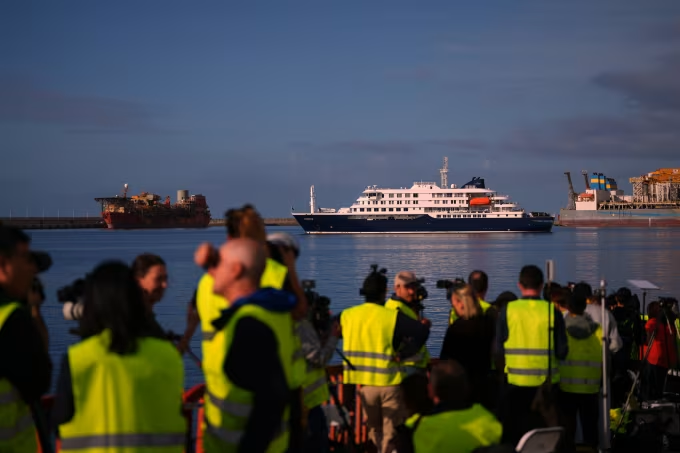
The Canadian patient marks the 10th positive case tied to the vessel, with total infections globally reaching 12 cases, nine of which have been definitively confirmed by laboratories.
The couple from the Yukon was among four Canadian nationals who were repatriated from Tenerife and placed into immediate monitoring on May 10.
Public health teams confirmed that the patient’s spouse has tested negative so far and exhibits only minor symptoms.
While lab experts at the National Microbiology Laboratory in Winnipeg work to formally verify the presumptive findings, medical teams are emphasizing early supportive care, which remains the most critical intervention for mitigating the rapid respiratory progression typical of the infection.
Dr. Henry strongly dismissed any comparisons to the structural disruptions of the COVID-19 pandemic, reassuring Canadians that the Andes hantavirus does not possess pandemic potential due to its specific transmission dynamics.
Standard epidemiological safeguards, environmental decontamination procedures, and strict travel quarantine mandates were established well before the travelers touched down on Canadian soil.
As the MV Hondius continues its journey back to the Netherlands with only a skeleton crew on board, international agencies like the World Health Organization (WHO) are coordinating with health desks across Europe, North America, and Africa to monitor all discharged passengers.