- At least 95 people have died in devastating floods in northern Nepal
- Another 384 people, including foreign tourists, are missing
- Rescue teams are searching for survivors as floods damage roads and power facilities
At least 95 people have died and 384 others have been reported missing after devastating floods swept through Nepal’s northern Rasuwa district near the Chinese border, authorities said on Wednesday.
The Nepal Tourism Board said those missing include 291 foreign tourists and 93 Nepali citizens,Eko Hot Blog gathered.
EDITOR’S PICK
- Tinubu Directs Installation of 3,700 Telecom Towers Across Nigeria
- Alara of Ilara Praises Sanwo-Olu, LASU Staff’s Dedication To Progress
- Burna Boy, Tems Bag Nominations at 2026 MTV VMAs
Among the foreign nationals reportedly unaccounted for are Americans, Indians, Australians, Malaysians and Britons, although officials said efforts were still underway to confirm their status.
The flooding struck the Syabrubesi area, a major gateway to the Langtang trekking region and a route used by pilgrims travelling towards Mount Kailash and Lake Mansarovar.
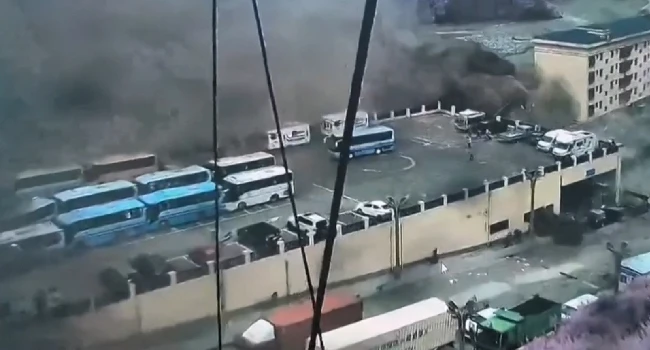
Nepal Police spokesman Abi Narayan Kafle confirmed that the death toll had risen to 95, while 28 police officers were also among those reported missing.
The disaster unleashed torrents of water, mud and debris through mountain valleys, destroying or damaging buildings, roads and other infrastructure. Images released by the police showed floodwaters carrying large amounts of debris through affected communities, with some structures partly buried in mud.
Kafle said authorities were still assessing the full extent of the destruction, warning that several settlements could have been affected by the powerful floods.
Officials had earlier advised residents living near rivers to move to safer locations and deployed available emergency resources to the affected areas.
The Nepal Army has sent helicopters and disaster-response teams to assist with search and rescue operations, while Prime Minister Balendra Shah held an emergency meeting to coordinate the government’s response.
Shah said authorities were working with medical teams, scouts and the Red Cross to provide assistance to affected communities.
The flooding also damaged Nepal’s power infrastructure. The Nepal Electricity Authority said approximately 430 megawatts of electricity generation capacity, including hydropower and solar facilities, had been affected, disrupting production, transmission and distribution.
Several major highways were also closed because of the flooding, creating additional challenges for rescue teams and restricting access to affected areas.
The disaster extended towards the Nepal-China border, where Chinese authorities also reported casualties following a mudslide near the Gyirong Port on the Tibetan side.
Chinese state media showed floodwaters carrying branches and debris across roads, while President Xi Jinping directed authorities to intensify rescue operations, locate missing people and provide treatment to those injured.
Traffic authorities in Tibet’s Shigatse region also warned of possible mudslides and advised against travelling on vulnerable roads.
Nepali remote-sensing analyst Sarthak Shrestha said an initial assessment suggested that a rock-and-ice avalanche may have blocked the Lhende River, potentially triggering the flooding.
Authorities have also raised concerns that another flood could occur if an upstream blockage along the river near the Nepal-China border gives way.
Qianggong Zhang, head of climate and environmental risks at the International Centre for Integrated Mountain Development, urged authorities to remain prepared for the possibility of further flooding.
The disaster occurred during the South Asian monsoon season, when heavy rainfall frequently causes floods and landslides. Scientists have increasingly linked the growing intensity and frequency of extreme weather events to climate change.
The European Union has activated its Copernicus satellite monitoring system to help identify and map the worst-hit areas and support emergency response efforts.
Rescue workers continued searching for missing people as authorities assessed the damage and worked to determine the full scale of the disaster.
FURTHER READING