- The FDA has approved Revolution Medicines’ new pancreatic cancer drug, Rasonque
- Clinical trials showed the treatment could significantly extend survival for patients with advanced disease
- Doctors say targeting the RAS pathway could transform pancreatic cancer treatment
The U.S. Food and Drug Administration has approved a new pancreatic cancer drug developed by Revolution Medicines after clinical trials showed that the treatment could significantly extend the lives of patients with advanced disease.
Eko Hot Blog gathered that the once-daily pill, to be marketed in the United States as Rasonque, is approved for patients with metastatic pancreatic cancer who have previously undergone treatment or are unable to receive combination chemotherapy.
The drug, daraxonrasib, works by targeting RAS proteins, which play a major role in the growth of many pancreatic tumours. Researchers and cancer specialists say the treatment could mark a significant development in the management of one of the most difficult cancers to treat.
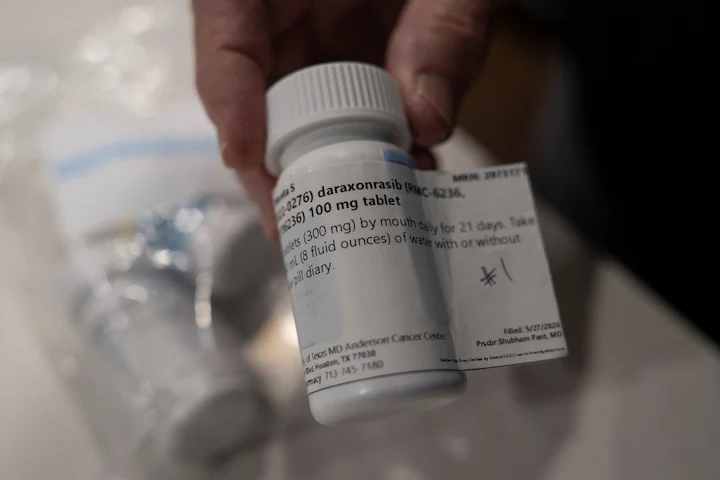
Revolution Medicines said Rasonque will be available in the US at $39,800 for a 30-day supply, with financial assistance programmes also being offered to eligible patients.
The FDA processed the application through an expedited review programme intended to shorten the approval period for certain promising treatments. Under the programme, reviews can be completed within about one to two months, compared with the conventional 10 to 12 months.
The approval follows strong results from a major clinical trial. Revolution Medicines reported in April that the treatment had produced a substantial improvement in survival among patients with advanced pancreatic cancer, triggering significant demand for access to the drug.
The FDA had previously allowed some seriously ill patients to receive the experimental treatment through its expanded access programme before full regulatory approval.
One of those patients, 88-year-old Barbara Andes of California, said the drug helped her return to normal activities after a year of chemotherapy. She also reported experiencing less nausea and fatigue while taking the pill.
Revolution Medicines CEO Mark Goldsmith said the approval represented the culmination of more than a decade of research focused on RAS-driven cancers and the challenges surrounding pancreatic cancer treatment.
The drug has attracted considerable attention from investors, with Revolution Medicines’ share price rising sharply this year on expectations that Rasonque could become a major treatment option.
Analysts at RBC Capital Markets estimated that the drug could generate about $28 million in US pancreatic cancer revenue during the third quarter and as much as $148 million in the fourth quarter.
They projected that annual global sales could eventually reach $11.5 billion if the treatment gains widespread adoption.
Cancer specialists have welcomed the approval, saying the results could change the approach to treating advanced pancreatic cancer.
Rachna Shroff, chief of hematology and oncology at the University of Arizona Cancer Center, said the results demonstrated the potential of targeting the RAS pathway in pancreatic cancer. She noted that patients not only lived longer but also experienced improvements in their quality of life compared with chemotherapy.
Peter Hosein, associate director for clinical research at Sylvester Comprehensive Cancer Center, described the development as a major shift in pancreatic cancer treatment, noting that scientists had spent decades trying to develop effective RAS-targeting therapies.
The American Cancer Society estimates that about 67,350 people will be diagnosed with pancreatic cancer in the United States this year, underscoring the potential significance of new treatment options for the disease.