- Newly sworn-in Colombian President Abelardo de la Espriella has formally ended peace dialogues with guerrilla groups, pledging an aggressive military crackdown on narco-terrorism.
- In a major break from past foreign policy, de la Espriella announced plans to join the US-led “Shield of the Americas” anti-cartel alliance and requested expanded military cooperation with Washington.
- The US State Department confirmed plans to work with Congress to approve a $1 billion security assistance package to bolster the new administration’s defense and counter-narcotics efforts.
Colombia’s newly inaugurated President, Abelardo de la Espriella, has signaled a dramatic shift in the nation’s security stance, declaring that options for dialogue with armed groups are completely exhausted and announcing a full-scale war on narco-terrorism.
Eko Hot Blog reports that addressing troops at a military base in Cali shortly after his swearing-in ceremony on Friday, the 48-year-old leader vowed to restore order and eradicate cocaine-trafficking cartels.
EDITOR’S PICK
- Tinubu Approves Army Expansion, Recruitment of 28,000 Personnel
- Aregbesola Claims Record as First Nigerian Governor to Serve Eight Years Without Owning a House
- Ikosi-Ejinrin LCDA Commissions Fully Equipped NSCDC Divisional Headquarters, Donates Patrol Vehicle and Motorcycle to Boost Security
De la Espriella explicitly rejected the previous administration’s peace negotiation model, promising instead to dismantle insurgent networks, build mega-prisons, and aggressively target illegal drug laboratories.
As part of his security roadmap, titled “Plan Colombia II,” the new president confirmed intentions to join President Donald Trump’s regional “Shield of the Americas” anti-cartel initiative and invited deeper US and Israeli defense cooperation.
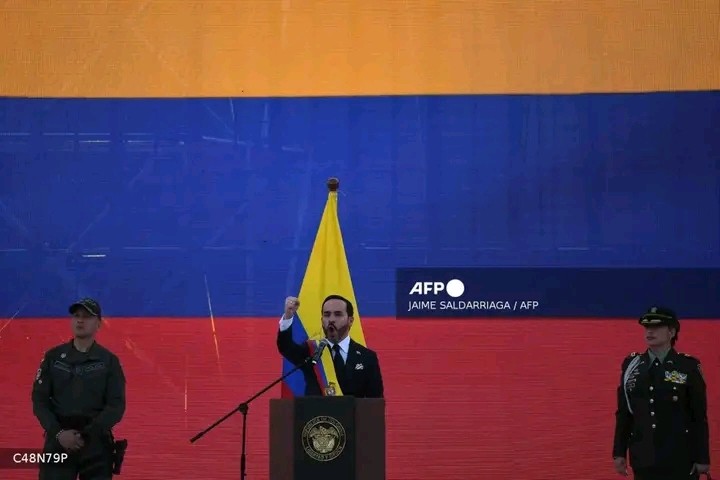
Following his address, the US State Department announced it would seek congressional approval for a $1 billion security assistance package to support Bogotá’s new strategic direction.
De la Espriella’s narrow election victory brings an end to four years of leftist governance under Gustavo Petro, ushering in a right-leaning administration focused heavily on militarized security, border defense, and economic restructuring.
FURTHER READING