- Nigeria’s Foreign Trade Strengthens Under Tinubu as Surplus Expands to ₦6.69 Trillion
- In Q2 2024, exports rose to ₦17.71 trillion as imports dipped to ₦13.96 trillion
- Analysts say the weaker naira has helped boost export earnings and restrain imports
Nigeria’s foreign trade has recorded steady growth under President Bola Tinubu, with exports rising sharply and trade surpluses posted in every quarter since mid-2023, according to new data from the National Bureau of Statistics (NBS).
Eko Hot Blog reports that the figures show that by the third quarter of 2025, Nigeria’s total trade rose to ₦38.93 trillion, while the trade surplus widened to ₦6.69 trillion, marking one of the strongest external trade positions in recent years.
EDITOR’S PICK
- Ooni Honours Ghana’s Mahama in Ile-Ife
- Funke Akindele’s Film Hits ₦200m Opening
- Lekki LCDA Sets Inclusive Growth Agenda with ₦14.77bn 2026 Budget Proposal
Economic analysts attribute the performance largely to exchange rate reforms and the impact of naira volatility on imports. Historically, a weaker naira tends to curb imports almost immediately, while export responses depend on supporting policies and global market conditions. In the short term, currency movements have had a significant influence on Nigeria’s trade balance.
A review of the data indicates a clear upward trajectory since the start of the Tinubu administration. In Q2 2023, Nigeria recorded total trade of ₦12.74 trillion, with exports of ₦6.44 trillion and imports of ₦6.30 trillion, resulting in a modest surplus of ₦0.13 trillion.
By Q3 2023, exports climbed to ₦10.35 trillion, while imports stood at ₦9.04 trillion, pushing the surplus to ₦1.32 trillion. The momentum strengthened in 2024, beginning with Q1 exports of ₦19.18 trillion against imports of ₦14.75 trillion, yielding a surplus of ₦4.43 trillion.
In Q2 2024, exports rose further to ₦17.71 trillion as imports dipped to ₦13.96 trillion, producing a surplus of ₦3.75 trillion. The trend continued in Q3 2024, when exports reached ₦20.54 trillion, imports were ₦15.28 trillion, and the surplus expanded to ₦5.23 trillion, the highest recorded that year.
The positive run extended into 2025. In Q1, exports stood at ₦20.60 trillion, imports at ₦15.43 trillion and the surplus at ₦5.17 trillion. Q2 2025 saw exports jump to ₦22.75 trillion against imports of ₦15.29 trillion, resulting in a record surplus of ₦7.46 trillion.
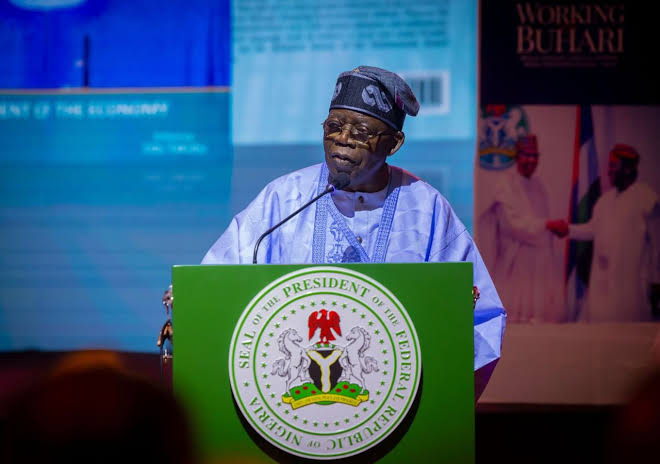
By Q3 2025, exports edged up to ₦22.81 trillion, while imports rose to ₦16.12 trillion. Total trade increased to ₦38.93 trillion, with a sustained surplus of ₦6.69 trillion.
Analysts say the weaker naira has helped boost export earnings and restrain imports, particularly in the short term. Oil exporters have also benefited from currency depreciation combined with relatively strong global oil prices.
Commenting on the data, Director-General of the Centre for the Promotion of Private Enterprise, Dr Muda Yusuf, said the consistent trade surpluses reflect a mix of policy adjustments and broader economic shifts, rather than a complete transformation of Nigeria’s export base.
“The data show strong growth in trade values, largely driven by exchange rate liberalisation and higher oil export earnings in the near term,” Yusuf said.
He cautioned, however, that much of the export growth remains oil-dependent and that Nigeria continues to rely heavily on imports. According to him, the rise in imports in 2024 and 2025 may also signal improving domestic demand.
“The key challenge is converting these impressive trade numbers into lasting economic gains by diversifying exports, strengthening manufacturing, improving logistics and reducing import dependence,” Yusuf added.
Overall, analysts describe the figures as encouraging but mixed, noting that while Nigeria is earning more from trade and sustaining surpluses, long-term stability will depend on deeper structural reforms as the Tinubu administration progresses into the second half of its term.
FURTHER READING
- BAT Vanguard Endorses Tinubu for 2027
- APC Chieftain Warns Tinubu Over Army Promotions
- Makarfi: PDP Will Emerge Stronger Ahead of 2027
Click here to watch video of the week