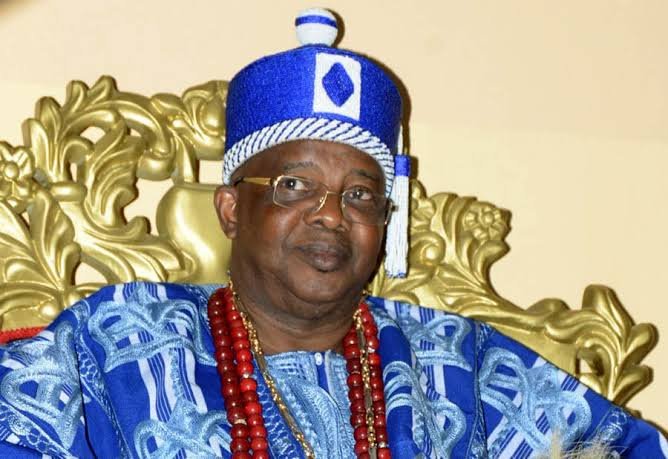
- Oba Shotobi calls for legal distinction between chieftaincy councils and action against fake monarchs.
- Traditional rulers reject leadership changes, seek one month to review proposed law.
- Lagos State government plans to empower traditional rulers in dispute resolution and community development.
The Ayangburen of Ikorodu, Lagos State, Oba Kabiru Shotobi has called for greater legal clarity on the status of divisional and provincial chieftaincy councils in the State.
EKO HOT BLOG reports that the Monarch made this call at a stakeholders’ meeting which was recently held in Alausa, Ikeja.
EDITOR’S PICK
- Lagos State Taskforce Cracks Down on Criminal Hideouts in Gowon Estate
- LAWMA Encourages Proper Waste Management Practices During Eid-el-Kabir Celebrations
- Sanwo-Olu Distributes 180 Saudi Riyals to Each Pilgrim Participant
The traditional rulers who graced the occasion from across Lagos provided input on the proposed amendment and unanimously urged the state government to give them one month to study the proposed bill to give quality feedback.

Oba Kabiru Shotobi urged the Lagos government to take action against individuals falsely claiming to be monarchs.
The Ikorodu Monarch said, “We want a clear legal distinction between traditional and provincial councils. We have reported impostors multiple times, yet no action has been taken. This must stop.”

He further objected to any attempt to alter the current leadership structure of the State Council of Obas, which recognises four vice-chairpersons from the state’s four traditional divisions.
Oba Shotobi maintained that local Chief Transit Committees should be consulted before any appointments are made at the state level.
The Ikorodu Monarch urged the government to ensure chiefs are not excluded from the ongoing reform.
He, therefore, requested one month for traditional rulers to review the draft law and return with coordinated input.
In addition, the Monarch called for a legal framework to recognise traditional dispute resolutions handled within palaces.
Oba Shotobi said, “Our decisions are sometimes ignored in court due to lack of legal backing. We need enabling laws to make our rulings count.”
This was in reaction to the State government’s plan to commence a comprehensive review of the Obas and Chiefs Law of 2015 to address gaps in the existing laws.
Earlier, the State’s Attorney General and Commissioner for Justice, Lawal Pedro, announced this on behalf of Governor Babajide Sanwo-Olu at the meeting.

Pedro said the review is a deliberate attempt by Governor Sanwo-Olu’s administration to modernise the law in line with the current realities and good governance.
The Attorney General who lamented the erosion of respect for traditional institutions, blamed it on a combination of misconduct, the proliferation of unverified chieftaincy titles, and prolonged litigation over succession rights.

The Attorney General said, “Our royal fathers remain symbols of cultural continuity and community leadership. But today, with due respect, the institution is under threat from land grabbing, unlawful upgrades, and chieftaincy titles not rooted in the community’s customs.”
He added that the review aimed to address gaps in the existing law and redefine the roles of traditional rulers to include conflict resolution, peacekeeping, and partnership in community development.
The Commissioner further noted that the proposed amendments will formally recognise traditional rulers as partners in maintaining law and order, mediating disputes, and conveying government policies to grassroots communities.
Pedro said, “The law must evolve. Our Obas can help reduce crime by mediating disputes, gathering public feedback, and promoting community initiatives.
“Also, there is a need to restore integrity to the process of conferring chieftaincy titles. Only persons of proven honour and community ties should be eligible.
“This process is about partnership, not imposition as we want a law that preserves heritage while promoting justice, peace, and good governance.”
In his welcome remarks, the Solicitor General and Permanent Secretary at the Ministry of Justice, Hammed Oyenuga, said, “This gathering presents a unique opportunity for robust dialogue, reflection, and collaboration as we seek to strengthen the law that directly impacts our revered traditional institutions and the communities they serve.
Oyenuga further said that the law must be updated to align with contemporary realities while respecting cultural heritage.
FURTHER READING
- Olu-Epe Tussle: Princess Surah Animashaun Lift Suspension on Eid-I-Adha Celebration
- Anambra 2025: INEC Releases Final List Of Candidates, Campaign Dates
- FG, Reps Push For 5% Levy On Petrol, Diesel For Road Repairs
The meeting came to an end with a consensus to hold further deliberations within four weeks before submitting the final amendments.