- Trump has warned Americans to expect higher gasoline prices as the conflict with Iran continues
- He defended the rising fuel costs as necessary to prevent Iran from acquiring nuclear weapons
- Trump also said the US could take control of the Strait of Hormuz after defeating Iran
US President Donald Trump has warned Americans to prepare for continued high fuel prices as the conflict with Iran persists, while declaring that Washington’s campaign against Tehran is necessary to prevent the country from acquiring a nuclear weapon.
Eko Hot Blog gathered that Trump made the remarks during a political rally in Garden City, New York, as tensions between the United States and Iran remained high and efforts to revive peace talks showed little progress.
EDITOR’S PICK
- Osun Election: INEC Reports 94.5% Polling Units Opened on Time
- THEDSF Visits Alara of Ilara Kingdom, Seeks Royal Support for Youth Mobilisation
- Super Falcons Miss Women’s World Cup for First Time
The US president acknowledged that Americans could face higher gasoline costs as a result of the conflict but argued that the sacrifice was necessary to achieve his stated objective of preventing Iran from developing nuclear weapons.
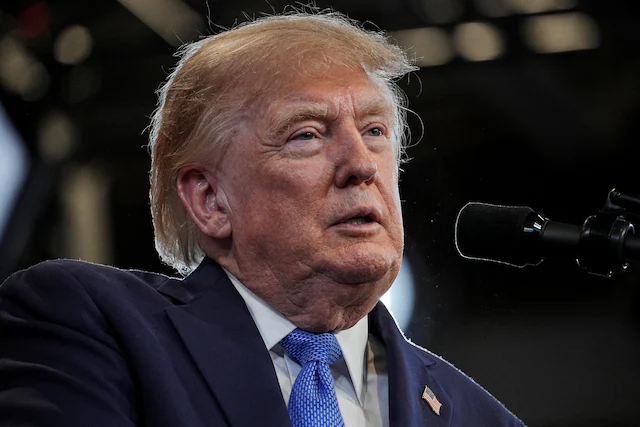
Trump described Iran as a “very evil country” and told supporters that paying slightly more for gasoline was a price worth accepting in the ongoing confrontation.
He also claimed that the United States would take control of the strategically important Strait of Hormuz after defeating Iran.
“After we finish defeating Iran … pretty soon I’ll be declaring the Hormuz Strait a territory of the United States,” Trump said.
The president’s comments came as shipping activity through the Strait of Hormuz remained severely disrupted. The waterway is one of the world’s most important energy routes and handled roughly one-fifth of global oil supplies before the war.
According to ship-tracking analysis by Kpler, only two vessels crossed the strait on Friday, with no crude oil shipments recorded. Before the conflict, more than 130 vessels were travelling through the waterway each day.
Although some vessels could have crossed without transmitting their tracking signals, the sharp decline in traffic has raised concerns about further disruption to global energy supplies.
Trump’s warning over fuel prices comes as American motorists are already paying substantially more at the pump. The average US gasoline price was about $4.08 per gallon on Friday, representing a 29 per cent increase compared with the same period last year, according to the American Automobile Association.
Crude oil prices have also risen amid concerns over the disruption. Brent crude was on course for a weekly increase of about six per cent, while West Texas Intermediate was heading for a gain of approximately 5.4 per cent.
The increase in energy costs could create political difficulties for Trump, who campaigned on a promise to reduce energy prices. Democrats are expected to use the economic impact of the conflict as an issue ahead of the November congressional elections.
Trump has maintained a tough position towards Tehran throughout the conflict, alternating between threats of further escalation and suggestions that a peace agreement could be reached.
His latest comments came as Iran continued to reject US demands and insisted that it would maintain control over traffic through the Strait of Hormuz.
Iranian Deputy Foreign Minister Kazem Gharibabadi warned that the waterway would remain under Tehran’s control until the United States accepted what Iran described as the reality of its defeat.
Iranian Foreign Minister Abbas Araqchi also said Tehran had not decided whether to resume negotiations with Washington, adding that the United States would have to meet certain conditions before normal shipping could resume through the strategic waterway.
The conflict has also created concerns about a broader regional escalation, with renewed attacks by Iran-backed Houthi fighters in Yemen adding to tensions across the Middle East.
Despite the economic and diplomatic pressure, Trump has continued to defend the US position, portraying the conflict as necessary to protect American and global security interests.
FURTHER READING