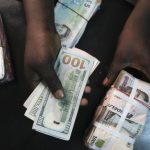
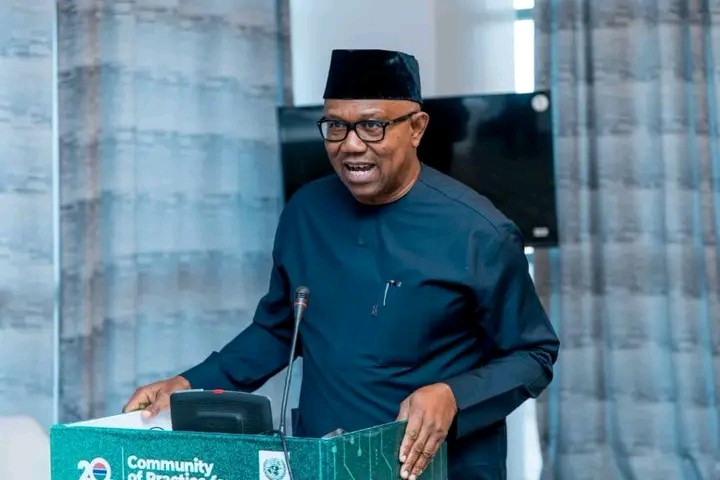
- Former presidential candidate Peter Obi has highlighted World Bank data showing that ₦34.44 trillion, about 41% of Nigeria’s federation revenue never reached the Federation Account between 2023 and 2025.
- The “missing” ₦34 trillion exceeds the combined capital project allocations for the entire 2024 and 2025 federal budgets, a figure Obi describes as evidence of “institutionalised corruption on a massive scale.”
- Obi warns that while national earnings are rising, “at-source” deductions by government agencies are quietly eroding funds meant for healthcare, education, and infrastructure.
Labour Party leader Peter Obi has issued a scathing critique of Nigeria’s public finance management, following a World Bank report that uncovered multi-trillion naira leakages in the country’s revenue pipeline.
Eko Hot Blog reports that Obi, in a statement released on Saturday, April 18, 2026, expressed deep concern over the “lethal paradox” of a nation earning record revenues yet lacking the resources to invest in its people.
EDITOR’S PICKS
- JAMB Delists 23 CBT Centres, Warns 89 After Mock UTME Review
- NASA Astronauts Return to Earth After First Human Trip to the Moon in 50 Years
- INEC Shifts Nationwide Voter Revalidation Until After 2027 General Election
According to the World Bank’s Nigeria Development Update, while the country’s federation revenue climbed to nearly ₦84 trillion over the last three years, a staggering ₦34.53 trillion was siphoned off through “deductions” before reaching the central account.
Data shows a sharp upward trend in these deductions: rising from ₦6.22 trillion in 2023 to ₦14.93 trillion by 2025.
Obi noted that these systemic captured resources allow certain government agencies to hold more funds than entire states or critical ministries.
“This is not a mere oversight,” Obi stated. “It points to institutionalised corruption. We are trapped in a cycle where we earn more but have less to show for it in healthcare, education, and power. Nigeria has no business being poor.”
Drawing a comparison to the 1994 Okigbo Panel Report, which investigated $12.4 billion in unaccounted oil windfall, Obi argued that the current situation is even more troubling.
He lamented that such massive leakages are “quietly eroding” the fiscal space available for development, explaining why nations with fewer resources consistently outperform Nigeria on global indices.
The former governor of Anambra State called for immediate, transparent leadership to “redirect hijacked resources back to the people,” insisting that a “New Nigeria” is only possible if the current “corruption-infested system” is dismantled.