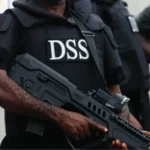
In Plateau State, the presence of military installations has increasingly become a bitter irony for residents who once believed proximity to armed forces guaranteed protection.
In April 2025, militants stormed Zike and Kimakpa communities in the Kwall District of Bassa LGA, killing at least 51 people in an overnight massacre. What makes the attack even more confounding is the fact that both communities lie within a five-kilometre radius of the Nigerian Army’s 3 Division Headquarters.
EDITOR’S PICKS
Less than two weeks earlier, over 50 people had been killed in Bokkos LGA, sparking official promises of renewed security efforts. But those pledges rang hollow when the carnage at Zike and Kimakpa unfolded almost within earshot of one of the country’s most significant military commands.
Fast forward to July, and the pattern repeats. In Bindi, a farming community in Riyom LGA, 27 farmers were killed in another pre-dawn assault. Homes were razed, crops destroyed, and families shattered, just 200 metres from a military checkpoint. Once again, no intervention came in time. No arrests were made. No attackers were pursued.
The Plateau State Government, through Commissioner for Information Joyce Ramnap, confirmed that soldiers were in close proximity with the assailants but failed to capture even one. The governor, Caleb Mutfwang, expressed outrage, questioning how such brazen violence could continue under the watch of security forces who had prior intelligence.

Speaking on Friday during The Morning Brief, a Channels TV programme, Ramnap said a military checkpoint was located 200 metres from the scene of the attack, adding that the community is not remote and help could have arrived swiftly.
“The response we got was that none were arrested and none were captured,” she said.
“None of those who carried out the attack have been apprehended despite the proximity of the soldiers to the location. It is not an obscure location. It is along a route that has checkpoints.”
She, however, said the government is not generalising blame on the military but expects greater accountability.
“We do not want to stereotype and say the entire army compromised in this case. However, there is room to do more investigation, and the governor specifically requested that at least they should have made some arrests,” Ramnap said.
The implications are disturbing. If people are not safe near military bases or checkpoints, where in Plateau—or anywhere—can they be safe? This repeated pattern of inaction raises fundamental questions about Nigeria’s security architecture.
Are these failures the result of incompetence, internal sabotage, poor coordination, or something more sinister? Notably, after a brazen attack on Yelwata area of Benue State claimed over 200 lives in a single weekend, Chief of Defence Staff, General Christopher Musa, made a startling revelation: saboteurs may be operating within the military itself.

“This is one killing too many,” Musa said as he surveyed the scorched remains of homes and farms. “We need to change our strategy, look inward… If you see the pattern of killings and slaughtering, it means there is an insider.”
In Zike and Kimakpa, the attack’s boldness so close to a military command headquarters has led grieving residents to question whether they were simply abandoned. In Riyom, the attackers met no resistance even though the area was not remote and was flanked by known checkpoints.
What emerges is a portrait of systemic dysfunction—where proximity to power does not translate to safety, and repeated bloodshed is met with apologies, rather than accountability.
If intelligence warnings go unheeded, and military presence amounts to little more than a visual deterrent, then the very premise of state protection is under siege.
FURTHER READING
Until there are serious answers, until commanders are held accountable, and communities near military posts are no longer left to fend for themselves, these killings will remain a damning indictment of a broken promise: that the Nigerian state can protect its citizens.
Philip Ibitoye is a Special Correspondent with EKO HOT BLOG. Click here to find daily analysis and critical insight on trending issues in Lagos and other parts of Nigeria.
Click here to watch the video of the week below: