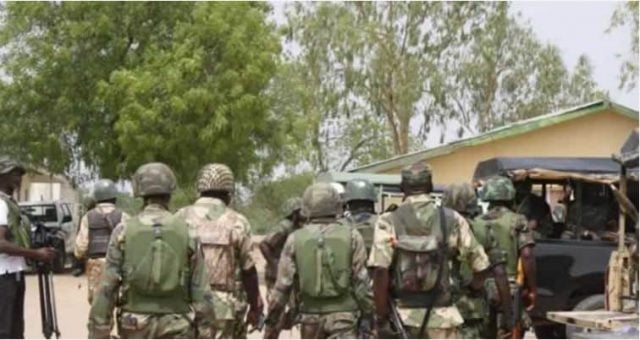
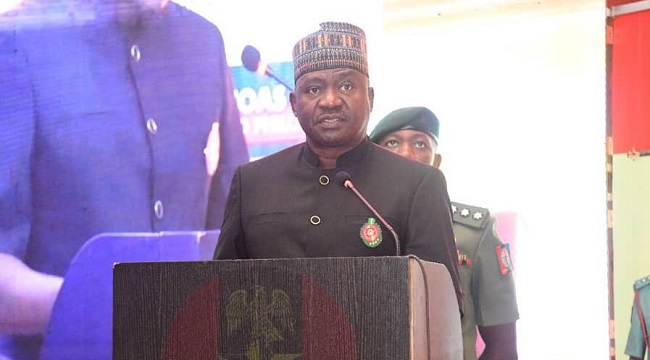
The federal government has raised the minimum monthly salary of Nigerian soldiers from ₦49,000 to ₦100,000, defence minister Christopher Musa announced on Wednesday.
Speaking to News Central ahead of an exclusive broadcast on Friday, Musa said the increase was meant to improve troop welfare, even as he admitted the overall defence budget remains inadequate.
EDITOR’S PICKS
- What Tinubu Wants ICPC To Uncover About PFIPC, Adeyemi
- 2% of GDP ‘Missing’ or Just Unreported? Inside the IMF Controversy
The question now is whether the raise is enough to matter for the men and women who face bullets, bombs, and kidnappers’ camps every day.
The Risk-Reward Gap
Nigerian soldiers do not have desk jobs. They are deployed against Boko Haram and ISWAP fighters in the northeast, bandit camps in the northwest, and kidnap gangs who now hold entire communities to ransom.
The same time Musa announced the pay rise, he was also speaking about children abducted in Oyo State, held by gunmen demanding the release of detained commanders, a reminder of how directly soldiers’ work intersects with life-and-death stakes.
Set against that risk, even ₦100,000 a month looks modest. It works out to roughly ₦3,300 a day, in a country where inflation has pushed up the cost of food, transport, and rent sharply in recent years. A soldier risking his life against armed kidnappers or insurgents is not paid very differently from many civil servants doing far safer work. The doubling of the minimum wage is real progress, but the gap between the danger of the job and the reward for doing it remains wide.
What It Means for Morale
Pay is not the only thing that affects a soldier’s morale, but it is one of the clearest signals of how much a government values its troops. An underpaid soldier is more likely to feel abandoned, especially when stories circulate about poor feeding or inadequate equipment — claims Musa himself pushed back on this week, insisting that a viral video showing soldiers being served poor meals was staged by an officer to mislead the public.
Whether or not that particular claim is true, the fact that it spread and gained traction says something about troop morale on the ground. Soldiers talk. When welfare complaints — about pay, food, or gear — travel faster than official denials, it suggests a trust gap between the military high command and the rank and file. A wage increase can help close that gap, but only if soldiers feel it in their pockets and see it matched by better living conditions, timely allowances, and support for families of the fallen.
Budget Realities Behind the Numbers
Musa was candid about one thing: the money is not really there yet. He described the military as still underfunded, even after the wage increase. This matters because a raise announced from Abuja is only as good as the budget behind it. Delayed salaries, inconsistent allowances, and underfunded logistics have long been quiet complaints within the ranks, and a headline pay rise does not automatically fix them.
For the ₦100,000 minimum wage to genuinely improve welfare, it needs consistent funding, transparent disbursement, and pairing with non-salary support — better equipment, medical care, and death benefits for families of soldiers killed in action. Without that, the increase risks becoming another announcement that looks good in the news but changes little for a soldier standing at a checkpoint in Borno or chasing bandits through Zamfara’s forests.
FURTHER READING
The wage rise is a step forward. But given the risks Nigerian soldiers face daily, the real test is not the number on the payslip — it is whether the government can back that number with the funding, equipment, and consistency that turn a policy announcement into a lived improvement for the men and women in uniform.
Philip Ibitoye is a Special Correspondent with EKO HOT BLOG. Click here to find daily analysis and critical insight on trending issues in Lagos and other parts of Nigeria.
Click to watch the video of the week below: