- Presidency Accuses Obasanjo of Hypocrisy Over Criticism of Tinubu’s Security Strategy
- Says Past Leaders Allowed Terrorism to Take Root
- Defends Tinubu’s Multi Level Security Approach
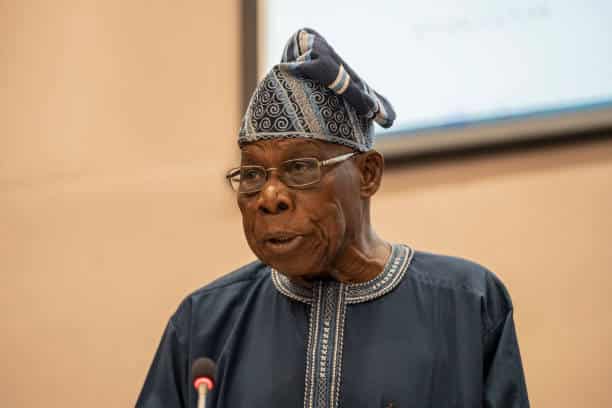
The Presidency on Sunday issued a sharp response to former President Olusegun Obasanjo and a group of what it described as “perennial presidential hopefuls,” accusing them of hypocrisy and offering lectures on national security from a place of selective memory.
Eko Hot Blog reports that in a statement shared on his X handle, the Special Adviser to the President on Media and Public Communication, Sunday Dare, said recent attempts to portray President Bola Ahmed Tinubu as incapable of securing the country were misguided and ignore a critical truth: Nigeria is confronting a complex, rapidly evolving and cross-border terrorist network.
EDITOR’S PICK
- FCT Court Rejects EFCC Witnesses in Emefiele Trial
- Tems Reveals Alternate Career Path Before Music Fame
- Lamido Holds Emergency PDP Stakeholders Meeting Amid Party Crisis
He argued that many of those now speaking loudly about insecurity refused to act when extremist movements were emerging under their own administrations. Nigerians, he added, understand this history and will not be misled by what he described as an effort to rewrite the past.
Dare dismissed the suggestion that Nigeria should rely heavily on foreign governments for internal security operations, insisting that such advice amounts to surrender. He noted that anyone making such a proposal must first confront the missed opportunities of their own time in office, when early warning signs of extremism were ignored.
He recalled that Boko Haram’s earliest structures and ideology solidified during Obasanjo’s civilian presidency. What began as a fringe sect, he said, could have been dismantled before it transformed into a violent insurgency and later merged into international jihadist networks.
“Let us call them what they are: terrorists,” Dare said, stressing that those who attack villages, kidnap citizens, destroy communities and challenge the authority of the state fit the definition, regardless of the name they choose to operate under.
He explained that Nigeria is now dealing with a complex terror environment made up of internationally designated extremist groups, ISIS and al-Qaeda affiliates in the Sahel, local criminal gangs posing as bandits, cross-border terror cells and hybrid organisations taking advantage of ungoverned spaces.
Dare maintained that President Tinubu has adopted a clear, multi-layered strategy that reflects the scale of the threat. On the military front, he highlighted upgraded capabilities, intelligence driven operations, the disruption of supply routes and the reclaiming of contested territories.
On the non-military side, he pointed to efforts to restore governance in neglected regions, expand economic support systems, deepen counter-radicalisation programmes and rebuild trust between communities and state institutions.
According to him, the President’s approach is based on a whole-of-government and whole-of-nation principle because “terrorists thrive on division, but Nigeria defeats them through unity.”
Dare noted that while Nigeria will continue to work with international partners, including the United States, the government will not hand over its responsibilities or “wave a white cloth because someone who once had the chance lost courage.”
He warned that disparaging statements from former leaders risk emboldening terrorists by giving them psychological encouragement during a period when the nation is consolidating gains.
“A true statesman supports the country in challenging moments, not offer commentary that weakens morale,” he said.
He added that if Obasanjo wishes to make a meaningful contribution, he should acknowledge the earlier failures that allowed extremists to grow and join the ongoing efforts rather than undermine them.
Dare said Obasanjo should use his international standing to support Nigeria as he has done for other nations, instead of attempting to diminish an administration working across multiple fronts: economic recovery, security improvement and infrastructure renewal.
He reaffirmed that under President Tinubu, Nigeria will overcome terrorism through determination, unity and a coordinated national strategy.
“This administration will not be distracted by selective memory packaged as elder statesmanship,” he said, “and it will not allow those who oversaw Nigeria’s early security lapses to recast history.”
FURTHER READING
- Olubadan Predicts Rapid Economic Growth for Ibadan
- Group Raises Alarm Over Nigeria’s High Malaria Deaths
- Over 160,000 Lagos Residents Living with HIV
Click here to watch video of the week