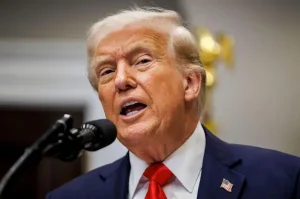
Tensions between Nigeria and the United States (US) escalated sharply after US President Donald Trump announced that Nigeria had been redesignated as a Country of Particular Concern (CPC) over what he described as the “mass slaughter” of Christians, a claim that President Bola Tinubu and other Nigerian officials have rejected as false.
In a statement earlier this month, Trump warned that the US “will not tolerate continued violence against Christians” and suggested consequences ranging from cutting aid to possible military action against terrorist groups operating in Nigeria.
EDITOR’S PICKS
In his dramatic statement, Trump said Christianity faced an “existential threat in Nigeria” and insisted that “something must be done.” He further ordered Congressman Riley Moore and House Appropriations Chairman Tom Cole “to immediately look into this matter and report back.”
"Christianity is facing an existential threat in Nigeria. The United States cannot stand by while such atrocities are happening there, and in numerous other Countries. We stand ready, willing, and able to save our Great Christian Population around the World!" – President Trump pic.twitter.com/1dSLMr7ApQ
— The White House (@WhiteHouse) November 5, 2025
The directive effectively placed Moore at the centre of US congressional scrutiny of Nigeria’s handling of religiously motivated violence, terrorism, and the protection of Christian communities.
Since Trump’s statement, Moore has repeatedly echoed the US president’s warning that Washington is prepared to take firmer action if Nigeria fails to demonstrate “tangible steps” to protect threatened communities.
Inside the Washington meeting with Ribadu and top security officials
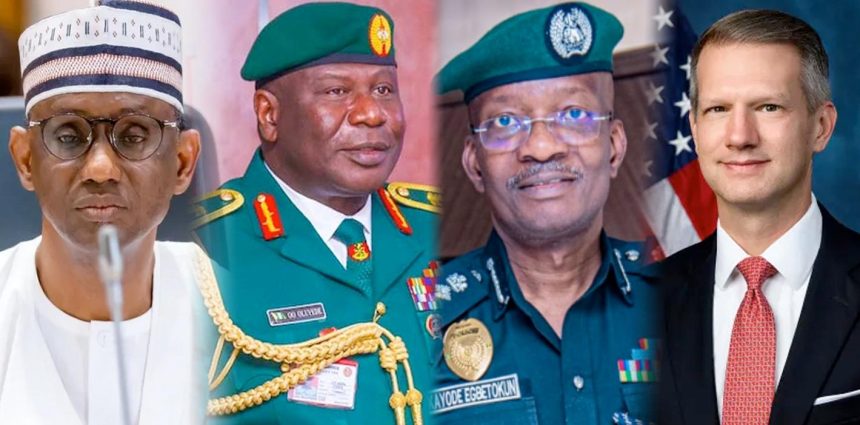
EKO HOT BLOG reports that the directive from Trump laid the groundwork for a high-level meeting in Washington, D.C. on Wednesday, where National Security Adviser (NSA) Nuhu Ribadu led a powerful Nigerian delegation to engage with Congressman Moore.
The delegation included Attorney-General of the Federation Lateef Fagbemi (SAN), Inspector-General of Police Kayode Egbetokun, Chief of Defence Staff General Olufemi Oluyede, Chief of Defence Intelligence Lt. Gen. E.A.P. Undiendeye, Minister of State for Foreign Affairs Bianca Ojukwu, top officials from the Office of the NSA, and senior diplomats from Nigeria’s embassy in Washington.
As of the time of filing this report, the Nigerian team had not issued any release on its US trip.
According to Moore, the meeting was “frank, honest, and productive,” focusing on Christian persecution, ongoing terrorist threats, and opportunities for improved U.S.–Nigeria coordination. Nigerian officials briefed the congressman on the country’s counterterrorism challenges, security assistance needs, protection of vulnerable communities, and the complex drivers of violence across different regions.
Press Release: Congressman Moore Meets With Delegation of Senior Nigerian Officials Regarding the Persecution of Christians and Terrorism Threat in Nigeria
Washington, D.C. – Today, Congressman Riley M. Moore met with a delegation of senior members of the Nigerian government,… pic.twitter.com/VytPVRvFjF
— Rep. Riley M. Moore (@RepRileyMoore) November 19, 2025
Moore emphasised that the US remains willing to work cooperatively with Nigeria but stressed that Washington expects measurable progress.
“I made it crystal clear that the United States must see tangible steps to ensure that Christians are not subject to violence, persecution, displacement, and death,” he said.
He added that Trump “does not make idle threats,” highlighting congressional seriousness about ending attacks attributed to Boko Haram, ISWAP, and violent Fulani militant groups.
Diplomatic implications as Trump raises spectre of unilateral action
The meeting comes at a delicate diplomatic moment. Trump’s warning, including insinuations that the US could “intervene” or strike terrorist targets in Nigeria, represents one of the most direct threats the US has issued to an African nation in recent years.
Although framed as a campaign to protect persecuted Christians, the rhetoric raises concerns about sovereignty, the limits of counterterrorism cooperation, and the potential for US military action without Nigeria’s consent.
For Nigeria, the engagement led by Ribadu is an attempt to defuse tensions, provide clarity on Nigeria’s domestic security realities, and prevent the US from acting on Trump’s more aggressive posturing. For Moore and US lawmakers, the meeting served as a fact-finding step as they prepare their report to Trump and consider whether to recommend sanctions, heightened pressure, or deeper security collaboration.
Diplomatically, the outcome of these conversations will help shape the future of US–Nigeria relations. If Nigeria demonstrates the “tangible steps” Moore demands, Washington may opt for strengthened cooperation. But if Trump’s allies conclude that Abuja is failing to protect Christian communities or confront terrorist groups decisively, the CPC designation could open the door to punitive measures or, as Trump suggested, more direct and controversial U.S. involvement.
FURTHER READING
What is clear is that Trump’s threat jolted both governments into urgent engagement. The Ribadu-led meeting in Washington represents Nigeria’s effort to retain control of its security narrative at a time when American political rhetoric is increasingly assertive.
Philip Ibitoye is a Special Correspondent with EKO HOT BLOG. Click here to find daily analysis and critical insight on trending issues in Lagos and other parts of Nigeria.
Click here to watch the video of the week below: