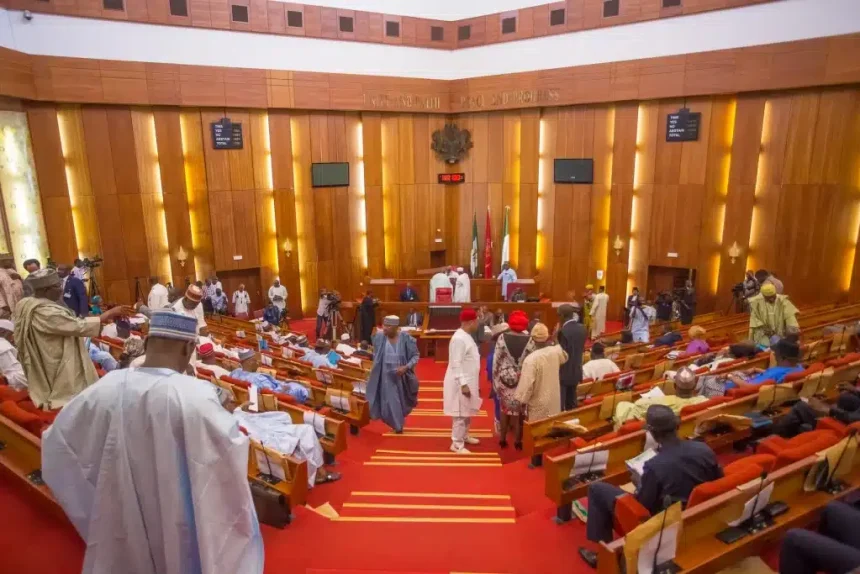
The Nigerian Senate has launched a sweeping investigation into the Safe School Initiative (SSI) following fresh mass abductions in Kebbi and Niger states, raising renewed concerns about why a programme created to secure schools continues to fall short more than a decade after its launch.
At plenary on Wednesday, Senator Orji Kalu, chairman of the newly constituted ad hoc committee, said the legislature would “uncover all issues” surrounding the initiative and explain why it has failed to shield students from recurring attacks.
EDITOR’S PICKS
Kalu disclosed that over 1,680 schoolchildren have been kidnapped and 180 educational facilities attacked since 2014, calling the numbers “unacceptable for a nation committed to educational development and child safety”.
“It is unacceptable that our schools remain soft targets for terrorists and kidnappers,” he said. “We will track every naira and every dollar allocated to the Safe School Initiative. Nigerians deserve to know why schools remain unsafe despite enormous investment and global support.”
The SSI was launched in May 2014 after the abduction of the Chibok schoolgirls, backed by the federal government, the United Nations and multiple private-sector donors.
According to Kalu, the initiative received $10 million in initial funding, while over $30 million was mobilised between 2014 and 2021. More recently, N144 billion was budgeted from 2023 to 2026 to protect schools nationwide.
Yet, as Kalu noted, attacks have “worsened despite the allocations”.
Fresh Abductions Reignite Urgency
The Senate probe comes against the backdrop of renewed school kidnappings. On November 17, 25 female students were abducted from Government Girls Comprehensive Secondary School, Maga, in Kebbi State. Days later, 227 persons — including teachers and students — were kidnapped during an attack on St. Mary’s Catholic Primary and Secondary Schools in Papiri, Agwara LGA, Niger State.
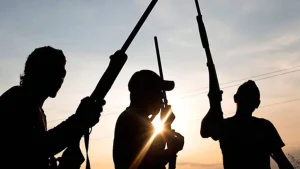
These incidents, occurring within days of each other, have revived public anger and questions about whether the SSI was properly implemented. Senator Godswill Akpabio, the Senate President, had earlier named an 18-member panel to lead the investigation, with representation across geopolitical zones.
Kalu stressed that the committee’s work is not punitive but necessary. “This is not a witch-hunt. We owe Nigerian parents the responsibility to guarantee that their children can pursue education without fear,” he said. “The Senate will not rest until it gets answers.”
Audit, Accountability and “Re-engineering” the Initiative
The committee — mandated to submit a report within four weeks — will conduct a financial and operational audit, scrutinising how funds were utilised and whether interventions matched the security realities. Kalu said the probe would cover funding utilisation, security deployment, emergency response systems, infrastructure upgrades, and donor partnerships.
He also revealed plans for consultations with federal ministries, state governments, security agencies and civil society groups.
According to him, the task before the Senate is clear: “Our goal is simple: to make Nigerian schools safe, secure, and conducive for learning. Nothing short of genuine accountability will suffice.”
FURTHER READING
As mass abductions continue to scar communities and instil fear among families, the Senate’s probe signals a decisive — if long overdue — step toward answering the central question: why are Nigeria’s schools still unsafe despite billions committed to their protection?
Philip Ibitoye is a Special Correspondent with EKO HOT BLOG. Click here to find daily analysis and critical insight on trending issues in Lagos and other parts of Nigeria.
Click here to watch the video of the week below: