- Senate Passes Landmark Bill: Lecturers Who Sexually Harass Students to Face 14 Years in Jail
- Educators convicted of sexual harassment face a minimum of five years and up to 14 years imprisonment
- Every tertiary institution is now required to establish such a committee to investigate and adjudicate complaints
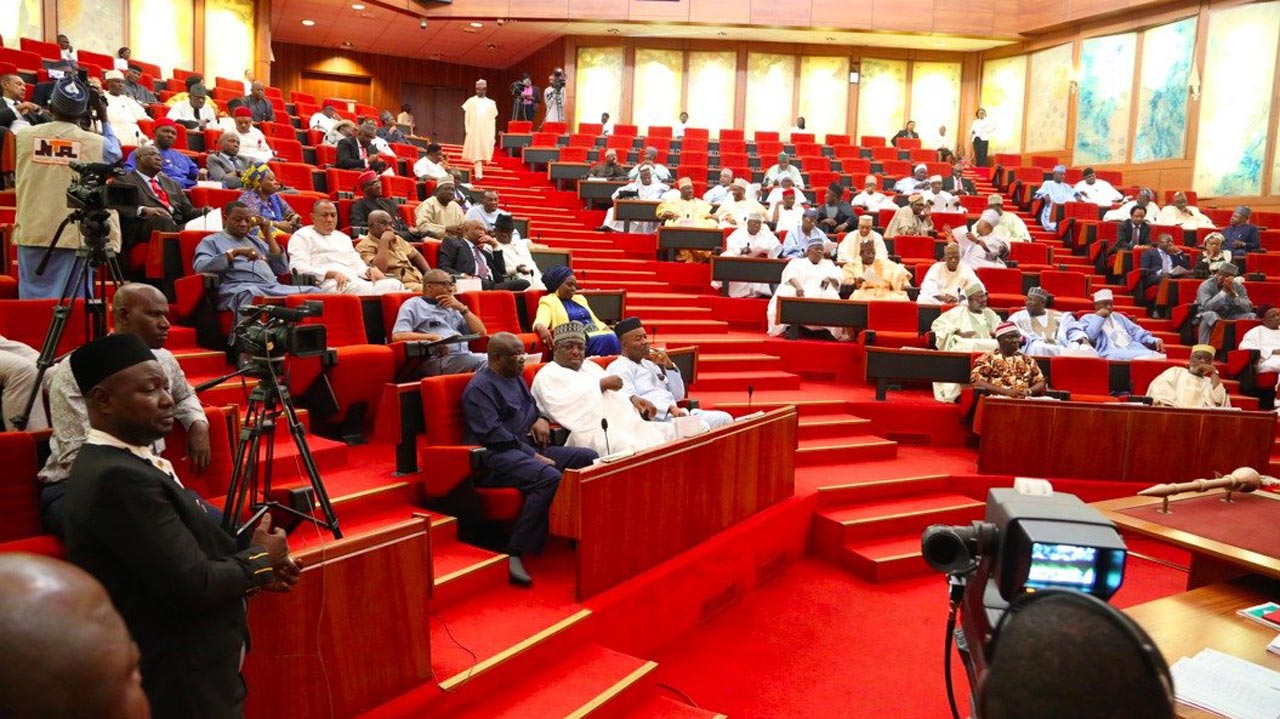
The Nigerian Senate has passed a groundbreaking law prescribing up to 14 years in prison for lecturers found guilty of sexually harassing students, marking a historic moment in the nation’s fight against abuse of power in tertiary institutions.
Eko Hot Blog reports that the Sexual Harassment of Students (Prevention and Prohibition) Bill, 2025, was approved on Wednesday after an impassioned debate that exposed the deep rooted problem of sexual exploitation in the country’s ivory towers, a culture long whispered about but rarely confronted openly.
EDITOR’S PICK
- Senate To Enact Stiffer Penalties For Artificial Fruit Ripening With Chemicals
- Augustine University Holds 2025/2026 Students’ Orientation Programme
- Akinloye Reaffirms Grassroots Development Commitment as Eredo LCDA Hosts 2026 Budget Forum
Sponsored by Senate Leader Opeyemi Bamidele (APC, Ekiti Central), the legislation aims to end what he called a “culture of coercion and silence” that has eroded trust between lecturers and students.
“This law safeguards the sanctity of the student educator relationship built on authority, dependency and trust,” Bamidele said. “It ensures that no educator ever uses that trust as a weapon of exploitation again.”
Under the new Act, educators convicted of sexual harassment face a minimum of five years and up to 14 years imprisonment without the option of a fine. Related offences attract between two and five years in prison, also without a fine.
The law goes further to criminalise indirect complicity such as aiding or encouraging sexual harassment. It also removes the defence of consent, declaring that it “shall not be a defence that a student consented” to the act, except in cases of a legally recognised marriage.
Students or their representatives, including family members, guardians, or lawyers, can now file petitions directly to the Nigerian Police Force, the Attorney General, or an institution’s Independent Sexual Harassment Prohibition Committee.
Every tertiary institution is now required to establish such a committee to investigate and adjudicate complaints in line with the new law. However, once a case is brought before a court, institutional panels must stand down to avoid jurisdictional conflict.
For decades, Nigerian campuses have been plagued by sex for grades scandals, many of which went unpunished. Analysts say this legislation signals a new era of accountability and zero tolerance for sexual exploitation in education.
FURTHER READING
- Surah Animashaun Empowers Traders, Marking 100 Days of People-Focused Leadership
- Epe Division Sets Pace as APC Chairman’s Cup LOC Officially Inaugurated
- PDP Suspends Ibadan Convention After Federal High Court Judgment
Click here to watch video of the week