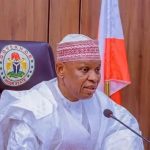
- Governors are seeking greater powers under the proposed state police system
- They also want guaranteed funding for state police operations
- The proposals form part of ongoing constitutional reforms on policing in Nigeria
State governors are pushing for wider constitutional powers over security operations and guaranteed funding for the proposed State Police Services as efforts to decentralise policing in Nigeria gather momentum.
Eko Hot Blog gathered that the proposals emerged from a high-level meeting organised by the Nigeria Governors’ Forum (NGF) Secretariat in Abuja, where state Attorneys-General, legal experts and senior security officials discussed a framework for establishing state police across the country.
EDITOR’S PICK
- Federal Lawmaker Yaya Tongo Dies In Abuja Hospital
- Rep. Wale Raji Celebrates Alhaja Aduke Salimot Seriki on Birthday
- Nancy Isime Recalls Alex Ekubo’s Fearless Humor, Generosity at Late Actor’s Tribute
According to a report from the meeting, participants agreed on the need for a decentralised policing system that strengthens security while maintaining constitutional safeguards, accountability and national unity.

A key recommendation was the constitutional recognition of governors’ authority to coordinate security operations within their states. Although governors are widely regarded as chief security officers, they currently have limited control over police activities because the Nigeria Police Force remains under federal command.
The proposal comes as Nigeria continues to grapple with terrorism, banditry, kidnapping, communal clashes and other violent crimes that have exposed the limitations of the country’s centralised policing structure.
The governors’ recommendations follow recent progress by the House of Representatives, which approved constitutional amendment proposals to establish state police as part of wider security reforms.
If passed, the amendments would create a dual policing system comprising the Federal Police Service and State Police Services, with individual states empowered to establish their own police formations through legislation.
Supporters of the reform argue that local policing will improve intelligence gathering, strengthen community engagement and enable quicker responses to security threats. They also point to regional security outfits such as Amotekun and Ebube Agu as evidence of growing demand for community-based security structures.
However, concerns remain that state police could be abused for political purposes, particularly during elections. To address these fears, participants proposed strong oversight mechanisms, operational independence and accountability measures to prevent misuse.
Under the proposed framework, the Federal Police Service would retain exclusive responsibility for offences of national importance, including terrorism, treason, drug trafficking and interstate crimes, while state police would investigate and prosecute offences created under state laws.
The report also recommends restructuring some existing police assets and facilities to support the establishment of state police commands where necessary.
To strengthen oversight, stakeholders proposed that State Attorneys-General should have rotating representation on the National Police Council to ensure states participate more actively in national policing decisions.
Funding was another major issue discussed, with participants calling for constitutional guarantees to ensure sustainable financing of state police operations. They also proposed transitional federal support and the creation of State Security Trust Funds to attract contributions from the private sector and other stakeholders.
On personnel, the framework recommends allowing willing members of the Nigeria Police Force to transfer to state police without losing their rank, seniority or pension benefits. The transfers, however, would be time-bound to ensure smooth implementation and effective workforce planning.
The proposal also provides flexibility for states that may not be ready to establish their own police services immediately, allowing the Federal Government to continue policing such states until they develop the required institutional capacity.
If eventually approved through constitutional amendments and supporting legislation, the reforms would introduce one of the most significant changes to Nigeria’s security architecture since the country’s return to democratic rule, creating federal and state police institutions with clearly defined constitutional responsibilities.
FURTHER READING