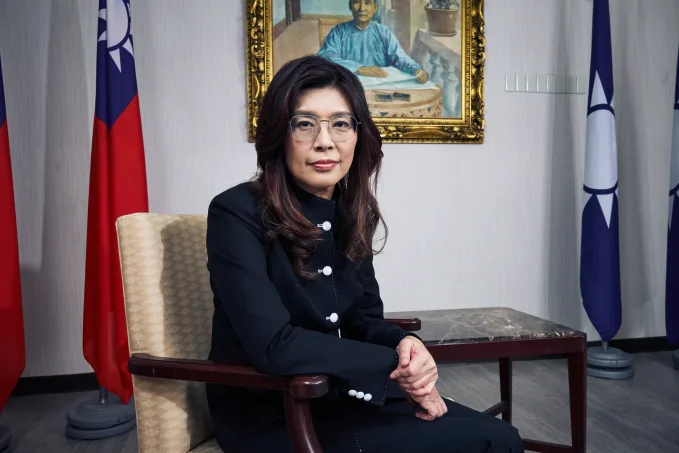
- Kuomintang (KMT) Chairperson Cheng Li-wun is advocating for a “dialogue-first” approach with Beijing, arguing that Taiwan should embrace both Washington and Beijing rather than being forced to choose between the two superpowers.
- Taiwan’s opposition-led legislature passed a significantly reduced defense package, cutting President Lai Ching-te’s $40 billion plan by approximately one-third, specifically targeting domestic drone and defense buildup.
- Fresh from a historic meeting with Chinese President Xi Jinping, the first high-level KMT-Communist Party summit in a decade, Cheng warns that “weapons alone will not keep Taiwan safe” and that the island must avoid becoming “the next Ukraine.”
Cheng Li-wun, the outspoken head of the KMT said that while her party remains a “staunch supporter” of national defense, the previous $40 billion proposal was too vague and lacked transparency.
Eko Hot Blog reports that the newly approved, watered-down package maintains major US arms purchases but pulls back on domestic defense initiatives, a move that has drawn criticism from former US officials who argue that cheap, effective capabilities like drones are essential for deterring a potential invasion.
EDITOR’S PICKS
- JAMB Delists 23 CBT Centres, Warns 89 After Mock UTME Review
- NASA Astronauts Return to Earth After First Human Trip to the Moon in 50 Years
- INEC Shifts Nationwide Voter Revalidation Until After 2027 General Election
Cheng’s recent trip to the mainland marked a dramatic pivot from her past as an independence activist. She now explicitly supports the “One China” framework, asserting that finding a common foundation is the only way to avoid a catastrophic war.
Critics, however, worry that her rhetoric, particularly her warnings against “external interference”, mirrors Beijing’s efforts to drive a wedge between Taipei and its closest security partners, the United States and Japan.
The chairperson’s rise comes at a critical juncture, with Taiwanese security officials noting that Chinese military activity around the island continues unabated despite the high-level diplomatic outreach.
As the Trump administration pressures Asian allies to shoulder more of their own defense burdens, Cheng argues that a KMT return to power in 2028 would naturally decrease military confrontations.
For now, her focus remains on the upcoming local elections, even as she warns that the next few years will be a “determining moment” for the fate of Taiwan’s democracy.