For Nollywood actress Temitope Osoba, popularly known as Tope Osoba, her death has not only plunged colleagues, friends and fans into mourning, it has also generated questions about what happened in the final hours of her life.
EDITOR’S PICK
- How Lagos Achieved 57.4% Exclusive Breastfeeding Rate
- Shaibu Lists Nigeria’s Biggest Security Challenges
- Vote, Protect Your Mandate, Governor Adeleke Urges Residents Ahead of August 15 Polls.
Osoba, who was 40, was a familiar face in Yoruba Nollywood and had spent years building a career in the Nigerian entertainment industry.
Her death was announced in early August 2026 by fellow actor Alesh Sanni, who described her as a dear sister and recalled the good memories they shared.
But as tributes began to pour in, attention quickly shifted from mourning the actress to questions surrounding the circumstances of her death.
And that is where the story became complicated.
WHO WAS TOPE OSOBA?
Temitope Osoba was not new to the entertainment industry.
Before becoming widely recognised as an actress, she worked as a dancer and video vixen. In a 2016 interview, she said she studied Business Education at Olabisi Onabanjo University and entered acting almost by accident after encountering a movie rehearsal while she was still dancing. She subsequently appeared in Yoruba productions and also ventured into movie production.
In an earlier interview, Osoba said she had been acting since 2005 and had appeared in films including Oogun Mi, Gucci Girls and Igboro Ti Daru.
Her career was therefore not simply that of an actress who appeared on screen; she was part of the wider creative ecosystem of Yoruba Nollywood.
She also had a documented history of producing and writing. For instance, she was listed as a writer and producer on the 2015 film Ifedolapo.
THE BREAST CANCER BATTLE
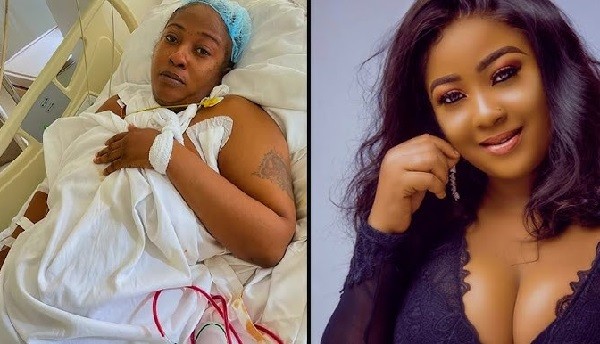
One of the most important parts of Osoba’s recent story was her battle with breast cancer.
In 2024 and 2025, the actress publicly discussed how she discovered a lump in her breast during a self-examination. She said an initial medical assessment did not immediately identify the lump as cancerous, but further tests eventually confirmed the diagnosis.
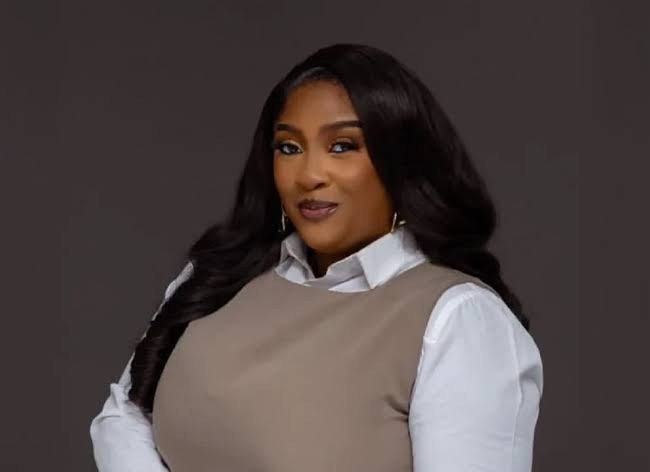
She subsequently underwent surgery and later sought financial assistance for another procedure after doctors reportedly identified remaining cancerous tissue.
In an interview published in 2025, Osoba recalled the emotional impact of the diagnosis and explained that she had undergone further treatment. She also said subsequent medical checks showed that there was no residual tumour and that she had been cleared to conceive.
By August 2025, Osoba had publicly announced her return to acting.
She described the experience as a turning point in her life and said she was returning to the industry stronger and more determined to use her story to inspire others.
That history is significant because, following her death, several reports initially connected her passing to her previous cancer battle.
However, that explanation is disputed.
WHAT WAS FIRST REPORTED ABOUT HER DEATH?
Osoba’s death became public on August 5, 2026, after Alesh Sanni announced her passing.
At the time, details surrounding the circumstances of her death were not immediately clear. Some reports linked the death to her previous health challenges, while other accounts urged caution until the family provided more information.
The uncertainty created room for speculation on social media.
The Awonuga/Osoba family subsequently warned against what it described as false, speculative and unauthorised reports about the actress’ death, asking the public to rely on information from authorised family channels.
While Osoba unquestionably had a history of breast cancer, there has not been sufficient independently verified evidence establishing that cancer caused her death.
THE FIANCÉ’S ACCOUNT
The controversy deepened when Osoba’s fiancé, Prophet Itunu Onadeko, spoke publicly about what he said he had learnt about her final moments.
Onadeko claimed that he was informed by an unidentified caller around midnight that Osoba had died at a police station in the Ikorodu area of Lagos.
He said he did not know the specific police station.
According to his account, Osoba had gone to see a woman identified as Kehinde Osoba shortly before her death. He said the actress had also intended to see him, but he was unavailable because of church activities.
He further rejected claims that Osoba died from complications related to cancer and dismissed allegations of poisoning or maltreatment.
These are claims made by the fiancé, not independently established facts.
That distinction matters, particularly because the circumstances described by different people do not completely align.
YOMI FABIYI CALLS FOR A PROBE
The issue took another turn when actor and human rights activist Yomi Fabiyi called for an investigation into Osoba’s death.
Fabiyi said his organisation, Break The Silence Foundation, had petitioned the Lagos State Commissioner of Police and begun what he described as a legitimate investigation.
According to him, Osoba had reportedly approached the police herself and raised what he described as a criminal matter shortly before her death.
Fabiyi questioned why the matter was not being investigated and called for an autopsy before the actress’ burial.
He argued that the circumstances warranted patience and due process rather than rushing to bury the actress without establishing what happened.
Fabiyi also said his organisation would continue its investigation regardless of whether the burial went ahead.
Again, these are allegations and requests for investigation; they should not be presented as proof that a crime occurred.
CONFLICTING ACCOUNTS
At this point, the story contains several different accounts.
One account points towards Osoba’s previous battle with breast cancer.
Another, from her fiancé, disputes that explanation and alleges that she died at a police station in Ikorodu.
Yomi Fabiyi says Osoba had allegedly reported a matter to the police shortly before her death and wants authorities to investigate.
There were also reports that Osoba’s maternal aunt, Pejuola Ogunesan, gave a different account of the actress’ final moments, alleging that Osoba had spoken about her impending death and that her condition deteriorated before she was taken to the hospital. Reports also noted that these conflicting accounts had not been independently established.
The family, meanwhile, has warned against speculation.
That leaves one unavoidable conclusion:
- There are still unanswered questions.
- And unanswered questions are precisely why an investigation, where warranted, should be allowed to establish the facts.
THE BURIAL THAT DID NOT HAPPEN
The controversy also affected plans for Osoba’s burial.
She had initially been scheduled to be buried on Thursday, August 13, 2026, in Iperu Remo, Ogun State. A funeral service was expected to take place at Saint James Anglican Church before her remains were to be interred at Iperu Remo Cemetery.
However, the family announced a postponement less than 24 hours before the scheduled ceremony.
The announcement came after a candlelight procession and artistes’ tribute night held at LTV 8 in Ikeja.
The family said the burial had been postponed indefinitely because more time was needed to complete arrangements and resolve outstanding matters. It did not specify what those outstanding matters were.
Importantly, the family did not say that the postponement was connected to the investigation demands or the controversy surrounding Osoba’s death.
For now, therefore, the new burial date remains unknown.
THE CHURCH INVESTIGATION
Another layer was added when the Celestial Church of Christ announced an internal investigation following allegations involving Osoba’s fiancé, who is a shepherd within the church.
As of the latest reports reviewed for this story, the church had not released the outcome of that investigation.
The allegations against Onadeko also remain unproven.
This is another area where caution is necessary.
Public accusations, social-media claims and personal accounts are not substitutes for evidence.
WHY THE STORY MATTERS
Beyond the controversy, the death of Tope Osoba has raised a broader question about how quickly Nigerians sometimes move from mourning a public figure to investigating their death on social media.
Within hours of a person’s death, theories can become “facts”, screenshots can become evidence, and accusations can spread far beyond what the available information supports.
Osoba’s case demonstrates why that can be dangerous.
She had genuinely battled breast cancer. She had publicly spoken about that battle. She had undergone treatment and later announced that she had recovered and returned to acting.
But none of that, by itself, establishes the cause of her death.
Likewise, an allegation that someone died at a police station does not establish that the person was killed there.
And a call for an autopsy does not mean that a crime has occurred. Those are matters for evidence.
WHAT HAPPENS NEXT?
For now, the most important questions remain unanswered.
- What exactly happened during Osoba’s final hours?
- Where did she become critically ill?
- Where was she taken for medical attention?
- Was a police report actually made shortly before her death?
- What did that report concern?
- What does the medical evidence say?
- Was an autopsy conducted or will one be conducted?
- And, ultimately, what was the official cause of death?
Those questions cannot responsibly be answered by social media speculation.
They require evidence, medical findings and, where necessary, a proper investigation.
For her family, friends and colleagues, however, there is also a woman behind all these questions.
A woman who danced before she acted.
A woman who built a career in Yoruba Nollywood.
A woman who publicly confronted cancer and returned to the screen believing she had another chapter to live.
And a woman whose death has now left an industry asking for clarity.
As the family mourns and the controversy continues to unfold, the most responsible thing the public can do is allow the facts to emerge.
Tope Osoba’s legacy should not be reduced to the circumstances of her death. But neither should legitimate questions about those circumstances be silenced.
Until there is verified evidence, the cause and circumstances of her death should be treated as unresolved.
FURTHER READING