- Tinubu Excludes Kemi Badenoch from UK State Visit Itinerary
- Badenoch has previously criticized Nigeria publicly, despite her Nigerian heritage
- King Charles highlighted Nigeria’s growing economic ties with Britain
Nigeria’s President Bola Tinubu has begun his two-day state visit to the United Kingdom without including a meeting with Kemi Badenoch, the leader of the Conservative Party. The visit kicked off on Wednesday with a series of high-profile engagements.
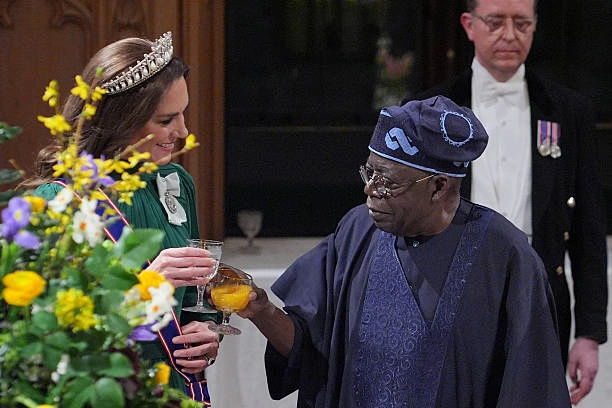
Eko Hot Blog reports that on the first day, Tinubu met with King Charles III and Queen Camilla at Windsor Castle, attended interfaith dialogues, and joined a state banquet where both he and the King delivered speeches.
EDITOR’S PICK
- Blind Man, 59, Arrested Over Alleged Abuse of Wife’s 10-Year-Old Niece
- “We Thought It Was a Collision” Passengers Speak on Train Mishap
- Tinubu Responds to Maiduguri Attacks, Orders Urgent Security Action
A meeting with UK Prime Minister Keir Starmer is scheduled for Thursday. Traditionally, heads of state meet opposition leaders during official visits, but Badenoch was notably absent from these interactions.
Badenoch has previously criticized Nigeria publicly, despite her Nigerian heritage. She has described the country as plagued by corruption and accused the Nigerian police of misconduct. These remarks drew sharp responses from Nigerian officials, including Vice-President Kashim Shettima. Notably, Badenoch shared photos with former U.S. President Donald Trump during his UK visit, but not with Tinubu, even though she attended the banquet in his honor.
During his visit, Tinubu engaged in discussions with national and international interfaith organizations about ongoing violence against Christian communities in Nigeria’s Middle Belt and northern regions. These conversations, which included the First Lady, Oluremi Tinubu, addressed the urgent need for solutions to these crises.
At the state banquet, Tinubu praised the Nigerian diaspora in the UK for its contributions, particularly in healthcare, noting the significant number of Nigerian-trained doctors and nurses serving in the NHS.
He also acknowledged the regional security challenges linked to terrorism in the Sahel, emphasizing the importance of partnership with the UK to maintain stability.
King Charles highlighted Nigeria’s growing economic ties with Britain. The visit, the first Nigerian state visit to the UK in 37 years, aims to strengthen bilateral relations and create mutually beneficial economic partnerships.
Ahead of the visit, both countries finalized major investment agreements expected to generate hundreds of jobs. Tinubu will also witness the signing of a £746 million deal to upgrade Lagos ports in Apapa and Tincan Island.
The visit has drawn attention from human rights organizations, including the Socio-Economic Rights and Accountability Project (SERAP), which called on King Charles to address concerns about Nigeria’s human rights record.
They urged the monarch to encourage reforms, including the withdrawal of lawsuits against journalists and civil society activists.
The Nigerian delegation accompanying Tinubu includes governors from several states, as well as senior federal officials.
While some citizens have criticized the size of the delegation as excessive, others argue the visit could yield long-term economic benefits. Concerns about governance back home arose after reports of deadly attacks in Katsina State while the governor was abroad.
Cultural diplomacy also featured prominently. Tinubu and the First Lady were warmly received by the British royal family, and the delegation viewed items from the Royal Collection, including a Yoruba throne and a manuscript by Nigerian writer Sir Ben Okri. In a gesture of respect for Ramadan, the King adjusted the state visit schedule to allow Tinubu to observe fasting, with the state banquet held later in the evening.
In addition to diplomacy and culture, Nigeria is pursuing an educational partnership with Coventry University to establish a campus in Lagos.
The initiative aims to offer UK-accredited degrees locally, expanding access to higher education in Nigeria while reducing costs for families. The campus, expected to open between the third and fourth quarters of 2026, will provide programs in STEMM, business, and technical and vocational education.
FURTHER READING
- Tinubu Unstoppable in 2027, Lagos APC Replies Momodu
- Tinubu’s Policies Opening Doors for Trade, Investment – FG
- Middle East Conflict Disrupts Travel, FG Begins Evacuation Plans
Click here to watch video of the week