- The Executive Mayor of eThekwini, Cyril Xaba, has ordered the immediate administrative transfer of hundreds of Nigerians and other African nationals from the Durban central business district to a designated refugee reception center for legal documentation screening.
- The sweeping displacement operation follows an aggressive multi-agency verification campaign inside KwaZulu-Natal, where initial immigration audits revealed that only two individuals out of 457 reviewed migrants possessed fully legal residency permits.
- Regional human rights observers and leadership blocks confirmed that state logistics were deployed primarily under mounting pressure from aggressive local anti-foreigner groups, though municipal law enforcement managed to prevent the evacuation from declining into active street violence.
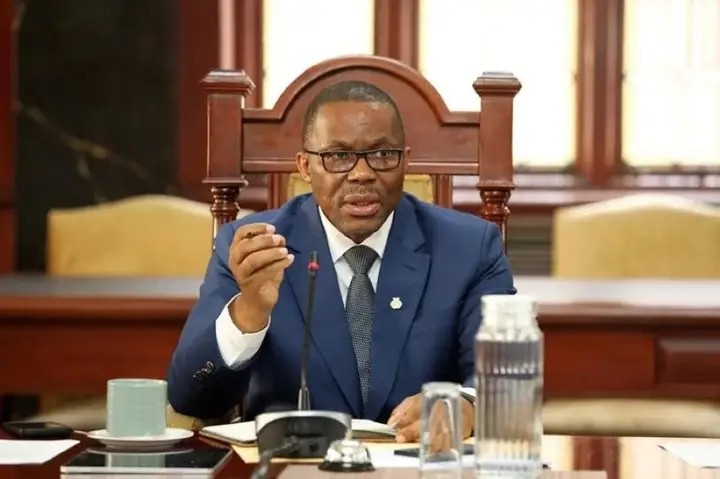
The mayor of eThekwini, Cyril Xaba, on Thursday, ordered the transfer of Nigerians and other African nationals in Durban, South Africa, to a screening centre for legal status.
Moving under heavy municipal police escort, Eko Hot Blog reports that administrative transit vehicles were deployed to systematically evacuate hundreds of displaced foreign nationals from the Diakonia Centre within the Durban CBD.
EDITOR’S PICK
- Fresh Details Emerge on Death of Odomola Monarch, Oba Adebowale Adeshina
- Sanwo-Olu Applauds LASU’s Academic Excellence After JAMB Ranking
- NRC Moves 176,820 Tonnes Of Cargo Through Lagos Ports In Q1
The individuals were moved directly to a secured Department of Home Affairs refugee processing branch to undergo rigorous documentation audits.
Digital footage of the evacuation showing lines of African migrants being guided onto buses sparked widespread alarm and debate across international social platforms on Friday.
The targeted verification exercise represents a major escalation in the continuous anti-foreigner campaigns that have swept across major South African metropolitan areas since the start of the year.
Confirming the details of the relocation, the National President of the Nigerian Union South Africa (NUSA), Smart Nwobi, clarified that municipal authorities executed the mass separation plan primarily to defuse boiling hostilities from local host communities.
Nwobi noted that while the state’s intervention was driven by immense public pressure, tight tactical policing successfully averted a breakdown of law and order during the physical removal process.
Regional security coordinators report that the pressure on Durban administrators intensified significantly following a sweeping audit conducted by the KwaZulu-Natal Department of Home Affairs.
Administrative field logs revealed that out of 457 foreign nationals systematically screened during a targeted regional sweep, an astonishing total of only two migrants possessed valid, fully legal immigration documentation.
This discovery immediately supercharged the demands of local demonstrations, forcing municipal executives to clear out temporal shelters where vulnerable migrants had sought emergency protection from anti-immigration groups.
The general climate of unrest across South African provinces has been further exacerbated by the violent assassination of prominent Mahikeng crime activist and traditional healer, Thato Molosankwe, who was gunned down at his residence in Lomanyaneng village on Wednesday morning.
Although the murder took place in the North West province, local factions have pointed to the tragedy to re-engineer aggressive street protests demanding the immediate removal of foreign elements.
As the South African Police Service (SAPS) hunts for the killers, Nigerian legal representatives operating within Durban confirmed that an unyielding June 30, 2026, expulsion deadline set by local host coalitions remains active, leaving hundreds of West African traders exposed to ongoing displacement threats.