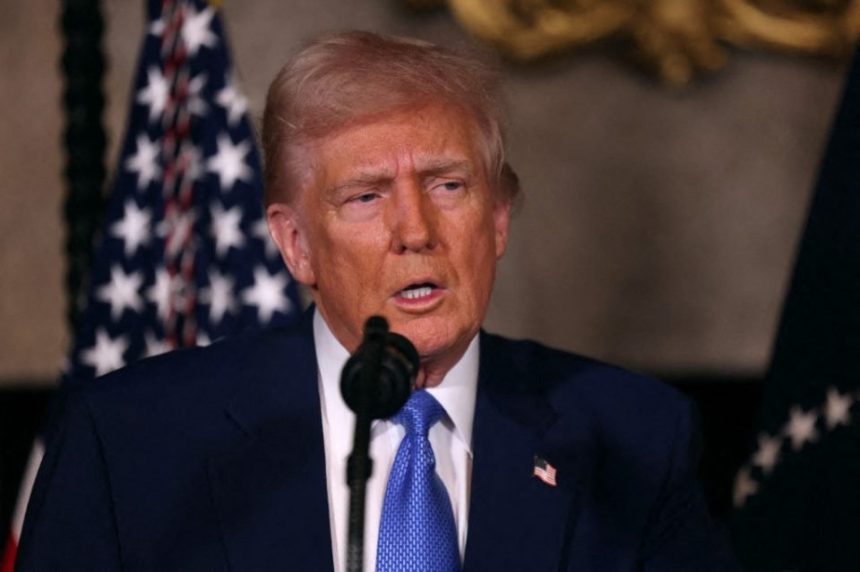
Since United States (U.S.) President Donald Trump redesignated Nigeria as a Country of Particular Concern (CPC) — a classification reserved for nations accused of engaging in or tolerating severe violations of religious freedom under the U.S. International Religious Freedom Act (IRFA) — there have been questions about how the decision may affect the country.
In a post made on his Truth Social account on Friday, Trump claimed that “Christianity in Nigeria faces an existential threat,” alleging that radical Islamists are killing thousands of Christians across the country.
EDITOR’S PICKS
However, a review by many media outlets and other reputable human rights organisations contradict that claim. While Nigeria continues to grapple with widespread insecurity — from banditry and terrorism to farmer-herder clashes — there is no credible evidence of a state-backed or systematic campaign to wipe out Christians.
Nigeria’s violence is driven by a mix of historical grievances, ethnic tensions, economic disparities, religious extremism, and weak governance, not a singular religious war. Both Muslims and Christians have suffered heavy casualties from terrorist attacks and communal violence. Groups like Boko Haram and its offshoots have targeted clerics, mosques, churches, and entire communities, regardless of faith.
Still, some U.S. lawmakers — including Senator Ted Cruz and Representative Miley Moore — have amplified claims of a “Christian genocide,” pushing for sanctions and suspension of arms sales to Nigeria. These pressures appear to have influenced Trump’s decision to revive the CPC designation which he slammed on Nigeria during his first term in office.
What does it mean to be a Country of Particular Concern?
The Country of Particular Concern designation is one of the most serious labels the U.S. government can apply to another nation on religious freedom grounds.
Under the International Religious Freedom Act of 1998, the U.S. Secretary of State can designate any country as a CPC if it is found to have “engaged in or tolerated particularly severe violations of religious freedom.” This includes acts like torture, mass killings, imprisonment, or systemic discrimination based on religion or belief.
Being listed as a CPC subjects the country to enhanced scrutiny by the U.S. government. It signals that Washington views the nation as a major violator of international norms on religious rights and may require diplomatic or economic action.
The designation is both a legal and symbolic measure; it shapes U.S. foreign policy and influences how international partners view the country’s human rights record.
What are the consequences of ‘Country of Particular Concern’ designation?
A CPC designation can trigger a series of diplomatic and economic consequences. The U.S. government is required by law to take one or more actions in response, ranging from direct engagement to punitive measures.
Possible consequences include diplomatic pressure, such as formal protests or demands for policy reforms, economic or trade sanctions, including restrictions on military assistance, arms sales, or development aid, visa bans for government officials implicated in religious persecution, and public condemnation, which can tarnish the country’s international image and deter foreign investment.
However, the U.S. Secretary of State may waive punitive measures if they are deemed contrary to America’s national interests, for instance, if Nigeria’s cooperation is vital in regional security or counterterrorism. However, there is no indication that the U.S. is currently relying on Nigeria’s cooperation on any project. Notably, after the first Trump administration designated Nigeria a CPC on December 2, 2020, it announced a waiver of sanctions that usually accompany such a move. The state department said the decision was made in the “important national interest of the United States.”
The designation also carries reputational costs. It portrays Nigeria as a country hostile to religious freedom, potentially straining relations with Washington and international donors.
Nigeria rejects accusations of ‘Christian genocide’
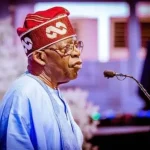
Meanwhile, in a statement on Saturday, President Bola Tinubu rejected the accusations of a Christian genocide in Nigeria, declaring that Nigeria stands firmly as a democracy governed by constitutional guarantees of religious liberty.
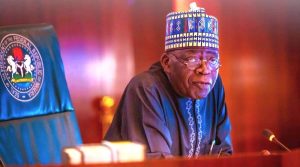
“The characterisation of Nigeria as religiously intolerant does not reflect our national reality, nor does it take into consideration the consistent and sincere efforts of the government to safeguard freedom of religion and beliefs for all Nigerians,” Tinubu said.
Nigeria stands firmly as a democracy governed by constitutional guarantees of religious liberty.
Since 2023, our administration has maintained an open and active engagement with Christian and Muslim leaders alike and continues to address security challenges which affect… pic.twitter.com/mRb9IqKMFm
— Bola Ahmed Tinubu (@officialABAT) November 1, 2025
Similarly, the Minister of Foreign Affairs, Yusuf Tuggar, insisted that there is no genocide in Nigeria.
“For the avoidance of any doubt, and out of respect for all the victims and survivors around the world of this unique and appalling crime against humanity, let the record show that there is no genocide, now or ever, in Nigeria,” he wrote on X.
For the avoidance of any doubt, and out of respect for all the victims and survivors around the world of this unique and appalling crime against humanity, let the record show that there is no genocide, now or ever, in Nigeria. pic.twitter.com/4XRyWmwFke
— Hon. Yusuf Maitama Tuggar (@YusufTuggar) November 1, 2025
FURTHER READING
For Nigerians, the designation may have little immediate effect on daily life, but it highlights how external narratives — often politically charged — can shape international policy. While insecurity in Nigeria is real and tragic, framing it purely as religious persecution risks oversimplifying a complex national crisis.
Philip Ibitoye is a Special Correspondent with EKO HOT BLOG. Click here to find daily analysis and critical insight on trending issues in Lagos and other parts of Nigeria.
Click here to watch the video of the week below: