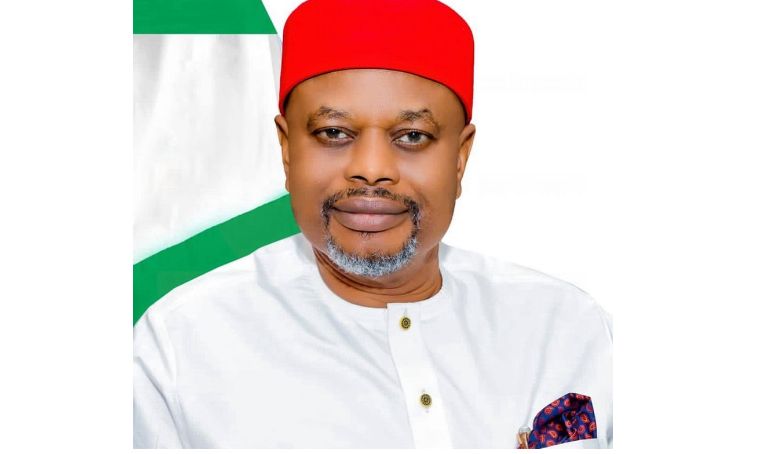
The resignation of Uche Nnaji, the Minister of Innovation, Science and Technology, marks a significant moment in Nigeria’s long struggle with public accountability.
Nnaji’s exit, accepted by President Bola Tinubu on Tuesday follows months of controversy surrounding allegations that he forged his university and National Youth Service Corps (NYSC) certificates, claims he has now indirectly confirmed.
EDITOR’S PICKS
The revelations stem from a two-year investigation by PREMIUM TIMES, which found that both the degree certificate and NYSC discharge certificate Nnaji submitted to the Presidency and Senate during his 2023 ministerial screening were forgeries. According to the investigation, Nnaji claimed to have graduated from the University of Nigeria, Nsukka (UNN) in 1985 with a Bachelor’s degree in Microbiology/Biochemistry. However, UNN records and statements from top officials later showed that he never completed his studies and was never issued any certificate.

In court filings obtained by PREMIUM TIMES, Nnaji himself admitted that the university “never issued him a certificate,” contradicting the documents he presented for his ministerial appointment. The university’s Vice-Chancellor, Simon Ortuanya, also confirmed in a letter dated October 3, 2025, that Nnaji was not among UNN’s 1985 graduates.
The minister’s resignation letter thanked President Tinubu “for allowing him to serve Nigeria,” while blaming his troubles on political blackmail. But the facts, as established by documentary evidence and his own court statements, suggest otherwise — a clear breach of integrity and a violation of the public trust.

When Accountability Should Be the Rule, Not the Exception
While Nnaji’s resignation is an important step, it should not be viewed as extraordinary. In mature democracies, public officials accused of wrongdoing or ethical violations are expected to step aside, often even before investigations conclude. Nigeria must begin to normalise such accountability.
Resignation in the face of proven misconduct is not a punishment; it is an acknowledgment of public responsibility. Allowing individuals accused of forgery, corruption, or abuse of office to remain in power erodes citizens’ confidence in governance and institutions. Every act of dishonesty at the top normalises impunity below.
The principle is simple: public office is a position of trust, not entitlement. When that trust is broken, stepping down should be the minimum response, not the rare exception.
Beyond Resignation: The Question of Justice
Section 467 of Nigeria’s Criminal Code Act clearly defines forgery as a felony, punishable by up to three years’ imprisonment. It states:
“Any person who forges any document, writing, or seal, is guilty of an offence which, unless otherwise stated, is a felony, and he is liable, if no other punishment is provided, to imprisonment for three years.”
This law does not exempt ministers or political elites. Having resigned, Nnaji should not be allowed to quietly fade from public scrutiny. If his documents were indeed forged, as evidence overwhelmingly suggests, the logical next step should be criminal prosecution.
The resignation should not be treated as the end of accountability. It should mark the beginning of justice. The question now is: Will Uche Nnaji face prosecution next? Because that is exactly what should happen. Accountability must not stop at resignation.
Philip Ibitoye is a Special Correspondent with EKO HOT BLOG. Click here to find daily analysis and critical insight on trending issues in Lagos and other parts of Nigeria.
Click here to watch the video of the week below: