- Top administrative officials have confirmed that negotiators from the United States and Iran have established an agreement in principle on core diplomatic tenets, mapping a path toward a formal cessation of the regional conflict.
- Under the emerging framework layout, Tehran has broadly committed to a structured process targeting the disposal and dilution of its highly enriched uranium (HEU) stockpiles, alongside a pledge never to pursue weapons-grade nuclear development.
- The provisional Memorandum of Understanding (MoU) details a 60-day ceasefire extension during which the heavily blockaded Strait of Hormuz will be gradually demined and reopened to revive disrupted international energy corridors.
A senior Trump administration official said that the U.S. and Iran are working towards a finalized agreement.
Formally disclosed by diplomatic correspondents on Sunday evening, May 24, 2026, Eko Hot Blog reports that the breakthrough indicates that Iranian envoys have in principle agreed to a deal that would include the disposal of highly enriched uranium, establishing a broad commitment on foundational stabilization principles.
EDITOR’S PICK
- Fresh Details Emerge on Death of Odomola Monarch, Oba Adebowale Adeshina
- Sanwo-Olu Applauds LASU’s Academic Excellence After JAMB Ranking
- NRC Moves 176,820 Tonnes Of Cargo Through Lagos Ports In Q1
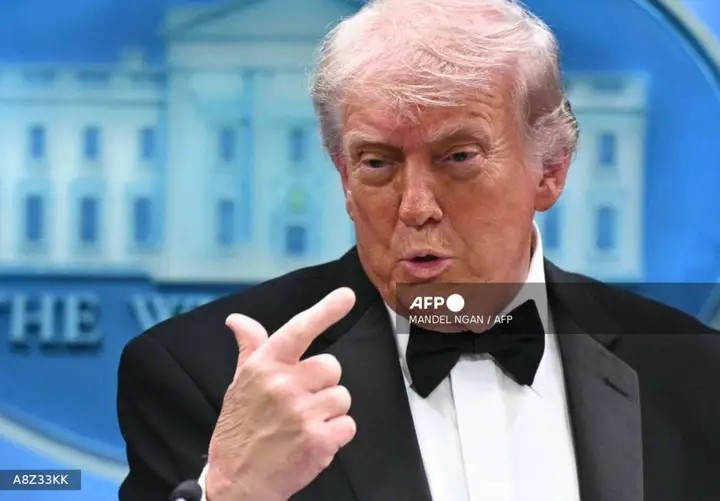
Taking to TruthSocial to manage public expectations, President Donald Trump confirmed that high-level backchannel negotiations between Washington and Tehran are ongoing, though he explicitly noted that he had instructed his technical representatives “not to rush into a deal” because “time is on our side.”
The sudden diplomatic momentum crystallized following a comprehensive multilateral telephone conference between the White House and prominent Middle Eastern heads of state over the weekend.
Trump noted that a comprehensive peace pact had been “largely negotiated,” with final procedural aspects and fine-print clauses currently being ironed out by special envoys.
Both the executive desk and Secretary of State Marco Rubio indicated that a formal joint announcement detailing the exact legal parameters of the memorandum would be released shortly to ease the geopolitical gridlock that has upended international trade indexes for several months.
According to close administrative sources, the latest framework proposal features a synchronized process designed to immediately reopen the Strait of Hormuz to restore untolled commercial shipping lanes.
In exchange for Tehran demining the strategic waterway, the United States has agreed to lift its maritime blockade on domestic Iranian trade ports and issue selective, high-volume sanctions waivers allowing the Islamic Republic to freely sell crude oil on the global market.
Furthermore, the draft guidelines stipulate the partial unfreezing of up to $25 billion in Iranian state assets currently locked across foreign banking accounts, with comprehensive sub-negotiations regarding long-term nuclear enrichment ceilings scheduled to continue over the next 60 days.
Despite the optimistic tone maintained by western officials, domestic media entities inside Iran have continued to project a highly guarded narrative regarding the final terms of the territorial compromise.
The semi-official Fars News Agency, which maintains close structural ties to the Islamic Revolutionary Guard Corps (IRGC), published an early morning advisory stating that even in the event of a finalized bilateral agreement, the physical management, transit scheduling, and security oversight of the Strait of Hormuz will remain strictly under sovereign Iranian jurisdiction.
While international oil prices hit a sharp two-week low in response to the peace breakthrough, the conflicting statements over waterway sovereignty indicate that key logistical friction points must still be reconciled before a final treaty can be officially certified.