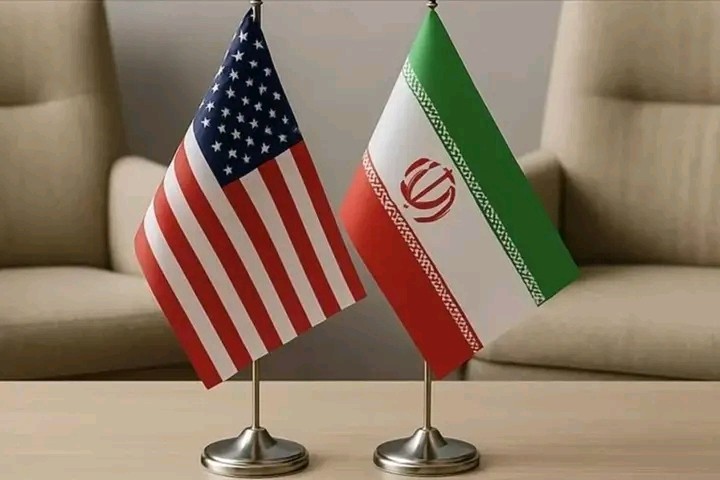
- Just a month after signing a peace memorandum intended to end the war that began in February 2026, the United States and Iran have resumed direct, heavy hostilities across the Middle East.
- Iran has accused US forces of striking key civilian infrastructure including airports, railway stations, and bridges, prompting Tehran to retaliate by launching massive strikes against US assets and Gulf allies.
- Ongoing battles over the strategic Strait of Hormuz have triggered a strict US maritime blockade, driving up global energy prices as commercial vessel transit grinds to a near-halt.
The United States and Iran traded severe military attacks on Friday, with Tehran aggressively targeting American assets across the Middle East in the largest escalation of violence since the two adversaries returned to outright war.
Eko Hot Blog reports that this sudden, massive wave of hostilities erupts just a month after both nations agreed to a tentative memorandum of understanding aimed at ending the bloody conflict that first broke out in February 2026.
EDITOR’S PICK
- Why Africa Still Cannot Win the FIFA World Cup Despite Its World Class Talent
- Man Allegedly Slits Father’s Throat, Mutilates Body in Anambra
- Lagos Court Convicts Director, Company Over N822.4m Fraudulent Conversion
Instead of de-escalation, both sides have spent the last six days exchanging heavy missile and drone strikes across the region.
The Iranian government accused US forces of targeting civilian infrastructure overnight.
State media reported at least eight dead and 20 injured after airstrikes allegedly hit a domestic airport, a railway station, and two key bridges.
While Washington officials have declined to comment directly on these specific targets, independent reports suggest an intentional expansion of American operations aimed at degrading Iranian military and logistics networks.
Tehran had previously warned that any strikes on its domestic facilities would make regional infrastructure fair game.
Following through on that threat, Iran’s Revolutionary Guards confirmed they targeted two US radar installations in Oman, as well as the Al-Tanf military base in Syria.
The fallout from the exchange has rippled across neighboring states.
The Jordanian military reported shooting down three Iranian missiles over its airspace, while coalition forces in Erbil, the capital of Iraq’s Kurdistan region, intercepted eight explosive-laden drones.
Additionally, exiled Kurdish opposition groups in Iraq claimed eight of their members were killed in separate Iranian strikes.
At the heart of the reignited war is a fierce battle for control over the strategic Strait of Hormuz.
Iran claims sovereign authority over the strait, a critical global chokepoint for oil and gas, and has repeatedly disrupted commercial traffic to enforce its demands.
In response, the US has reinstated its strict maritime blockade on Iranian ports. Tensions peaked overnight when a commercial oil tanker was struck by an unknown projectile off the coast of Oman.
Diplomatic mediators are working desperately to bring both sides back to the negotiating table.
Following a high-level summit in Shanghai, the foreign ministers of China and Pakistan issued a joint statement calling for an immediate ceasefire and the resumption of diplomatic talks.
However, the battlefield continues to widen. US allies in the Gulf reported taking fire on Friday, with Qatar and Kuwait confirming they intercepted incoming missile attacks.
In Bahrain, state media reported that Tehran targeted US helicopters and aircraft at a local air base, prompting local authorities to sound sirens and urge citizens to seek immediate shelter.
Since the fighting resumed, Iran’s Health Ministry reports that at least 38 people have been killed and over 400 injured within the country. Despite the mounting toll, Iranian military leaders remain defiant, declaring they will “never back down” over their claim to the Strait of Hormuz.
Meanwhile, the White House has stated that the administration will hold Tehran fully accountable for violating the terms of the previous truce, warning that military pressure will only intensify if diplomatic alternatives are rejected.