- Gattado stressed that insecurity remains the biggest barrier to food production
- Ajenifuja emphasized that agriculture requires collective action
- Ibrahim stressed that farmers must adopt modern agricultural knowledge systems, improve productivity
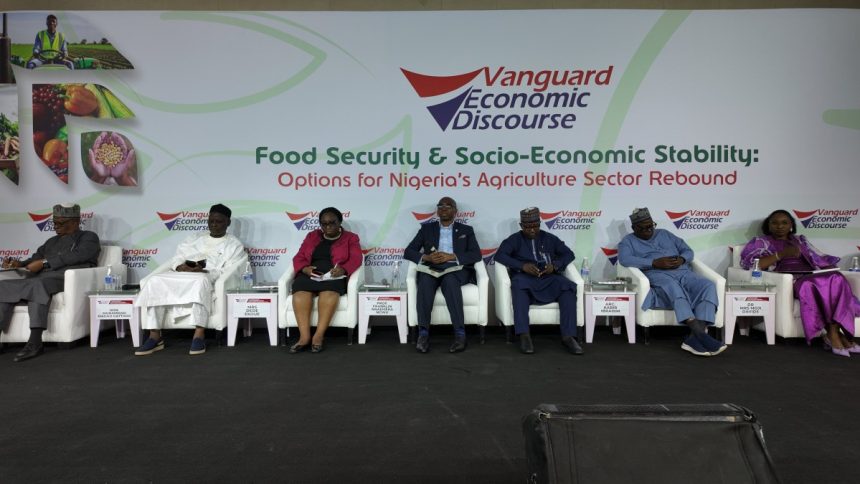
Agriculture experts, policymakers, and industry leaders have called for urgent, coordinated action to address Nigeria’s food security challenges, as discussions took center stage at the Vanguard Economic Discourse themed “Food Security and Socio-Economic Stability: Options for Nigeria’s Agriculture Sector Rebound.”
Eko Hot Blog reports that the panel session, moderated by Professor Franklin Nnaemeka of Lagos Business School, brought together key stakeholders who offered practical solutions to boost agricultural productivity, improve affordability, and strengthen collaboration across all levels of government.
EDITOR’S PICK
- Benue Mortician Arrested for Using Corpse Part as Walking Stick
- Baba Yusuf: Bandits May Reach National Assembly
- PDP Asks INEC To Withdraw Recognition Of Anyanwu As National Secretary
Responding to a question on what the government can achieve within three months, the President of the All Farmers Association of Nigeria, Hon. Muhammad Magaji Gattado, stressed that insecurity remains the biggest barrier to food production.
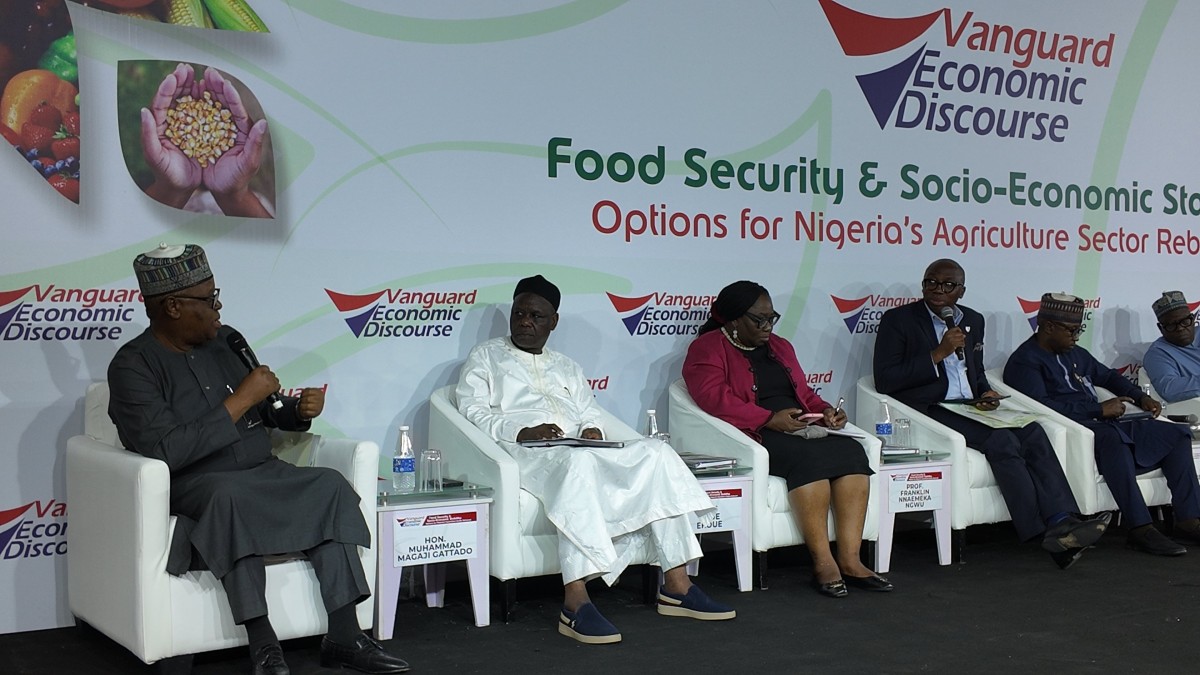
He urged the Federal Government to establish a conflict prevention committee rather than reactive conflict resolution structures, noting that proactive measures would protect farmers and farmlands.
According to him, widespread banditry and insurgency have forced many farmers off their land, significantly reducing output. Gattado explained that in states like Borno, farming activities have dropped drastically due to insecurity, adding that improved safety would immediately encourage farmers to return to their fields and boost food supply.
On collaboration with subnational governments, the Minister of Agriculture and Food Security, Senator Abubakar Kyari, represented by Engineer Maruf Ajenifuja, highlighted ongoing partnerships between the federal and state governments.

He revealed that key interventions, including the distribution of agricultural inputs and the development of Special Agro-Industrial Processing Zones, are being implemented through joint efforts. These initiatives aim to connect farmers to markets, improve infrastructure, and attract private sector investment.
Ajenifuja emphasized that agriculture requires collective action, noting that states control land resources and must align with federal policies to achieve meaningful results.
Speaking on culture, knowledge, and innovation, Arc. Kabir Ibrahim, founder of Kebram Farms Ltd, argued that Nigeria must move beyond primary production and focus on value addition.
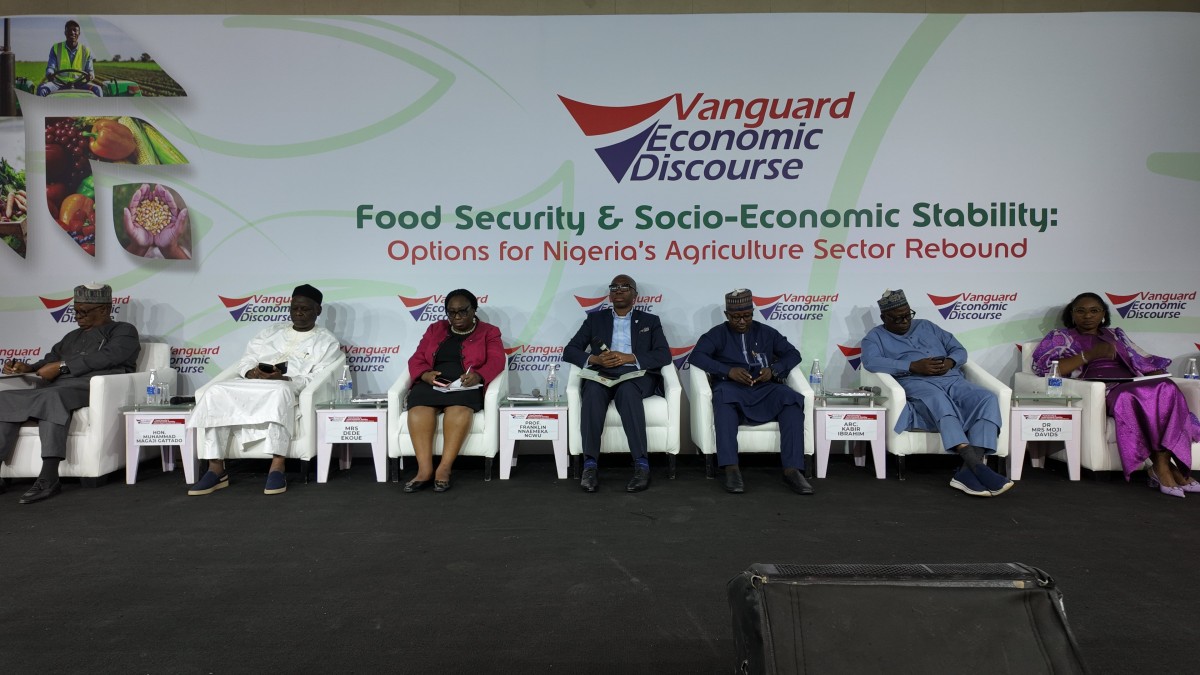
He pointed out that countries like the Netherlands import raw agricultural products from Nigeria, process them, and export finished goods at higher value, a practice he said deprives Nigeria of jobs and revenue.
Ibrahim stressed that farmers must adopt modern agricultural knowledge systems, improve productivity, and embrace agribusiness strategies to make farming profitable and sustainable.
Dr. Moji Davids, Group Managing Director of Xtralarge Farms and Resort, offered a reform-focused perspective when asked what she would do differently if appointed Minister of Agriculture.
She advocated for a shift toward youth and women inclusion, emphasizing the need to groom young people into agribusiness leaders rather than job seekers.
Davids also called for policies that prioritize food affordability and grassroots production, noting that transforming agriculture requires not just funding but a mindset change that encourages innovation, entrepreneurship, and local food systems.
From the development partner angle, Mrs. Dede Ahoefa Ekoue, Country Director of the International Fund for Agricultural Development, highlighted the importance of sustained investment and partnerships.
She noted that international organizations are working closely with Nigeria to support rural farmers, improve access to finance, and strengthen agricultural value chains.
Ekoue emphasized that long-term food security depends on inclusive policies that empower smallholder farmers and improve rural livelihoods.
The issue of banning food imports also sparked debate during the session, with Hon. Gattado cautioning against outright bans without first addressing domestic production challenges.
He maintained that while boosting local production is essential, Nigeria must ensure that farmers are supported with security, inputs, and infrastructure before restricting imports, to avoid worsening food shortages and price hikes.
Across the discussions, panelists agreed that Nigeria’s food security crisis is not due to lack of food alone, but largely driven by poor access, insecurity, and weak purchasing power.
They called for immediate, coordinated action involving government, private sector, and international partners to rebuild the agricultural sector, improve productivity, and ensure that food becomes both available and affordable for Nigerians.
The discourse ended with a strong consensus that agriculture remains central to Nigeria’s economic stability and requires decisive reforms to unlock its full potential.
FURTHER READING