- He described Kwankwaso as a seasoned political figure whose views on key national issues
- He also identified insecurity as one of the most urgent problems facing the country
Presidential candidate of the Nigeria Democratic Congress (NDC), Peter Obi, has assured Nigerians that his proposed administration would embrace collective leadership, with former Kano State Governor Rabiu Kwankwaso playing a central role in decision-making if they win the 2027 presidential election.
Eko Hot Blog gathered that Obi made the pledge on Saturday after receiving the party’s presidential ticket and unveiling Kwankwaso as his vice-presidential nominee.
EDITOR’S PICK
- APM Endorses Makinde For 2027 Presidency, Targets PDP Members In Osun
- Eredo Monarchs Suspend Ojude Oba Celebrations in Honour of Late Omola of Odomola
- “Do Not Cheat Back”—Actress Eriata Ese Warns Women Against Revenge Infidelity
Addressing party supporters, the former Anambra State governor said his administration would move away from a system where deputy leaders are largely excluded from governance, stressing that his running mate would be actively involved in shaping government policies and programmes.
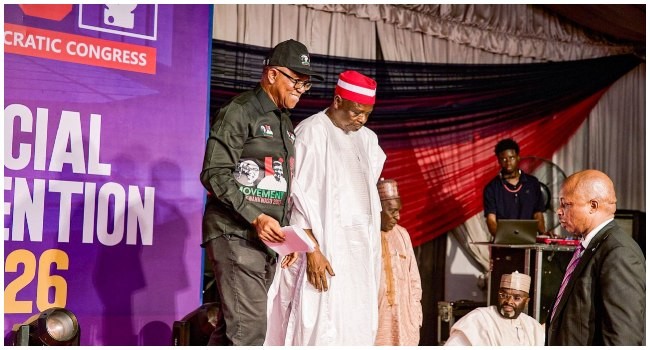
According to him, effective governance requires collaboration, consultation and shared responsibility among leaders entrusted with public office.
Obi explained that both leaders would work closely together to implement policies aimed at improving the country, adding that major decisions would be reached through broad consultations rather than unilateral actions.
He described Kwankwaso as a seasoned political figure whose views on key national issues, particularly education and security, align with his vision for Nigeria.
The NDC candidate said their partnership was built on a common desire to tackle the country’s pressing challenges and create opportunities for citizens across all regions.
While accepting the party’s nomination, Obi reiterated his belief that Nigeria could achieve meaningful progress through accountable leadership, strong institutions and a renewed commitment to national development.
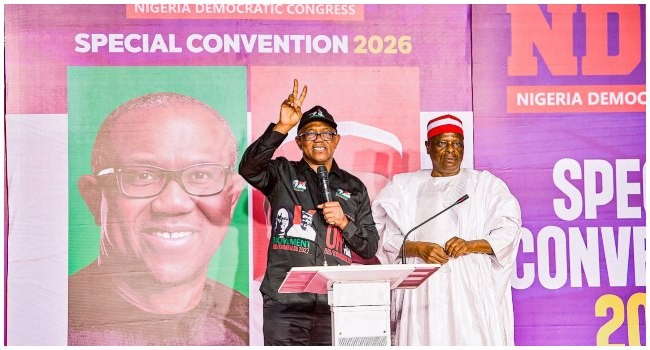
He also identified insecurity as one of the most urgent problems facing the country, promising to prioritise the protection of lives and property if elected
Obi noted that Nigeria once enjoyed a strong reputation for peacekeeping and military professionalism across Africa, expressing confidence that the country could restore that standing through purposeful leadership and strategic reforms.
He added that strengthening national unity, rebuilding public trust and improving security would remain key objectives of an Obi-Kwankwaso administration.
The former governor concluded by urging Nigerians to remain hopeful, insisting that the country’s future depends on leaders who are willing to place national interest above personal ambition.
FURTHER READING