- Aggressive rioters have burned down critical isolation tents at Rwampara hospital in the northeastern Ituri province, the core epicenter of the Democratic Republic of Congo’s latest lethal Ebola outbreak.
- The violent unrest erupted following the death of a 24-year-old patient when medical administrators, citing severe contamination risks, refused to release the infected body to relatives demanding a traditional communal funeral.
- As local resistance scales up over restrictions targeting highly infectious mourning rituals, armed soldiers have been heavily deployed across rural cemeteries to forcefully escort medics and guarantee safe, secure burials.
Rioters have burnt down hospital tents in a hotspot of the Democratic Republic of Congo’s Ebola epidemic, as many Congolese wrestle with fear, anger and confusion over the latest deadly outbreak.
Eko Hot Blog reports on the hastily arranged burials of the victims suspected to have been killed by the viral haemorrhagic fever have been met with profound suspicion across the conflict-ridden Ituri province, where rural communities harbor a deep-seated distrust of state interventions.
EDITOR’S PICK
- Fresh Details Emerge on Death of Odomola Monarch, Oba Adebowale Adeshina
- Sanwo-Olu Applauds LASU’s Academic Excellence After JAMB Ranking
- NRC Moves 176,820 Tonnes Of Cargo Through Lagos Ports In Q1
With local anxieties and security vulnerabilities running incredibly high, the Congolese military has been officially deployed to secure medical zones and prevent grieving families from forcefully seizing highly contagious corpses.
The flashpoint at the Rwampara medical facility on Thursday, May 21, 2026, was triggered by the passing of a young man who was the son of an active soldier.
Hospital administrators clarified that handing over the deceased for customary burial rites was completely impossible given that the virus is transmitted directly through prolonged physical contact and contaminated bodily fluids.
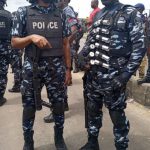
Refusing to accept the safety rules, an angry mob, which included some uniform-wearing soldiers, torched the hospital’s specialized isolation and triage setups, leaving only charred husks behind.
The riot was only brought to a halt after armed guards fired warning shots into the air to disperse the crowd, while a clinical nurse suffered injuries from stones hurled during the chaos.
The ongoing emergency represents the 17th Ebola outbreak documented in the Central African nation, and the World Health Organization (WHO) estimates that the current crisis has already claimed more than 177 lives.
Compounding the medical emergency is the fact that the Bundibugyo strain driving this particular spread currently has no approved vaccine or specific therapeutic cure, forcing frontline workers to rely strictly on strict containment, early isolation, and rapid contact tracing.
Despite the clear epidemiological danger, community leaders lament that many rural families continue to touch infected corpses and organize heavily populated mourning rituals, dismissing Ebola as an imaginary disease fabricated by a government that has historically neglected the restive province.
The severe institutional deficits within Ituri’s healthcare network continue to escalate the internal risk of cross-contamination.
While public health campaigns have successfully educated populations in adjacent towns like Mongbwalu on the extreme dangers of touching the dead, clinicians at Rwampara warn that the destruction of their isolation units leaves the region highly exposed.
Lacking designated triage structures, suspected hemorrhagic fever cases are currently being mixed directly into standard hospital wards alongside general patients.
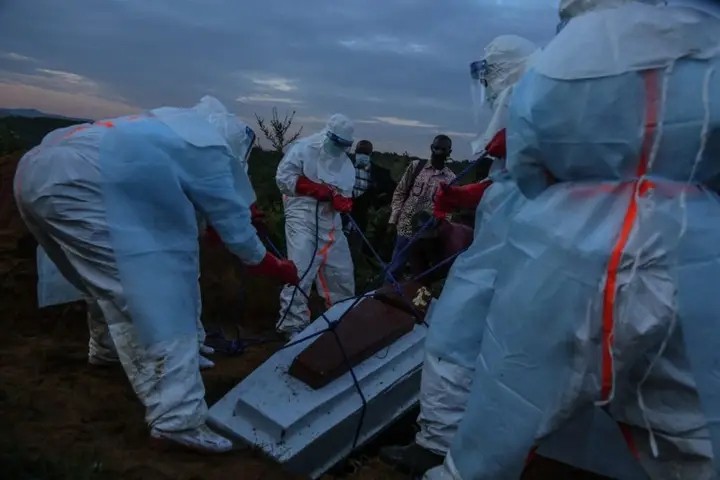
Surrounded by heavily armed military escorts, healthcare workers in full personal protective equipment (PPE) continue to execute hurried, sterilized burials at the edge of the green hills, while grieving relatives watch from afar, trapped between intense cultural heartbreak and state-enforced biosecurity.