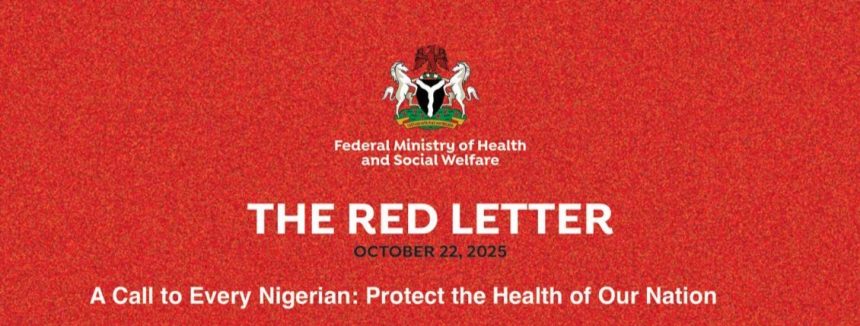
In a rare and symbolic move, Nigeria’s Coordinating Minister of Health and Social Welfare, Prof. Muhammed Ali Pate, has issued what he calls “The Red Letter,” a nationwide appeal urging citizens to take ownership of how federal health funds are managed at the community level.
The message, released on Wednesday, is both a policy statement and a moral challenge, asking Nigerians to hold their local health facilities accountable for billions in new funding.
EDITOR’S PICKS
EKO HOT BLOG gathered that the letter follows the release of ₦32.9 billion through the Basic Health Care Provision Fund (BHCPF), marking the third round of disbursements this year. But its message goes beyond numbers: it calls for vigilance, participation, and transparency in the way these funds are used.
The Red Letter: A National Call to Protect Our Health
📌“The Red Letter” from the Coordinating Minister of Health and Social Welfare, @muhammadpate , is more than an announcement. It’s a call to every Nigerian to take ownership of our nation’s health.
📌Through this message,… pic.twitter.com/97VCla3egz
— Federal Ministry of Health, NIGERIA (@Fmohnigeria) October 22, 2025
A Shift From Abuja to the Grassroots
Prof. Pate’s message marks a deliberate shift from centralised control to community-driven accountability. The minister stressed that the ₦32.9 billion “is not sitting in Abuja,” but has already been transferred into the bank accounts of primary health care facilities in every ward across Nigeria.
The goal is to make every community a partner in health spending, not a passive beneficiary. “It is your clinic’s money. It is your community’s chance. It is your country’s promise,” the minister wrote.
However, this shift also places a heavier burden on citizens to ensure that the funds are not misused. Communities are now expected to monitor how each clinic manages the money, ensuring it delivers tangible improvements in medicines, safe births, and infrastructure.
Citizens as Watchdogs, Not Spectators
A key message in “The Red Letter” is that health financing transparency cannot work without community oversight. The minister challenged Nigerians to no longer stand aside while local committees and health officials make spending decisions unchecked.
“The health committee in your ward, your traditional leaders, your women’s and youth groups, your faith-based organisations, all of you are meant to sit together, decide together, and spend together,” the letter reads.
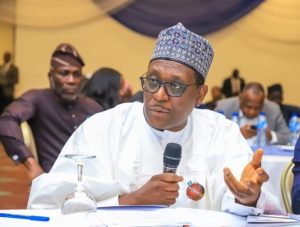
According to Pate, communities often stand aside and their members and institutions do not ask how the money is used, or if it reaches the people it was meant for. “When that happens, silence becomes a loss,” he cautioned, urging citizens to “stand up, join the committee, demand openness, and celebrate progress.”
Health entrepreneur Dr. Neto echoed this sentiment in a public commentary, calling for immediate citizen engagement at every level of Nigeria’s health system. According to him, “The Nigerian federal government has just released ₦33 billion to primary healthcare centres, state health insurance schemes and state emergency management committees. This money will be lost if you don’t actively monitor it.”
He outlined specific steps for citizens:
- For PHCs: visit phc.nphcda.gov.ng to find your local facility, go there, request spending reports, and join the health council.
- For state health insurance schemes: check the WellaHealth report for details on your state’s funding and demand transparency from officials.
- For emergency care: contact your state’s Ministry of Health to ask about the emergency committee, ambulance purchases, and call centres. Test the emergency number regularly.
“If you and I do this today and follow up every day, our healthcare will be excellent in no time,” Dr. Neto warned. “If we don’t, it’s only a matter of time before Nigeria will happen to us and we will lament, but it will be too late.”
The Nigerian federal government has just released N33 billion to primary healthcare centres, state health insurance schemes and state emergency management committees.
This money will loss if you don't actively monitor it.
for PHCs – go to https://t.co/7pN0KII2YW find your… https://t.co/qX4f2HRWXY
— Neto (@docneto) October 22, 2025
A Shared Responsibility
The BHCPF, created under the 2014 National Health Act, is the backbone of Nigeria’s efforts to rebuild its Primary Health Care (PHC) system, the first line of defence for most Nigerians.
Yet, years of underfunding, weak monitoring, and corruption have often blunted its impact. Pate’s letter acknowledges this reality but also places responsibility squarely on citizens. Government, he said, is “trusting you to help safeguard that spending.”
This shared model of accountability means local vigilance must complement federal oversight. Communities are urged to track expenditures, verify purchases, and ensure that funds translate into medicine, safe births, better infrastructure, and lives saved, not waste and silence.
If communities heed the call — visiting clinics, asking questions, and monitoring performance — the ₦32.9 billion could strengthen thousands of primary health centres nationwide. If not, the health minister’s warning may prove prophetic: that public silence can quietly undo progress.
FURTHER READING
“Together, we plan. Together, we spend. Together, we protect life,” Pate wrote. The challenge now is whether Nigerians will turn those words into action.
Philip Ibitoye is a Special Correspondent with EKO HOT BLOG. Click here to find daily analysis and critical insight on trending issues in Lagos and other parts of Nigeria.
Click here to watch the video of the week below: