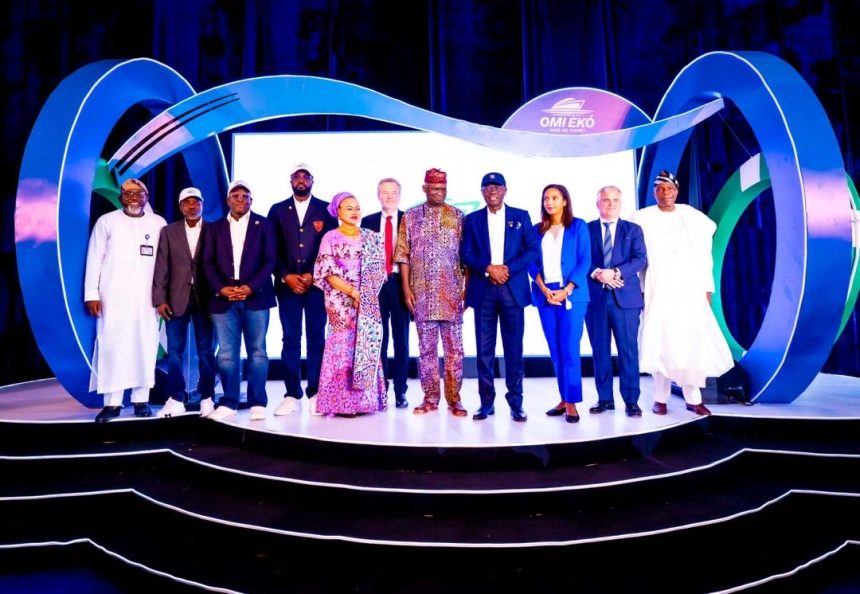
Lagos, Nigeria’s bustling economic hub and Africa’s most populous city, is taking another bold step to tackle one of its most persistent challenges: mobility.
Governor Babajide Sanwo-Olu on Friday launched the “Omi Eko” project, an ambitious initiative designed to transform water transportation and advance the state’s emerging blue economy.
EDITOR’S PICKS
“Omi Eko,” a Yoruba phrase meaning “the water of Lagos,” aims to redefine how Lagosians move, work, and interact with their environment.
With the unveiling of 78 new electric ferries, supported by a robust network of digital ticketing systems, intelligent terminals, and safety upgrades, the project signals a strategic shift towards a cleaner, more efficient, and integrated transport ecosystem.
A Vision Rooted in Lagos’ Water Heritage
At the official launch, Sanwo-Olu described “Omi Eko” as more than a transport scheme. He called it a declaration of Lagos’ commitment to sustainable and modern urban mobility. The governor reminded residents that Lagos’ story has always been intertwined with water, tracing its growth and identity to its coastal origins.
“Our story as Lagosians has always been written on water,” Sanwo-Olu said. “But history is not just what we inherit; it is also what we choose to create. Today, we are launching not just a project but a vision to redefine urban movement.”
The initiative aligns with the state’s THEMES Plus agenda, which integrates road, rail, and water transport development. It complements earlier milestones such as the Lagos Blue and Red Line Rail projects and the Waterways Monitoring and Data Centre — Africa’s first — aimed at improving security and operational efficiency on Lagos’ waters.
Building a Multimodal Future
By introducing a modern ferry system powered by clean energy, Lagos seeks to ease traffic congestion on its crowded roads, reduce carbon emissions, and offer residents a safer and faster alternative to road travel. Sanwo-Olu emphasised that the project combines “technology, smart design, and environmental consciousness to optimise the city’s waterways.”
“Our goal is simple but profound — to make movement seamless, to make the air cleaner, and to transform our waterways into channels of prosperity,” the governor said. “Water is life, water is connectivity, and water is the soul of Lagos. It nourishes us, shapes our identity, and carries us into the future.”
If fully realised, the project could provide thousands of commuters with a daily alternative to gridlocked highways, reduce travel times between the island and mainland, and expand commercial activities around ferry terminals and waterfronts. It also signals Lagos’ gradual transition toward electric-powered public transport, consistent with global climate and sustainability goals.
Partnerships and Global Support
The “Omi Eko” project has attracted strong international backing. The French Development Agency (AFD) and the European Investment Bank (EIB) are jointly providing €300 million in loans, while the European Union (EU) is contributing a €60 million grant. These partnerships, according to France’s Minister for Europe and Foreign Affairs, Jean-Noël Barrot, demonstrate confidence in Lagos’ vision for sustainable urban growth.
“Through Omi Eko, Nigeria, with the support of France and the EU, is leading the way in putting innovative and sustainable mobility at the service of people’s needs,” Barrot said.
The EU ambassador to Nigeria, Gautier Mignot, described the initiative as a benchmark for Global Gateway projects across Africa, noting that Lagos and Nigeria are “spearheading the execution of sustainable connectivity in the ECOWAS region.”
Continuity and Governance
Former Lagos governor Babatunde Fashola also hailed the initiative as a continuation of a decades-long journey toward an integrated transport system.
He credited Sanwo-Olu for sustaining the state’s vision of linking roads, rails, and waterways, while commending the leadership of younger technocrats like Damilola Emmanuel, Managing Director of the Lagos State Waterways Authority (LASWA).
“Young people who have been entrusted with public responsibility have shown commitment and competence,” Fashola said, adding that the partnership between Lagos and France “reflects long-standing trust and results-oriented cooperation.”
What Lies Ahead
For Lagosians, “Omi Eko” could become more than just a transport solution — it represents a blueprint for balancing mobility, sustainability, and economic growth. With its emphasis on electric ferries, digitised services, and environmental management, the project has the potential to open up new waterfront economies, create jobs in maintenance and logistics, and improve the overall quality of life in Africa’s most crowded megacity.
FURTHER READING
Yet, as with all ambitious urban projects, success will depend on effective execution, continued maintenance, and public adoption. If the ferries run reliably, the terminals remain safe, and ticketing remains affordable, Lagos may finally begin to unlock the full promise of its waterways, turning its age-old relationship with water into a new engine of progress.
Philip Ibitoye is a Special Correspondent with EKO HOT BLOG. Click here to find daily analysis and critical insight on trending issues in Lagos and other parts of Nigeria.
Click here to watch the video of the week below: