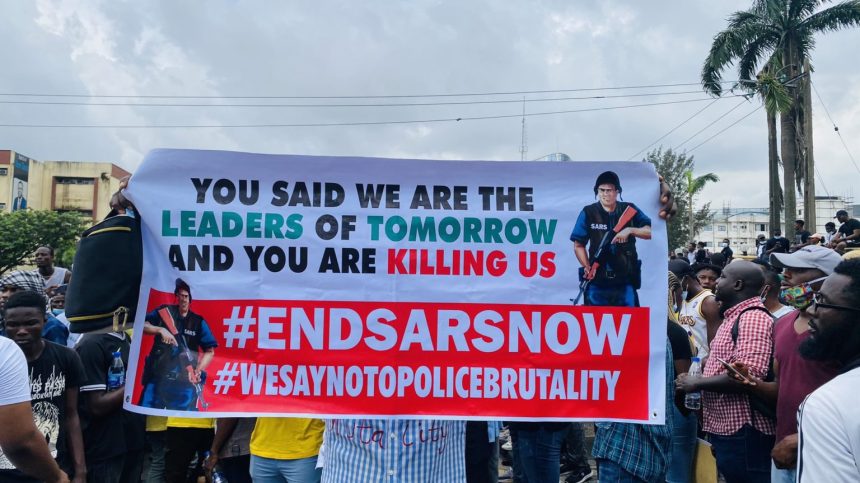
Five years after the #EndSARS protests rocked Nigeria and forced the federal government to promise sweeping police reforms, many Nigerians still struggle to see meaningful change.
The October 2020 demonstrations, which began as a youth-led outcry against the notorious Special Anti-Robbery Squad (SARS), were among the largest civic movements in Nigeria’s recent history.
EDITOR’S PICKS
Yet, despite their scale and global attention, the issues that triggered them — police brutality, corruption, and lack of accountability — remain deeply rooted in the Nigeria Police Force.
The Protests That Shook Nigeria
In October 2020, young Nigerians across major cities took to the streets to demand an end to police brutality. The catalyst was a viral video allegedly showing SARS operatives killing a young man in Delta State. For years, SARS had been accused of extortion, torture, and extrajudicial killings. Protesters rallied behind a simple but powerful slogan: End SARS — a call for justice and police reform.
The protests symbolised more than anger at a single police unit. They reflected a generation’s frustration with systemic impunity and a government often seen as indifferent to citizens’ suffering.
The peaceful demonstrations culminated in tragedy on October 20, 2020, when soldiers opened fire on unarmed protesters at the Lekki Toll Gate in Lagos — an incident later described by the Lagos Judicial Panel of Inquiry as a “massacre” in context.
Promises Made, Promises Unfulfilled
In response to public pressure, then-President Muhammadu Buhari’s administration disbanded SARS and accepted protesters’ five-point demand.
These included halting the use of force against demonstrators, releasing those detained, creating an independent body to investigate police misconduct, conducting psychological evaluations of former SARS officers before redeployment, and improving police welfare.
However, a review of government actions since then suggests that most of these commitments were never fully implemented.
While police salaries were increased by 20 percent more than a year later, there is little evidence that an independent oversight body was established or that disbanded SARS operatives underwent psychological assessment. Instead, many officers were simply reassigned to other units within the police force, allowing old habits to persist under new names.
A Culture of Impunity Persists
Observers and civil society groups argue that police impunity has not only continued but worsened.
Reports of harassment, illegal detention, and extortion remain common, especially at checkpoints and police stations across the country. Incidents of officers demanding bribes, assaulting citizens, or even engaging in criminal acts have surfaced regularly in the media.
The lack of accountability is compounded by weak internal disciplinary mechanisms and a justice system that often fails victims. Few officers implicated in abuses have faced trial or meaningful punishment.
Meaningful change will require more than salary adjustments or the renaming of units. It demands a comprehensive overhaul of recruitment, training, and accountability systems, coupled with the establishment of truly independent oversight institutions.
The Way Forward
Policing in a democratic society must be guided by service, not fear. Nigerians deserve a police force that distinguishes between criminals and law-abiding citizens, one that earns respect through professionalism rather than coercion. Achieving this will require political will at the highest levels and sustained public pressure for reform.
FURTHER READING
Five years after EndSARS, the fundamental questions remain: Has the police changed? Have citizens become safer? The prevailing sentiment among many Nigerians suggests otherwise.
Philip Ibitoye is a Special Correspondent with EKO HOT BLOG. Click here to find daily analysis and critical insight on trending issues in Lagos and other parts of Nigeria.
Click here to watch the video of the week below: