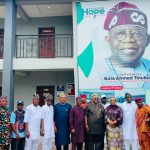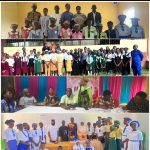
When the APC Lagos East Senatorial District Reconciliation Committee arrived in Epe on August 15 to assess the state of the party after the bruising May 2026 primaries, the room was filled with the right people.
Babatunde Ogala, SAN, led the committee. Ward leaders were present. Aspirants showed up. Party elders spoke. Rep. Wale Raji and Hon. Abiodun Tobun made their commitments publicly.
EDITOR’S PICKS
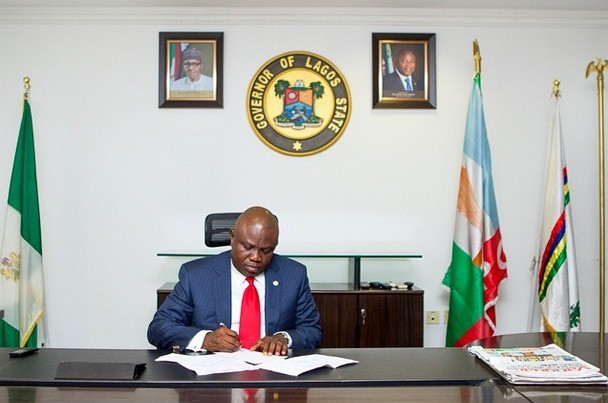
But one name was conspicuously absent from the entire exercise: Akinwunmi Ambode, former Governor of Lagos State, born and bred in Epe, one of the most prominent sons of the division in living political memory.
There is no suggestion that Ambode was invited and declined, or that he was excluded by design. His absence may well be circumstantial. But in a reconciliation effort that requires every available voice of weight and authority, the silence around his non-participation is worth examining.
Ambode’s Epe Legacy
Ambode was born in Epe on June 14, 1963, and when he became governor of Lagos State in 2015, he carried the expectations of his hometown on his shoulders and largely delivered.
At the inception of his administration, Ambode promised the Epe citizenry that his government would give attention to the challenges of infrastructural decay, flooding and erosion identified as the loudest sources of misery to the inhabitants of the town. He also restated his resolve to ensure a holistic implementation of the Epe Master Plan.
He followed through. He commissioned a network of reconstructed roads under the Epe Phase 1 Project, including Lagos Road, Professor Agbalajobi Road, and Oloja Estate roads.
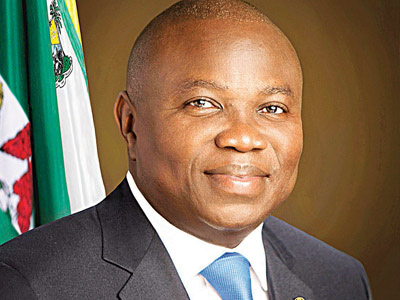
He also unveiled Alaro City, a 1,000-hectare satellite development in the Lekki-Epe corridor, describing it as part of his vision to make every part of the state economically viable and livable.
On his last weekend in office, he chose to spend it in Epe, where he commissioned an ultra-modern 400-capacity Lagos Theatre, expressing deep fulfillment at what his administration had delivered for the town in four years.
Stakeholders who have continued to track his legacy describe his achievements in Epe as unmatched, arguing that his tenure brought visible transformation to the division in infrastructure and inclusive governance.
This is not a man without influence or without standing in the community. If anyone carries moral authority to walk into a room of aggrieved Epe APC members and tell them to put their differences aside, it is Ambode.
A Gap That Needs Filling
To be fair, the Ogala-led committee has done commendable work. Ogala’s assessment that Epe scores 95 per cent on the reconciliation process was not empty praise; the meeting was, by most accounts, conducted in a spirit of goodwill, with Raji and Tobun both striking the right notes of humility and inclusion. The party’s structure in Epe appears to be moving in the right direction.
But party reconciliation is not a job for committees alone. It requires respected voices from within the community speaking directly to aggrieved members, not as party officials, but as sons and daughters of the same soil with a shared stake in the outcome.
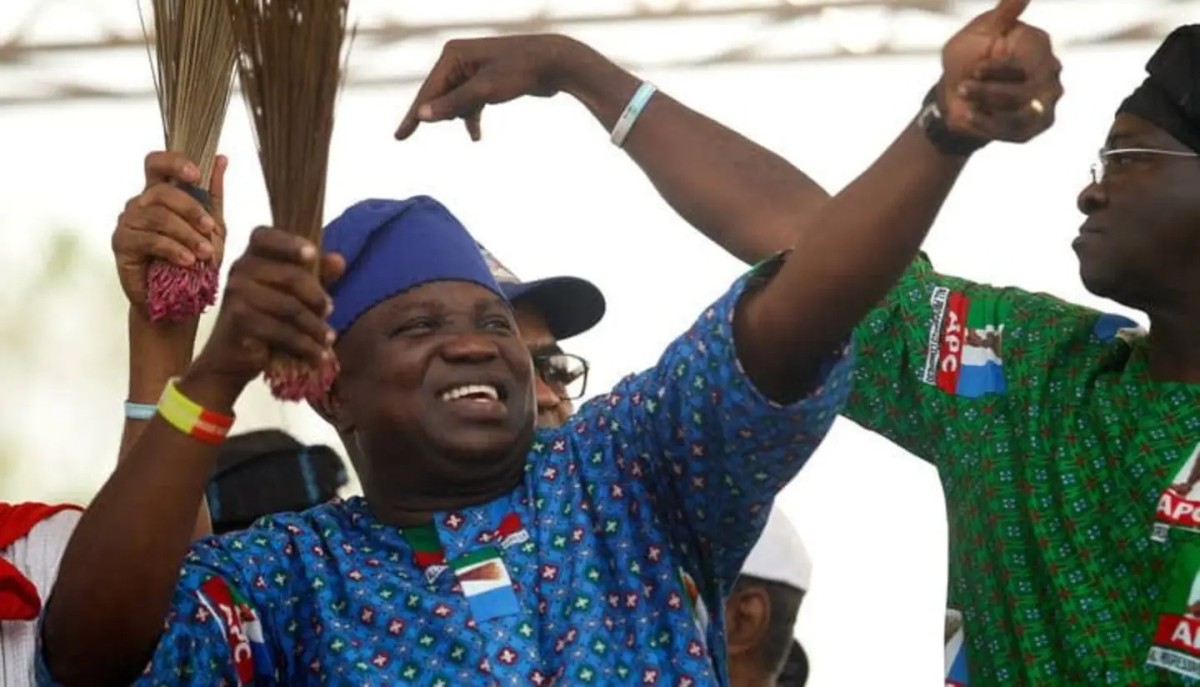
That is precisely the kind of voice Ambode represents in Epe. His participation in the reconciliation process — even a quiet, behind-the-scenes engagement — would send a signal that the APC’s unity drive in the division has the buy-in of its most prominent figure. It would also signal to aspirants who feel shortchanged that the party’s biggest names are invested in their healing, not just their compliance.
All Hands on Deck
Ogala himself reminded the gathering that Epe could not afford complacency; that anything below 70 per cent of the vote in 2027 should be regarded as failure, and that stronger figures from Epe could help compensate for losses elsewhere in Lagos. He was right. But hitting those numbers requires full mobilisation, and full mobilisation requires every heavyweight in the tent.
Ambode does not need a title or a committee seat to contribute to this process. A public statement of support for party unity, a private engagement with key stakeholders, or even a visible presence at future reconciliation events would go a long way.
FURTHER READING
The APC’s 2027 ambitions in Epe are well-founded. But unity is an all-hands-on-deck endeavour. And right now, one very important pair of hands appears to be missing from the deck.
Opinions expressed in this article are solely the writer’s and do not represent the views of EKO HOT BLOG.
Click to watch the video of the week below: