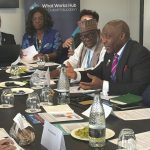
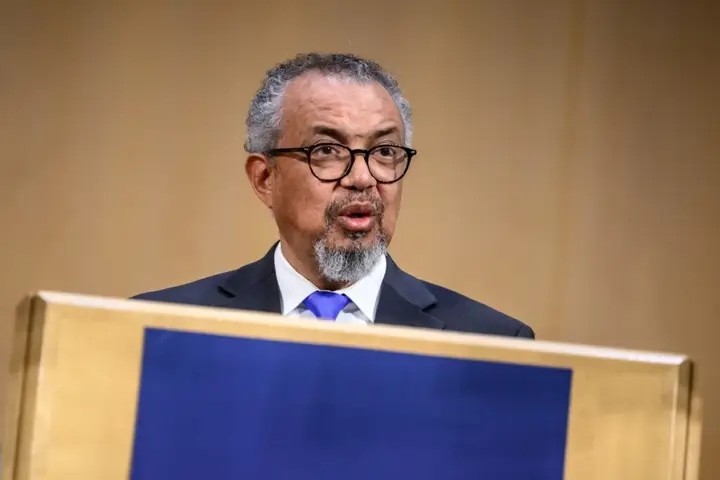
- Opening the 79th World Health Assembly in Geneva on Monday, May 18, 2026, World Health Organization Director-General Tedros Adhanom Ghebreyesus warned that the world is navigating highly dangerous and divisive times, exacerbated by new international health threats.
- The warning follows the formal declaration of a global health emergency over a virulent new Ebola outbreak in the Democratic Republic of Congo, occurring concurrently with a rare international hantavirus outbreak tied to the cruise ship MV Hondius.
- The global health body enters its structural review facing a severe 21 percent budget reduction, amounting to a nearly $1 billion deficit, driven primarily by funding cuts and the diplomatic withdrawals of the United States and Argentina.
The global security architecture is facing an unprecedented test as international health leaders convene under a cloud of escalating biological and diplomatic threats.
Eko Hot Blog reports that addressing health ministers and international delegates in Geneva on Monday, World Health Organization (WHO) Director-General Tedros Adhanom Ghebreyesus pointed to a severe convergence of geopolitical friction, climate challenges, and active disease outbreaks.
EDITOR’S PICK
- Fresh Details Emerge on Death of Odomola Monarch, Oba Adebowale Adeshina
- Sanwo-Olu Applauds LASU’s Academic Excellence After JAMB Ranking
- NRC Moves 176,820 Tonnes Of Cargo Through Lagos Ports In Q1
Highlighting the newly declared international emergency regarding the Ebola outbreak in the Democratic Republic of Congo, alongside the complex quarantine of the hantavirus-hit MV Hondius cruise ship, Tedros asserted that these health crises are the direct product of an increasingly fractured global landscape.
The assembly highlighted the deep structural damage inflicted on the WHO over the past fiscal year.
According to data presented by Swiss Health Minister Elisabeth Baume-Schneider, the organization’s operating budget has been slashed by nearly $1 billion, forcing hundreds of job cuts and the scaling back of critical field programs.
This financial strain is tied directly to the continuous geopolitical realignment under U.S. President Donald Trump, who submitted a mandatory one-year notice to completely withdraw the United States from the health body upon returning to office in January 2025.
Argentina followed Washington’s lead shortly after, leaving the WHO with an estimated $260 million in unpaid membership dues.
Beyond the financial shortfalls, deep diplomatic rifts continue to stall the finalization of the landmark pandemic treaty.
Disagreements between wealthy and developing nations over the equitable sharing of pathogen access and the resulting medical benefits, such as vaccines, tests, and therapies, have forced negotiators to extend deadlocked talks for another year.
Additionally, long-standing geopolitical flashpoints immediately resurfaced on day one, as delegates rejected a petition to restore Taiwan’s observer status due to strong objections from China, setting a tense tone for upcoming debates centered on conflicts in Ukraine, the Palestinian territories, and Iran.
Despite the ongoing diplomatic gridlock, several world leaders pressed the assembly to reject what Spanish Prime Minister Pedro Sánchez termed a “pandemic of egoism.”
Sánchez, whose administration was widely praised for allowing the infected MV Hondius vessel to dock in the Canary Islands for medical evacuations, received a standing ovation after declaring that no single nation can safely isolate itself from transnational health threats.
As the week-long assembly moves forward, leaders from developing regions, including Ghanaian President John Dramani Mahama, are calling for structural courage to fully overhaul and rebuild the world’s overlapping and underfunded global health architecture.