Just eight days after her husband died, an image circulated across social media allegedly showing her father-in-law padlocking the gate of the house where she lived with her husband and their children.
EDITOR’S PICK
- Nearly 30 Years Later, Who Really Knows How Abacha Died?
- Tinubu Govt Dismisses Reports of Fresh Electricity Tariff Increase
- Traditional Rulers Remain Key Partners in Lagos Development – Sanwo-Olu
Tosin also alleged that she was beaten, threatened and intimidated after his death. According to reports, members of her late husband’s family moved into the house, confined her and her children to one room and allegedly began sharing some of the deceased’s belongings.

It took public outrage, the intervention of activists and the swift response of the Lagos State Domestic and Sexual Violence Agency before she got help.
Tosin’s story touched many Nigerians because it exposed a painful reality that thousands of widows know too well.
Across Nigeria and many parts of Africa, the death of a husband often marks the beginning of another tragedy for his wife. Before the funeral flowers have dried and before the tears have stopped flowing, some relatives begin looking beyond the coffin to what the deceased left behind. The search often starts with the car keys.
Then come the land documents, property papers, investment records, ATM cards, mobile phones, bank details and other valuables. In some homes, these become the centre of attention while the widow is still trying to come to terms with her loss.
Instead of asking how she and her children will survive, the first question becomes, “Where are the documents?” That should trouble every one of us.
The woman who stood beside her husband through years of struggle suddenly becomes an obstacle to be removed. The wife who helped build the family is treated like a stranger. The mother of his children is made to feel she has no place in the home she called her own. Sadly, Tosin is not alone.

Many widows have spoken about being assaulted, threatened and forced out of their homes. Others have endured degrading traditional rites or been accused of causing their husbands’ deaths. Some have described being forced into rituals against their will. Many leave these experiences with deep emotional scars. Others develop serious health problems from the trauma they endure. In the worst cases, inheritance disputes have turned violent and claimed lives.
None of this is culture. It is greed.
Africa has beautiful traditions built on family, compassion and communal support. Those values should be preserved. But any practice that humiliates widows, denies children their inheritance or places property above human dignity deserves to be abandoned.
Perhaps the most striking part of this conversation is the double standard.
When a married woman dies, it is uncommon to see her family storming her matrimonial home to seize her husband’s property. Rarely do we hear of brothers taking away his car, demanding the keys to his house or forcing him out of his home because their sister has died.
Why then do some people think it is acceptable when the victim is a widow?
This is not simply about tradition. It is about how society has chosen to treat women. Men also have an important role to play.
A husband’s responsibility to protect his wife should not end with his death. Love is not measured only by what a man provides while he is alive but also by how secure he leaves his family when he is gone.
Every husband should ensure that important documents are properly arranged. Where appropriate, he should write a valid will, keep clear records of his assets and make his wishes known. These are not signs of expecting death. They are acts of responsibility that can save a family from years of conflict.
Parents must also teach their children that marriage creates a family, not a temporary relationship. A daughter-in-law does not stop being family because her husband has died. If anything, that is when she needs the family’s love and protection the most.
Religious leaders and traditional rulers also have a responsibility to speak against customs that encourage exploitation. Customs should protect the weak, not empower the strong to prey on them.
Government must continue to strengthen legal protection for widows. The intervention of the Lagos State Domestic and Sexual Violence Agency in Tosin’s case shows what is possible when institutions respond quickly. No widow should be told that assault, intimidation or property grabbing is merely a “family matter.”
It is a matter of justice, It is also a matter of the future.
When widows are thrown out of their homes, children lose stability, education is disrupted and families are pushed deeper into poverty. The consequences last far beyond one generation.
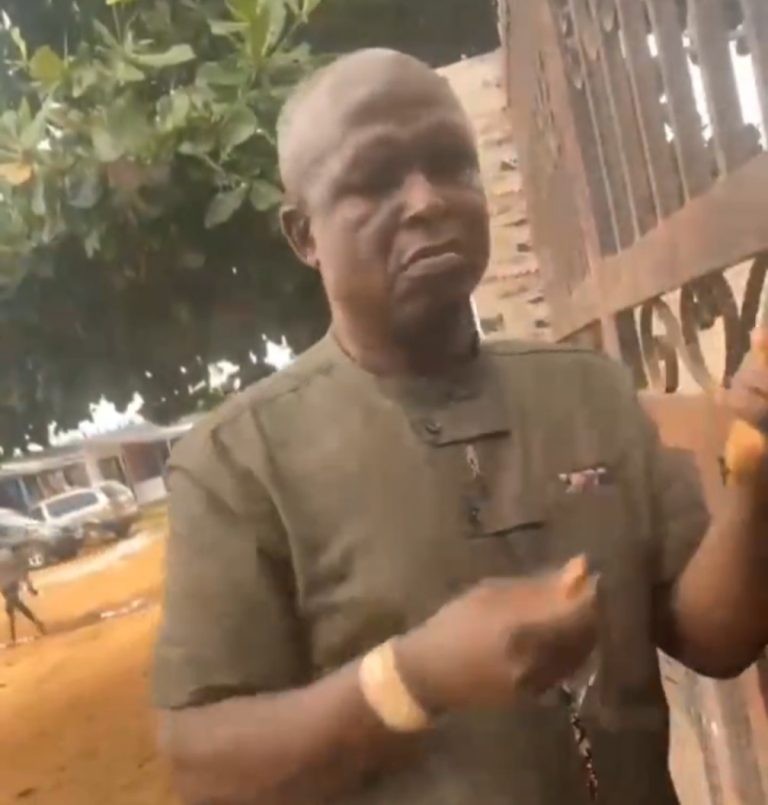
The image of Tosin Omolola’s father-in-law allegedly locking that gate may one day disappear from social media, but the issue it exposed will remain unless society chooses to change.
No woman should lose her husband and then spend the following days fighting for her home.
No child should watch relatives fight over property while a parent’s body is barely buried.
And no family should value land, cars, bank accounts and documents more than the life and dignity of the woman their son chose to marry.
Tosin’s story should not be remembered simply because it went viral.
It should be remembered because it forced us to ask a question every society must answer:
When a husband dies, do we protect the widow, or do we protect the property?
Our answer will say far more about us than any tradition ever could.
FURTHER READING
- Lagos Govt Threatens Legal Action Against Assault on Doctors, Nurses
- Northern Insecurity Will Soon Be History, Tinubu Assures
- Tinubu Calls on Universities to Drive Innovation, National Development
Click here to watch video of the week