- Tipsy Raccoon Causes Whisky Rampage in Virginia Liquor Store
- The Hanover County Animal Protection and Shelter confirmed that the raccoon had indeed consumed alcohol
- Studies show that many species regularly consume naturally fermented fruits and nectar
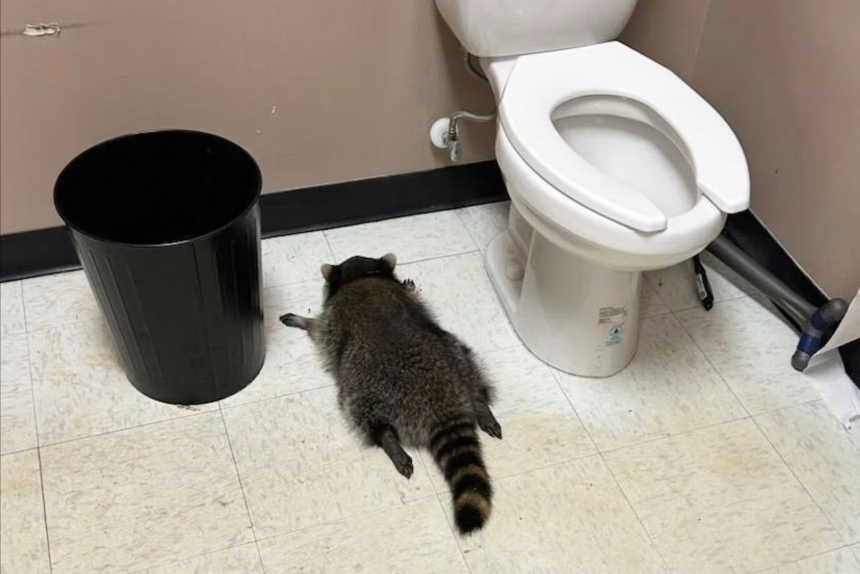
A Virginia liquor store employee got an unexpected surprise on Saturday when they discovered smashed whisky bottles scattered across the floor and a raccoon asleep, sprawled out in the bathroom, Eko Hot Blog reports.
“He fell through one of the ceiling tiles and went on a full-blown rampage, drinking everything,” said Samantha Martin, a local animal control officer, in comments to the Daily Mail.
EDITOR’S PICK
- Africa Begins Rollout Of Breakthrough HIV Prevention Injection
- Lagos Sets December 27 For Eyo Festival
- Sanwo-Olu Urges Responsible Credit Practices to Drive Business Growth, Economic Development
The Hanover County Animal Protection and Shelter confirmed that the raccoon had indeed consumed alcohol but had since sobered up. “After a few hours of rest, with no injuries other than perhaps a hangover and poor life choices, he was safely released back into the wild,” the agency said.
Raccoons have increasingly adapted to urban environments, showing physical traits associated with domestication, a recent study found. Compared to their wild counterparts, urban raccoons have shorter snouts, smaller teeth, curlier tails, smaller brains, and floppier ears.
“Wherever humans go, there is trash,” explained Dr. Raffaela Lesch, assistant professor of biology at the University of Arkansas at Little Rock. “Animals love our trash. It’s an easy source of food. All they have to do is endure our presence, not be aggressive, and then they can feast on anything we throw away.”

The raccoon sleeping it off in the liquor store in Ashland, Virginia, on 29 November 2025.
In Toronto, raccoons have become so common that popular culture now celebrates them. A widely recognized T-shirt slogan “Toronto v Everybody” has been playfully replaced with “Raccoons v Toronto.”
The phenomenon of alcohol consumption in animals is not unique. Studies show that many species regularly consume naturally fermented fruits and nectar.
In Australia, a feral pig stole three six-packs of beer at the DeGrey River rest area, consuming all 18 beers before getting into a scuffle with a cow. In Turkey, a brown bear cub was rescued after eating “mad honey,” a honey produced from rhododendrons that contains a neurotoxin capable of causing mild hallucinogenic effects.
These incidents illustrate the remarkable adaptability of animals in urban and natural environments, as well as their sometimes surprising interactions with human food and drink.
FURTHER READING
- Lagos Receives UNICEF-Donated Healthcare Waste Incinerator to Strengthen Primary Health
- Police Order Nationwide Arrest of Officers Escorting VIPs
- Taraba Gov Meets Tinubu In Aso Rock
Click here to watch video of the week