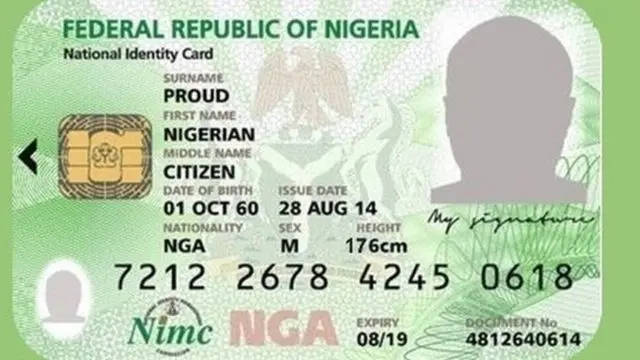
In September 2019, the Federal Government approved the recognition and observance of September 16 of every year as National Identity (ID) Day.
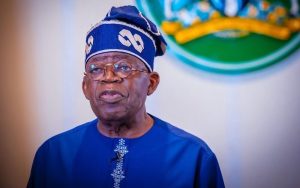
On Tuesday, President Bola Tinubu used the occasion of the 2025 commemoration in Abuja to reaffirm his administration’s commitment to building a Nigeria where every citizen’s identity is secure, trusted, and recognised across all platforms. The president, who cut his vacation short on Monday to return to Abuja on Tuesday, was represented by Secretary to the Government of the Federation (SGF), George Akume, at the programme.
EDITOR’S PICKS
The event, themed “Public Key Infrastructure (PKI): Backbone to Digital Public Infrastructure”, placed the spotlight on identity as the bedrock of modern governance and a critical enabler of both economic growth and security. Tinubu’s message was clear: without secure and verifiable identities, Nigeria cannot unlock the full potential of its digital economy or protect its citizens against the risks of fraud, exclusion, and insecurity.
Identity as the Gateway to Economic Planning
One of the president’s key arguments is that identity is more than a bureaucratic requirement — it is the “gateway to opportunity.” With over 126 million Nigerians now enrolled in the National Identity Number (NIN) database, government planners have a clearer picture of the population than ever before. For economic management, this means better targeting of resources, more accurate forecasting, and reduced leakages in public spending.
For instance, the integration of NIN with programmes such as pensions, health insurance, and social investment schemes has helped eliminate “ghost beneficiaries” and ensured that subsidies or welfare reach genuine citizens. The agriculture ministry’s linkage of identity data to food distribution is another example of how reliable records can improve efficiency and curb corruption.
Similarly, the Nigerian Education Loan Fund (NELFUND) has been able to process over 449,000 student loans based on NIN verification. This creates a reliable system where credit can be extended to individuals with traceable identities, thereby supporting human capital development while also building a culture of accountability.
At the macro level, a robust national identity system provides policymakers with demographic insights crucial for planning schools, hospitals, transportation, and housing. The shift from estimates to verified numbers helps government align policies with real needs, while businesses also gain confidence to invest in markets where consumer data is credible.
Securing the Digital Space and National Safety
Beyond economics, the security value of a trusted identity system is immense. Tinubu emphasised that “without PKI, digital interactions remain vulnerable.” PKI, the cryptographic backbone of the system, ensures that digital transactions are verifiable and tamper-proof, reducing risks of cybercrime, fraud, and impersonation.
For national security agencies, identity data provides a framework to track criminal activity, monitor movement, and authenticate transactions that might otherwise be exploited by fraudsters, insurgents, or transnational crime networks. Linking NIN to SIM card registration, bank accounts, and transport regulation closes loopholes often exploited by criminal elements.
The integration of identity into correctional services also means that offenders can be tracked even after incarceration, strengthening law enforcement databases. By dismissing rumours of data breaches and affirming ongoing collaboration with police cybercrime units, banks, and telecom operators, the National Identity Management Commission (NIMC) highlighted the system’s growing role in crime prevention.
Strategic Infrastructure for the Future
Minister of Interior Olubunmi Tunji-Ojo described identity systems as “strategic national infrastructure,” pointing out that PKI is the difference between “digital convenience and digital risk.” His five pillars — governance clarity, resilient technical standards, interoperability, local capacity building, and privacy — provide the guiding framework for Nigeria’s digital transformation.
This recognition aligns with global practice, where identity is treated not only as a civic right but also as a form of infrastructure that underpins banking, trade, healthcare, and security.
FURTHER READING
For Nigeria, a credible ID system is particularly vital as it seeks to diversify the economy, expand financial inclusion, and attract foreign investment. A country where transactions are verifiable and identities trusted is better positioned to compete globally.
Philip Ibitoye is a Special Correspondent with EKO HOT BLOG. Click here to find daily analysis and critical insight on trending issues in Lagos and other parts of Nigeria.
Click here to watch the video of the week below: