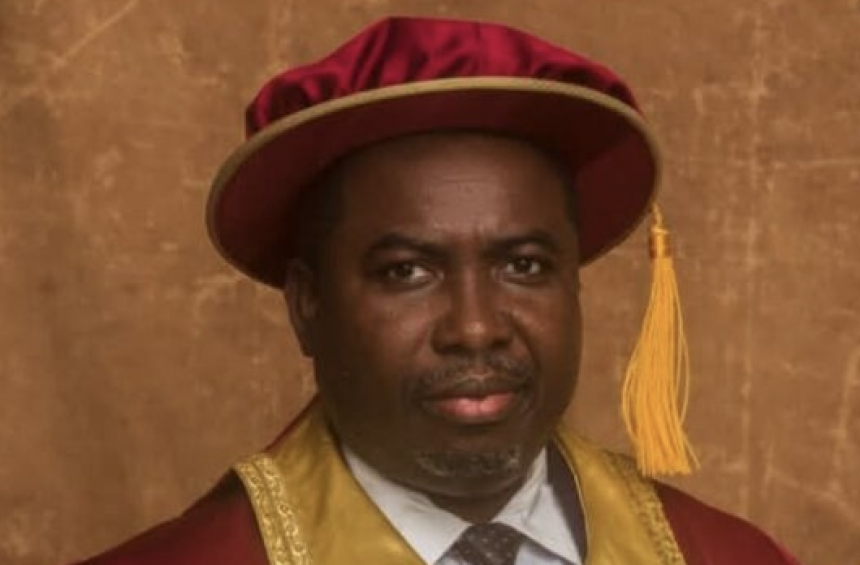
Nigeria’s electoral umpire is entering a new chapter. With the council of state’s unanimous endorsement of Professor Joash Ojo Amupitan, SAN, as chairman of the Independent National Electoral Commission (INEC), on Thursday, President Bola Tinubu has signalled a shift toward legal scholarship and institutional reform.
The appointment follows the end of Mahmood Yakubu’s tenure, a period that witnessed both technological innovation and fierce controversy over electoral transparency.
EDITOR’S PICKS
As Amupitan steps in, public confidence in Nigeria’s elections remains fragile, and the credibility of the ballot box is again under test. EKO HOT BLOG examines what the future holds for the law professor’s tenure as the country’s top electoral umpire.
Who is Joash Amupitan?
A professor of law and deputy vice-chancellor (administration) at the University of Jos, Amupitan brings a blend of academic rigour and administrative experience. Born in Aiyetoro-Gbede, Kogi State, on April 25, 1967, he becomes the first person from the state to be nominated for the INEC top job.
He holds bachelor’s, master’s, and doctoral degrees in law from the University of Jos, where he began lecturing in 1989. His teaching and research, spanning public law, corporate governance, and the law of evidence, have produced more than 50 academic publications and dozens of supervised postgraduate theses.
Elevated to the rank of Senior Advocate of Nigeria (SAN) in 2014, Amupitan has served as dean of law, chairman of the committee of deans, and member of the university’s governing council. Beyond academia, he has held roles on the Councils of the Nigerian Institute of Advanced Legal Studies and the Council of Legal Education. In 2023, he was appointed pro-chancellor of Joseph Ayo Babalola University, Ilesa.
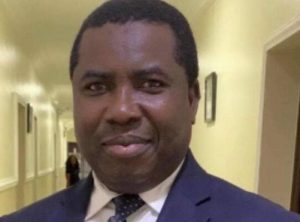
His record paints the picture of a measured, reform-minded academic, one more accustomed to the language of law and governance than to the rough edges of electoral politics.
An Appointment at a Delicate Moment
The timing of Amupitan’s appointment is politically significant. INEC is emerging from one of its most polarising cycles in recent history. Under Yakubu, the introduction of BVAS and IReV transformed voter accreditation and result collation but also exposed operational weaknesses that damaged public trust.
President Tinubu’s choice of an “apolitical” figure, as described by his spokesperson Bayo Onanuga, appears calculated to signal neutrality and professional credibility.
Yet, neutrality is often tested not by intent but by resistance; the ability to withstand political pressure while maintaining institutional independence.
The challenges before Amupitan are steep: rebuilding trust after the 2023 controversies, sanitising the voter register, ensuring technological reliability, and asserting the commission’s autonomy amid partisan crossfire. How he manages these early tests will determine whether his tenure deepens reform or becomes another cycle of cautious continuity.
The Law Meets the Ballot
Amupitan’s background in public law and governance suggests a chairman inclined toward systemic reform rather than administrative firefighting. His understanding of legislative gaps in Nigeria’s electoral framework could help tighten enforcement mechanisms that have long been the weak link in election management.

But INEC’s problems are not only legal. They are structural; from logistical lapses and funding constraints to the politicisation of its field operations. Leadership alone cannot resolve these without clear support from the executive and legislature. His ability to navigate that interdependence will define his success.
More than anything, Amupitan’s tenure will test whether intellectual discipline can anchor institutional independence. In a climate where public faith in elections is fragile, Nigerians will look to see whether the professor’s scholarship translates into courage — the courage to reform, to resist, and to rebuild.
A New Chapter for INEC
INEC’s credibility has long depended on the strength of its leadership, from Jega’s acclaimed moral authority to Yakubu’s technological ambition.
Amupitan enters this lineage with a reputation for integrity but without the political exposure of his predecessors. That may be his greatest advantage or his greatest vulnerability.
FURTHER READING
If he succeeds in restoring trust, strengthening transparency, and enforcing electoral discipline, he could help return legitimacy to Nigeria’s democratic process. If not, his tenure will be remembered as another missed opportunity in the struggle to make the vote truly count.
Philip Ibitoye is a Special Correspondent with EKO HOT BLOG. Click here to find daily analysis and critical insight on trending issues in Lagos and other parts of Nigeria.
Click here to watch the video of the week below: