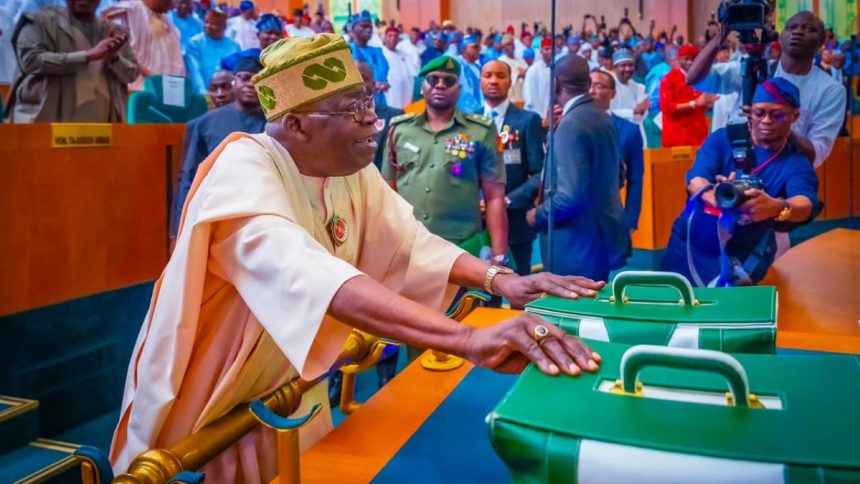
As 2026 progresses, emerging details about the 2025 budget’s performance paint a troubling picture. Billions of naira approved by the National Assembly remain trapped in government coffers, leaving critical projects in healthcare, education, and infrastructure at a standstill.
The latest revelation comes from the power sector, where an ambitious N300 billion intervention meant to provide stable electricity to federal universities and teaching hospitals has recorded zero progress.
EDITOR’S PICKS
EKO HOT BLOG gathered that not a single naira has been released from the allocated funds, despite the urgency of the crisis it was designed to solve.
The Special Adviser on Media to the Minister of Power, Bolaji Tunji, confirmed the complete breakdown in implementation. “Zero funding has been released for the 2025 budget for the project, so there has been no progress on the project,” he told The PUNCH.
The intervention was conceived to end the recurring nightmare of power outages in critical public institutions. Many teaching hospitals currently spend between N200 million and N300 million monthly on electricity and diesel to keep life-saving equipment running. Federal universities face similar challenges, with students and staff enduring frequent blackouts that disrupt academic activities.
President Bola Tinubu had approved the special allocation after Chief Medical Directors from teaching hospitals across the country raised alarm about crippling energy costs. The plan was to install solar hybrid and renewable energy systems that would guarantee uninterrupted power supply while cutting costs.
Hospitals and universities still waiting
One year after the announcement, beneficiaries like University College Hospital Ibadan, Lagos University Teaching Hospital, and the University of Lagos are still waiting. Enquiries reveal that no solar mini-grids have been installed at any of the listed institutions.
“We are on the list, but the mini grid is not yet on the ground,” confirmed Funmi Adetuyibi, Public Relations Officer at University College Hospital, Ibadan. At LUTH, the Chief Medical Director, Professor Wasiu Adeyemo, said assessment teams visited the hospital but nothing has materialized. “I guess the process is still on. That’s how far,” he said.
Meanwhile, these institutions continue to struggle with high electricity tariffs. After the 2024 tariff review moved many hospitals to Band A feeders, monthly electricity bills tripled. Though the government announced a 50 percent subsidy in August 2024, many hospitals say relief remains largely unfulfilled.
A pattern emerges
The stalled energy intervention is not an isolated case. Just days ago, Minister of Health Ali Pate revealed an equally troubling situation during the ministry’s 2026 budget defence before the House of Representatives.
Out of N218 billion capital allocation appropriated for the health ministry in 2025, only N36 million has been released. That represents a mere 0.1 percent of the approved budget. Pate attributed the poor implementation to the bottom-up cash planning system operated by the Office of the Accountant-General of the Federation.
He also noted that delays in releasing Nigeria’s counterpart contributions prevented access to donor-supported funds.
Also, on Wednesday, while defending the Ministry of Transportation’s budget before the Joint Senate and House of Representatives Committee on Land Transport, the Minister of Transportation, Senator Said Alkali, revealed that the ministry received just one per cent of the N256.73 billion allocated to it for capital expenditure in the 2025 Appropriation Act.
Alkali explained that the 2026 budget proposal largely consolidates the 2025 Appropriation, as about 70 per cent of projects were rolled over into the new fiscal year due to funding constraints and delayed cash backing.
This move suggests a pattern of non-execution of critical capital projects across the board due to no budgetary releases.
The real cost
This pattern of budget appropriation without corresponding cash releases is crippling public service delivery. While lawmakers debate and approve billions for critical sectors, the actual money needed to execute projects rarely arrives. Projects remain at the planning stage, contractors are not mobilized, and beneficiaries continue to suffer.
Budget analysts note that appropriation only signals policy intent. Actual execution depends on cash availability from the Ministry of Finance and the Budget Office of the Federation. When revenues fall short or cash management systems fail, projects in power, health, education, and infrastructure become casualties.
FURTHER READING
For Nigeria’s teaching hospitals and universities, the consequences are immediate and severe. Doctors perform surgeries under the threat of power failure. Students study in darkness. Critical medical equipment sits idle during blackouts. And institutional budgets bleed resources to pay inflated electricity bills and buy diesel.
Philip Ibitoye is a Special Correspondent with EKO HOT BLOG. Click here to find daily analysis and critical insight on trending issues in Lagos and other parts of Nigeria.
Click to watch the video of the week below: