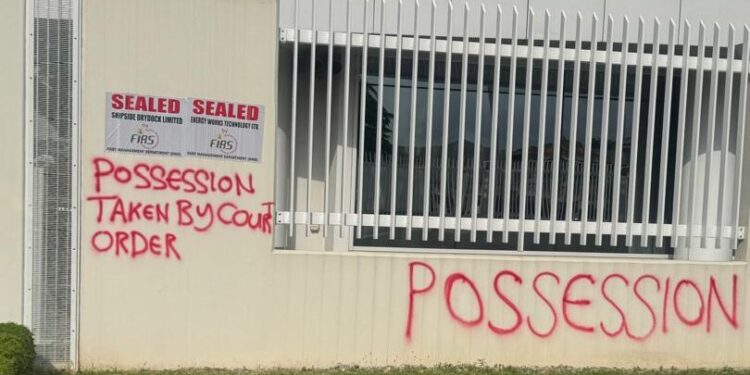
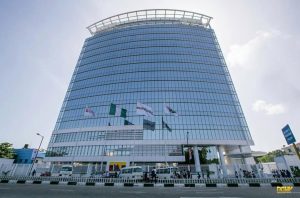
Armed police officers on Tuesday sealed off the corporate headquarters of Nestoil Limited on Akin Adesola Street, Victoria Island, Lagos, following a Federal High Court order placing the oil and gas firm under receivership.
The action came amid a debt recovery process involving more than $1 billion allegedly owed to a consortium of lenders.
EDITOR’S PICKS
What is Receivership?
Receivership is a legal debt recovery process that allows a creditor, usually a bank, to take possession of a debtor’s assets or business through a Receiver/Manager appointed by a court or loan agreement. The receiver’s role is to manage, preserve, or liquidate the assets to recover the debt owed to creditors.
In essence, the company remains a going concern, but control shifts from the owners to the receiver acting on behalf of the lenders. The firm may continue limited operations, but key financial decisions such as sale of assets or payments require the receiver’s approval.
In Nigeria, receivership is not an uncommon remedy, though it is typically used in high-value corporate loan defaults involving banks and large borrowers. In recent years, similar actions have affected firms in construction, aviation, and oil and gas sectors, reflecting the growing assertiveness of lenders amid rising credit risks and foreign exchange pressures.
How the Nestoil Court Order Came About
The Nestoil Headquarters sealing followed a Mareva injunction granted on October 22, 2025, by Justice D. I. Dipeolu of the Federal High Court, Lagos.
The order restrained Nestoil Limited, its affiliate Neconde Energy Limited, and their promoters, Ernest Azudialu-Obiejesi and Nnenna Obiejesi, from disposing of or transferring any assets pending the determination of a substantive debt suit.
The judge also authorised First Trustees Limited and its subsidiary, FBNQuest Merchant Bank, to assume control of the company’s assets as Receiver/Manager on behalf of the creditors. This judicial mechanism is designed to preserve assets that might otherwise be dissipated during debt disputes.
According to court filings, the total indebtedness stood at $1,012,608,386.91 and ₦430,014,064,380.77 as of September 30, 2025. Additional facilities personally guaranteed by Mr. Azudialu-Obiejesi included debts to Access Bank, First Bank, and Zenith Bank exceeding ₦366.8 billion and $213 million combined.
Who Is Affected by the Order?
The injunction listed more than twenty “affected parties,” including major financial institutions and business affiliates linked to Nestoil. These include Citibank Limited, Fidelity Bank Plc, Guaranty Trust Bank Plc, Stanbic IBTC Bank Plc, Standard Chartered Bank Nigeria, Polaris Bank Plc, Sterling Bank Plc, Unity Bank Plc, Wema Bank Plc, Titan Trust Bank Limited, and digital payments firm Opay Limited.
Clearing house Central Securities and Clearing Systems (CSCS) Plc was also directed to restrict dealings in any securities held on behalf of the defendants.
Other affected firms within the Nestoil Group and related entities are Gobowen Exploration and Production Limited, Hammakopp Consortium Limited, Krawcod Properties Limited, Santa Spring Oil and Gas Limited, Marine & Ocean Infinity Nigeria Limited, and White Dove Shipping Co. Ltd.
All were ordered to freeze accounts or assets tied to the defendants pending further court proceedings.
Nestoil’s Response and Industry Implications
Nestoil, through a statement issued after the sealing, described the development as a commercial dispute being handled in court. The company assured its staff and partners that it remained operational and was cooperating with its financial stakeholders to resolve outstanding obligations.
The case, however, highlights deeper financial challenges confronting indigenous oil and gas contractors. Many rely on syndicated loans to finance projects tied to government and international oil company contracts, which are often delayed in payment. This can expose firms to liquidity crises and default risks, especially during currency fluctuations or downturns in oil prices.
Nestoil, founded in 1991 by Azudialu-Obiejesi, is Nigeria’s largest indigenous Engineering, Procurement, Construction and Commissioning (EPCC) Company in the Oil and Gas sector. However, in recent years, the company has reportedly faced liquidity pressures over indebtedness to lenders.
The company’s receivership is one of the largest corporate debt enforcement cases in Nigeria’s recent history, both in scale and in legal complexity.
What Happens Next
The Federal High Court’s substantive hearing on the debt claims is scheduled for next month. Until then, the injunction remains in force, restricting the defendants from dealing in their accounts or transferring any assets.
FURTHER READING
If the court upholds the receivership, First Trustees/FBNQuest will retain control until the debt is fully recovered or a settlement is reached. Otherwise, the assets may be released back to Nestoil’s management upon resolution of the dispute.
Philip Ibitoye is a Special Correspondent with EKO HOT BLOG. Click here to find daily analysis and critical insight on trending issues in Lagos and other parts of Nigeria.
Click here to watch the video of the week below: