- we have more than 10 gigawatts of stranded generation capacity
- the facility could generate up to 660 megawatts if fully utilized
- 84-megawatt power plant at the Port Harcourt Refinery has been underutilized for years
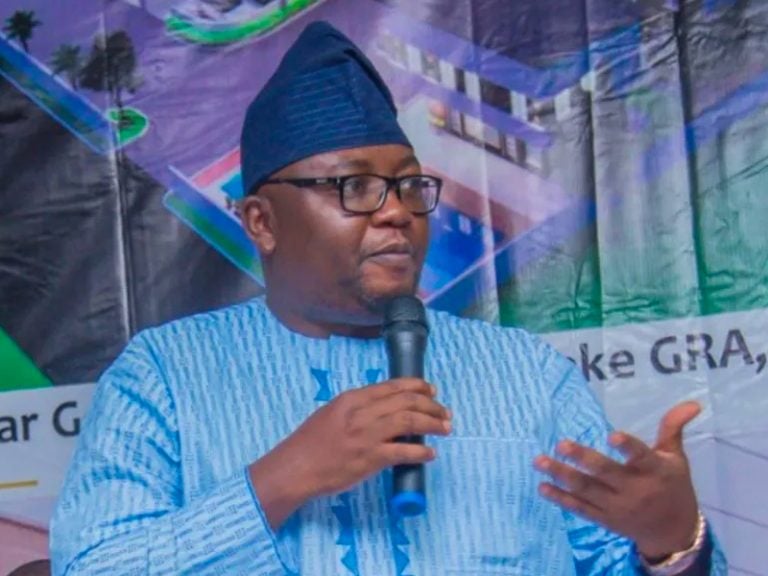
Nigeria’s Minister of Power, Adebayo Adelabu, has lamented the country’s huge electricity waste, revealing that over 10,000 megawatts of generated power lie unused across idle plants while millions of citizens still lack access to electricity.
Eko Hot Blog gathered that the minister made the revelation during the Nigeria Energy Conference in Lagos, where he stressed that Nigeria’s power problem is not generation but the inability to transmit and distribute available energy efficiently.
EDITOR’S PICK
- Death Row Inmate Escapes Yobe Prison, Police Begin Intensive Search
- Lekki LCDA Upskills Workforce With Digital Communication Training to Strengthen Public Service Efficiency
- Trump Threatens Military Action in Nigeria, Says U.S. Could Go ‘Guns Blazing’
“In Nigeria today, we have more than 10 gigawatts of stranded generation capacity. Power plants that should be lighting up homes and industries are left idle, even after billions were spent on their construction,” Adelabu said.
He described the situation as a sign of national waste and negligence, citing the Aluminium Smelting Company in Akwa Ibom, which houses six turbines capable of producing 540 megawatts of electricity but has remained dormant for about two decades.
According to him, the facility could generate up to 660 megawatts if fully utilized, yet remains disconnected from the grid due to a short four-kilometre transmission gap.
Similarly, the minister revealed that an 84-megawatt power plant at the Port Harcourt Refinery has been underutilized for years, with only 20 megawatts consumed while 60 megawatts lie idle. He said the facility could even produce an additional 120 megawatts if upgraded.
Adelabu pledged that his ministry would inspect other stranded assets nationwide to ensure their revival, adding that the Electricity Act 2023 now empowers states to generate, transmit, and distribute power independently.
He urged state governments and private investors to seize the opportunity, saying, “Nigeria has the potential to become a power hub in Africa, but we must stop being complacent and act with purpose.”
FURTHER READING