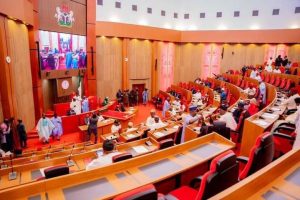
The Nigerian Senate on Wednesday passed the Sexual Harassment of Students (Prevention and Prohibition) Bill, 2025, a landmark legislation aimed at protecting students from sexual misconduct in tertiary institutions.
The bill, prescribing up to 14 years’ imprisonment for offenders, was presented for concurrence by Deputy Senate Leader Lola Ashiru, standing in for Senate Leader Opeyemi Bamidele, after being earlier passed by the House of Representatives.
EDITOR’S PICKS
A Framework for Accountability in Academia
The bill represents a major step toward curbing sexual abuse in Nigeria’s academic institution, an issue that has long undermined the integrity of the education system.
It creates a clear legal framework for identifying, prosecuting, and penalising educators found guilty of harassment, bridging the gap between administrative sanctions and criminal accountability.
Under the law, any educator convicted of sexual harassment faces between five and fourteen years’ imprisonment without the option of a fine. Lesser offences attract two to five years’ imprisonment, also without an option of a fine. Significantly, the legislation removes the defence of “consent” where a power imbalance exists, acknowledging the inherent coercion in relationships between lecturers and students.
It further empowers victims to pursue civil action for breach of fiduciary duty, ensuring that justice is not confined to criminal proceedings alone. Complaints can be filed not only by victims but also by relatives, guardians, or concerned third parties, widening access to redress and accountability.
One of the strongest aspects of the bill is its commitment to restoring trust and integrity within the student-educator relationship. By criminalising demands for sexual favours, unwanted advances, and inappropriate contact, the legislation seeks to reinforce ethical standards in academic environments.
It also mandates the creation of independent sexual harassment prohibition committees within tertiary institutions, designed to handle complaints impartially and in coordination with law enforcement agencies. This framework provides a structured approach to prevention, investigation, and punishment—key to breaking the culture of silence that has allowed misconduct to persist.
Potential Challenges to Implementation
Despite its promise, the bill may face significant hurdles once enacted.
Enforcement in institutions with entrenched hierarchies could be complicated by underreporting, fear of retaliation, and reluctance of witnesses to come forward. Adequate funding and training for institutional committees and law enforcement agencies will be critical to ensure timely and impartial investigations.
Cultural attitudes toward sexual harassment and gender dynamics may also limit the law’s effectiveness, particularly in environments where power imbalances are normalized. Awareness campaigns, institutional buy-in, and clear enforcement mechanisms will be essential to translating legal provisions into real protection for students.
Calls for Broader Scope
While the Senate’s passage of the bill has been widely viewed as a victory for student protection, some lawmakers argued for a broader application. Senators Adams Oshiomhole (Edo North) and Titus Zam (Benue North-West) called for extending the law beyond campuses to workplaces and other environments, noting that harassment “is everywhere.”
Despite these concerns, Deputy Senate President Barau Jibrin, who presided over the session, highlighted that existing laws already address workplace harassment. For now, the legislation’s focused scope allows for targeted enforcement in a sector where abuse of authority has been particularly pervasive.
FURTHER READING
In sum, the passage of the bill marks a progressive move toward safer learning environments and a renewed commitment to justice and dignity in Nigeria’s education system. Its success, however, will depend on robust implementation and cultural change alongside legal enforcement.
Philip Ibitoye is a Special Correspondent with EKO HOT BLOG. Click here to find daily analysis and critical insight on trending issues in Lagos and other parts of Nigeria.
Click here to watch the video of the week below: