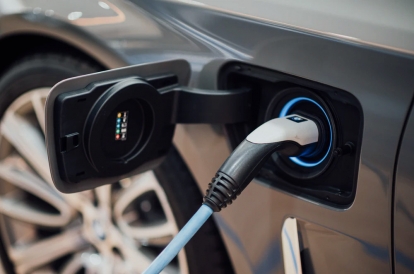
The Nigerian Senate has taken a major legislative step toward the country’s clean energy transition with the second reading of a bill seeking to phase out petrol-powered vehicles in favour of electric vehicles (EVs).
Sponsored by Senator Orji Uzor Kalu, the proposed law aims to establish legal and policy frameworks for electric mobility, reduce carbon emissions, and promote local manufacturing of EV components.
EDITOR’S PICKS
Kalu noted that the transport sector accounts for about 20 to 30 percent of Nigeria’s greenhouse gas emissions and warned that the country risks lagging behind peers like Kenya and South Africa, where electric mobility is already gaining traction. The bill also proposes the creation of a National Electric Vehicle Development and Promotion Council to coordinate the transition across all levels of government.
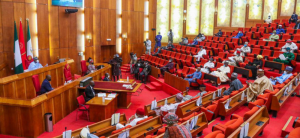
Senate President Godswill Akpabio described the initiative as “a very good innovation,” while senators Adamu Aliero, Osita Ngwu, and Titus Zam praised its potential to improve public health and reduce pollution in major cities such as Lagos and Kano. The bill has been referred to the Senate Committee on Industries for further deliberation.
A Vision Confronted by Harsh Realities
While the proposal reflects growing global momentum toward cleaner transport, it comes against the backdrop of Nigeria’s chronic energy crisis. Across much of the country, millions of homes and businesses still rely on petrol and diesel generators to meet basic electricity needs. Power supply remains unstable despite decades of reforms, and many rural communities remain completely off-grid.
Certainly, transitioning to electric vehicles in a country still struggling to keep the lights on may be premature. For electric mobility to succeed, a stable national grid, widespread charging infrastructure, and affordable electricity tariffs are prerequisites.
Yet, Nigeria continues to grapple with generation and transmission shortfalls that make even domestic electrification a daunting challenge.
The concern is that while the ambition behind the bill is commendable, its implementation may be unrealistic without first addressing the fundamental issue of reliable power supply.
Development Priorities and the Road Ahead
At 65 years after independence, Nigeria’s electricity sector remains one of its most persistent development failures. Successive governments have promised stable power without achieving it, leaving industries uncompetitive and households dependent on self-generation.
Given this context, the Senate’s enthusiasm for electric vehicles could be a case of misplaced priority. Rather than pursuing futuristic policies that depend on infrastructure yet to exist, lawmakers should first focus on ensuring uninterrupted electricity — a reform that would not only make EVs viable but also transform manufacturing, education, and healthcare.
Still, others may view the bill as an opportunity to prepare for a low-carbon future, even if full-scale adoption remains distant. Nigeria, as Africa’s largest economy, cannot remain static while global markets shift toward electric transport.
FURTHER READING
But the success of such a transition will ultimately hinge on political will, energy reform, and a practical roadmap that bridges ambition with Nigeria’s on-ground realities.
Philip Ibitoye is a Special Correspondent with EKO HOT BLOG. Click here to find daily analysis and critical insight on trending issues in Lagos and other parts of Nigeria.
Click here to watch the video of the week below: