The Nigerian Senate has taken a significant step toward reforming the country’s struggling primary healthcare system with the second reading of a bill seeking to repeal and re-enact the National Primary Health Care Development Agency (NPHCDA) Act.
Sponsored by Senator Solomon Adeola, who represents Ogun West, the proposed legislation aims to modernize the legal and operational framework guiding the agency, which has remained largely unchanged since its establishment in 2004.
EDITOR’S PICKS
Leading the debate at Wednesday’s plenary, Adeola argued that the current law has become obsolete, failing to reflect present realities in healthcare delivery, governance, and technology. He noted that despite substantial federal investments such as the recent ₦32 billion allocation to primary health institutions nationwide, the sector continues to suffer from poor coordination, accountability gaps, and underperformance. “The primary health centre is the first point of contact for every citizen, yet the system remains weak and uncoordinated,” he said during plenary.
The new bill, titled “A Bill for an Act to Repeal the National Primary Health Care Development Agency Act and to Re-enact the National Primary Health Care Development Bill, 2025”, is intended to provide a more robust structure for the agency. It seeks to reposition the NPHCDA as the central driver of universal access to essential healthcare services and to ensure that Nigeria’s healthcare system becomes more responsive to the needs of its citizens.
Addressing Systemic Weaknesses
A recurring concern among lawmakers is that Nigeria’s primary healthcare system, long described as the backbone of the nation’s public health infrastructure, has failed to deliver on its mandate due to fragmentation and weak governance.
Senator Adeola emphasized the need for a legal framework that strengthens coordination among the three tiers of government and enhances the role of community structures such as ward health committees.
The proposed law also highlights the importance of integrating technology and data systems into primary healthcare management. This digital transformation, according to the bill’s objectives, is essential to improving service delivery, monitoring outcomes, and ensuring transparency in the use of public health funds.
Adeola’s question — “Who manages this fund? How effective have we been in putting it to use?” — captures the core accountability challenge that the legislation seeks to address.
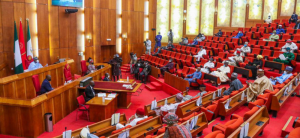
Supporters of the bill, including Senators Olalere Oyewunmi (Osun West) and Abdul Ningi (Bauchi Central), stressed that aligning Nigeria’s health laws with modern realities is long overdue.
Oyewunmi noted that the reform would particularly benefit citizens at the grassroots level, describing primary healthcare as “key to the well-being of the downtrodden.” Ningi added that the neglect of primary healthcare by successive administrations has undermined national development, arguing that “health should always be at the forefront of governance.”
Path to Implementation and the Road Ahead
The Deputy Senate President, Barau Jibrin, who presided over the plenary, commended Senator Adeola for what he described as a “grassroots-oriented intervention.” He referred the bill to the Senate Committee on Health, Primary Healthcare, and Communicable Diseases for further legislative work, with a directive to report back within four weeks.
If passed into law, the new NPHCDA Act could mark a turning point in Nigeria’s health governance, particularly by institutionalizing accountability mechanisms and promoting sustainable funding models. The bill’s emphasis on community participation, data-driven decision-making, and intergovernmental coordination reflects a shift toward a more holistic approach to healthcare reform.
FURTHER READING
But the initiative’s success will depend on consistent implementation, transparent fund management, and active collaboration among federal, state, and local authorities. While legislative reform offers a promising foundation, translating it into measurable health outcomes will require long-term political commitment and effective oversight.
Philip Ibitoye is a Special Correspondent with EKO HOT BLOG. Click here to find daily analysis and critical insight on trending issues in Lagos and other parts of Nigeria.
Click here to watch the video of the week below: