The Federal Ministry of Education’s decision to suspend the proposed hike in WAEC and NECO examination fees has, for now, calmed a growing public storm.
Announced on Monday, the reversal came just a day after the planned increase — from ₦27,500 to a uniform ₦50,000 — became public knowledge and drew swift criticism from parents, education advocates and politicians alike.
EDITOR’S PICKS
- What Tinubu Wants ICPC To Uncover About PFIPC, Adeyemi
- 2% of GDP ‘Missing’ or Just Unreported? Inside the IMF Controversy
But a closer read of the ministry’s statement suggests this is less a cancellation than a pause.
The proposed review, it said, “will not take effect, as earlier communicated, pending the conclusion of the consultation process.” That phrasing is key. It does not rule out a fee increase; it simply delays one, pending broader engagement with stakeholders.
In other words, the underlying pressures that produced the original decision have not gone away. They have only been given more time to be explained and possibly renegotiated.
A Question of Affordability
The first reality is straightforward: many Nigerian households are already stretched thin. Inflation, transport costs and general household expenses have made even routine schooling costs harder to bear. Against this backdrop, an 82 percent jump in examination fees lands heavily, particularly for lower-income families and for state governments that subsidise WAEC or NECO registration for public school students.
Critics, including the National Parent Teacher Association of Nigeria and former Vice President Atiku Abubakar, have framed the increase as a barrier to education access.
Their concern is not abstract. When examination fees rise sharply and suddenly, some families are forced to choose which child sits for an exam, or whether to sit for one at all. That risk — of quietly pushing vulnerable students out of the system — is the strongest argument against the hike as originally structured.
A Question of Sustainability
The second reality is less visible to the public but equally real: examination bodies operate in the same economy as everyone else.
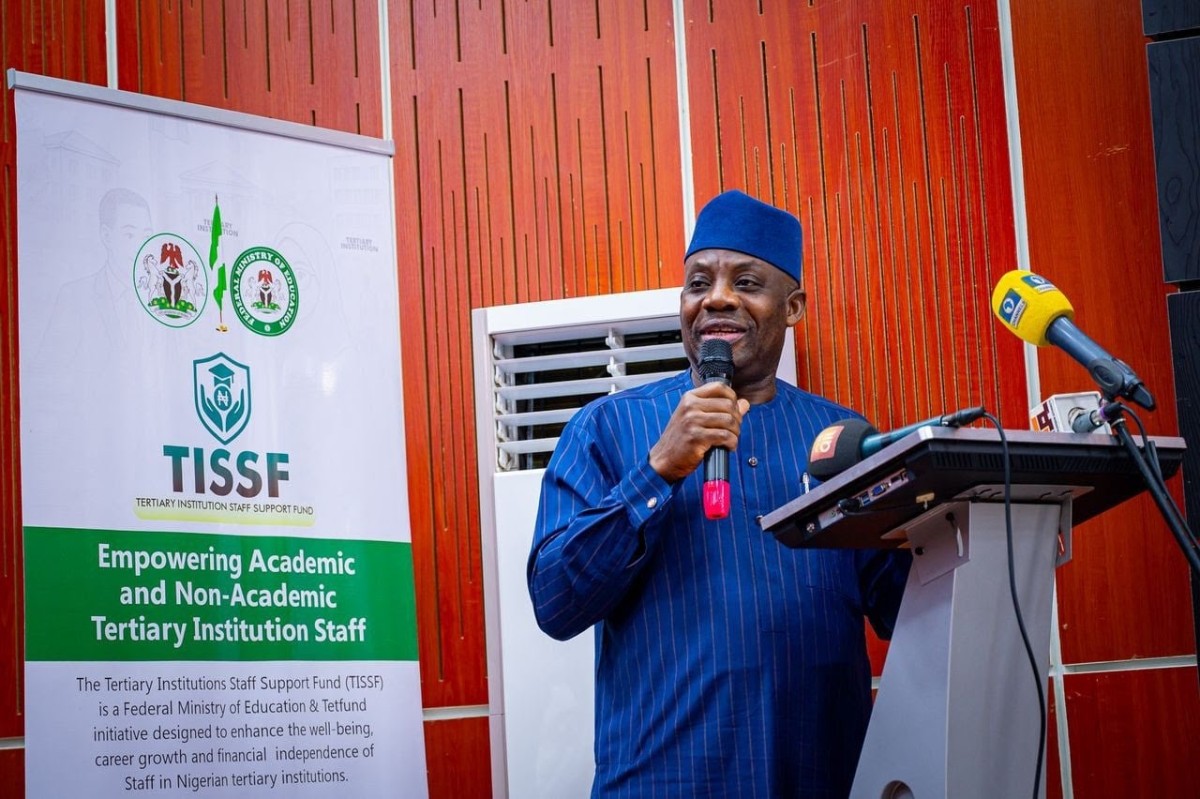
Printing, logistics, security, staffing and the broader cost of administering a national examination for millions of candidates have all risen. WAEC’s original request for an upward fee review was not made in isolation; it reflects genuine cost pressures on an institution tasked with delivering a credible, large-scale examination twice a year.
A fee structure that no longer reflects the actual cost of running these exams is not sustainable indefinitely. If registration fees remain frozen while costs climb, examination bodies risk cutting corners — on security, on materials, on quality control — the very things that protect the integrity of results millions of Nigerian students depend on for university admission and beyond.
Is There a Middle Ground?
The likeliest resolution is not a return to ₦27,500, nor an immediate jump to ₦50,000, but something between the two — phased in gradually rather than imposed all at once. A staggered increase, paired with continued state subsidies for vulnerable candidates, could balance both realities: giving examination bodies the resources they need while shielding the poorest families from shock costs.
Whatever emerges from the consultation process, the underlying tension will not disappear. The cost of running credible national examinations will keep rising. So will the number of Nigerian families for whom every naira counts.
FURTHER READING
Getting the balance right — not just the amount — will determine whether this policy strengthens access to education or quietly undermines it.
Philip Ibitoye is a Special Correspondent with EKO HOT BLOG. Click here to find daily analysis and critical insight on trending issues in Lagos and other parts of Nigeria.
Click to watch the video of the week below: