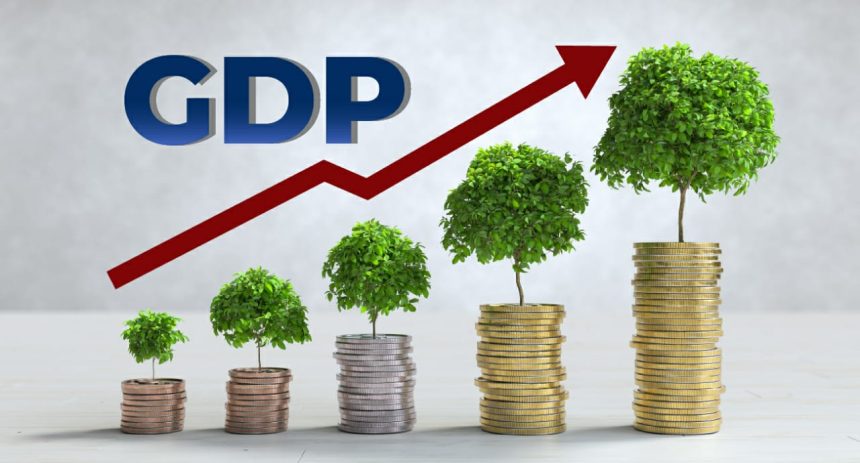
Nigeria’s GDP grew by 3.98 percent year-on-year in Q3 2025, according to the National Bureau of Statistics’ (NBS) latest report — an improvement on the 3.86 percent recorded in Q3 2024, and evidence that the economy is moving in the right direction.
EKO HOT BLOG observed that the figure, however, remains below the 4.23 percent growth recorded in Q2 2025, underlining that the recovery, while real, is uneven and still fragile.
EDITOR’S PICKS
The Q3 report shows a mixed but constructive picture beneath the headline number.
Gross Domestic Product grew by 3.98% (YoY) in real terms in Q3 2025. This growth rate is higher than the 3.86% recorded in Q3 2024.
Agriculture grew by 3.79% in Q3 2025, an improvement from 2.55% recorded Q3 2024.
Read the Q3 2025 GDP report here: https://t.co/1htUx6zTL4 pic.twitter.com/xicYAA1bMr
— NBS Nigeria (@NBS_Nigeria) December 1, 2025
Agriculture expanded by 3.79 percent, up from 2.55 percent a year earlier; industry rose 3.77 percent (from 2.78 percent); services grew 4.15 percent (down from 4.97 percent a year earlier). The oil sector’s real growth was recorded at 5.84 percent in Q3 and contributed 5.84 percent to total real GDP; average oil production was reported at 1.64 million barrels per day.
In nominal terms, aggregate GDP at basic prices stood at ₦113.58 trillion, a year-on-year nominal increase of 18.12 percent from ₦96.16 trillion in Q3 2024. These details show that both oil and non-oil components are contributing to the pace of expansion, but they also expose the limits of the current rebound.
In October, Sanyade Okoli, special adviser to President Bola Tinubu on finance and the economy, projected that Nigeria’s economy would grow 4 percent in 2025 and 5 percent in 2026. That official forecast aligns with the idea that the economy could still reach an average annual growth close to 4 percent for 2025 if Q4 posts stronger activity, particularly in trade, manufacturing, agriculture and services at year-end, and if oil output and prices remain favourable.

On that basis, Q4 could push the annual average into the 4 percent band, making the administration’s short-term targets plausible.
But the more ambitious 7 percent growth target for 2027 that President Tinubu has set is a different challenge altogether. Hitting that milestone would require a materially faster and sustained pace of expansion than what current data implies. Several concrete obstacles make 7 percent by 2027 difficult to see as the baseline expectation.
First, the arithmetic. To move from mid-single-digit growth (around 4 percent) in 2025 to 7 percent by 2027 requires not just one good year but back-to-back, significantly higher growth rates, or a very strong acceleration in nominal GDP driven by inflation and real gains. That means either a rapid expansion of productive capacity (through very large private and public investment) or an extraordinary improvement in oil receipts — neither of which is assured.
Second, the investment gap. Public investment remains historically low relative to what is needed to close infrastructure deficits and unlock private investment. The economy needs big, sustained increases in capital formation: roads, power, ports, rail, digital infrastructure and logistics. Without a substantial and sustained jump in both private and public investment, productivity gains will remain modest and a 7 percent real growth path will be hard to finance.
Third, structural constraints. Nigeria’s economy still faces structural bottlenecks — weak power supply, limited access to long-term finance, high interest rate, low manufacturing capacity, and underdeveloped value chains. These are not problems that a single policy adjustment fixes, they require coordinated, multi-year reforms and consistent policy implementation. Progress so far shows promise in pockets but not the systemic transformation required to lift potential growth close to 7 percent.
Fourth, oil volatility. Oil remains an important swing factor. Q3’s stronger oil output helped lift growth, but oil is volatile: production disruptions, price swings, and global demand shifts can quickly reverse gains. Exchange-rate instability and inflation also erode purchasing power and investment planning horizons. If macro stability falters, growth will falter with it.
Finally, skeptical but important voices in the market underline these practical limits. Analysts such as Afrinvest West Africa have explicitly warned that the 7 percent growth target “lacks key drivers”, arguing that the current policy settings and near-term outlook do not yet present the conditions necessary to deliver sustained, high single-digit real growth.
That caution reflects a broader market assessment: unless there is a rapid and visible scaling up of investment, structural reforms and improvement in productivity across key sectors, the 7 percent goal will remain aspirational.
So where does that leave policy and expectations? The short run — the remainder of 2025 and 2026 — still offers an opportunity to lock in gains. If Q4 delivers stronger non-oil activity and oil receipts hold, the administration’s 4 percent (2025) and 5 percent (2026) projections are achievable, especially when measured against recent quarterly momentum.
But turning those gains into a sustainable trajectory toward 7 percent by 2027 would require large-scale, credible public capital projects and private-sector crowding-in; improved macroeconomic stability (anchoring inflation and exchange rates); decisive measures to reduce the cost of doing business; higher tax-to-GDP mobilisation to fund investment; and meaningful progress on security and regulatory certainty.
FURTHER READING
The Q3 report confirmed progress — growth is positive, broader than oil alone, and nominal GDP has expanded sharply. Yet the same data expose the distance to Tinubu’s 7 percent target: the current recovery is necessary but not sufficient.
Philip Ibitoye is a Special Correspondent with EKO HOT BLOG. Click here to find daily analysis and critical insight on trending issues in Lagos and other parts of Nigeria.
Click here to watch the video of the week below: