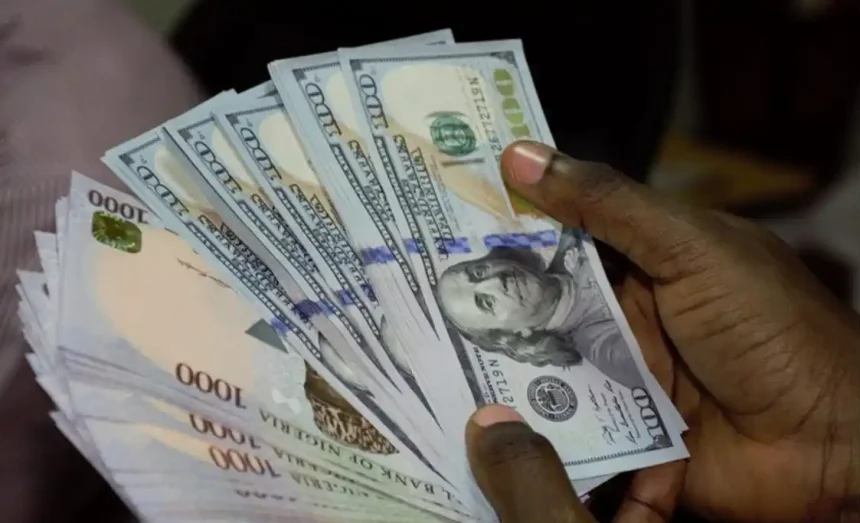
- Dollar to Naira Rate For Today December 7, 2025
- Dollar demand stays strong as limited liquidity keeps the naira under pressure
- Import costs may rise as FX shortages widen the gap between market rates.
The exchange rate between the U.S. dollar and the Nigerian naira remains under pressure as demand for foreign currency continues to rise.
EDITOR’S PICKS
- INEC Ends Phase 1 Voter Registration Dec 10
- Why CBN Increasing ATM Withdrawal Limit Matters
- Fire Service Officer Dies as One-Way Rider Causes Fatal Crash in Lagos
EKO HOT BLOG reports that the divergence between official and parallel-market rates persists, reflecting ongoing foreign-exchange supply constraints and high demand.
| Market | ₦ per USD |
|---|---|
| Official (NFEM / mid-market) | ₦1,449.67 |
| Parallel (Black Market) Typical Range | ₦1,472 – ₦1,485 |
What’s Behind The Rates
-
The official rate reflects trades on the Nigerian Foreign Exchange Market (NFEM), where liquidity remains limited but stable, keeping the naira around ₦1,449–₦1,450 per dollar.
-
On the black market, the naira trades at significantly higher rates — between ₦1,472 and ₦1,485 per dollar — as many buyers rely on informal channels due to shortage of dollar supply in official windows.
-
The gap between markets underlines persistent pressure from foreign-exchange demand for imports, remittances, and travel, with limited FX flow into the official system.
What This Means for Nigerians
-
Importers and import-dependent businesses: Those needing dollars for purchasing goods abroad will likely pay more if sourcing through black-market channels. Budgeting should assume rates closer to the upper band (₦1,470–₦1,490).
-
Travelers and remitters: Official bank conversions remain cheaper (~₦1,449), but limited dollar supply may force many to rely on parallel rates increasing costs.
-
Everyday consumers: As dollar-denominated import costs rise, prices of imported goods (electronics, fuel, pharmaceuticals) may climb, further squeezing purchasing power.
-
Businesses with foreign obligations: Firms repaying foreign-currency loans or sourcing foreign-priced inputs face heavier naira costs, affecting cash flow and pricing.
FURTHER READING
- Remi Tinubu Disburses N50m to Akwa Ibom PWDs
- BREAKING: Senate Confirms General Musa as Defence Minister
- US Imposes Visa Ban Over Attacks on Christians