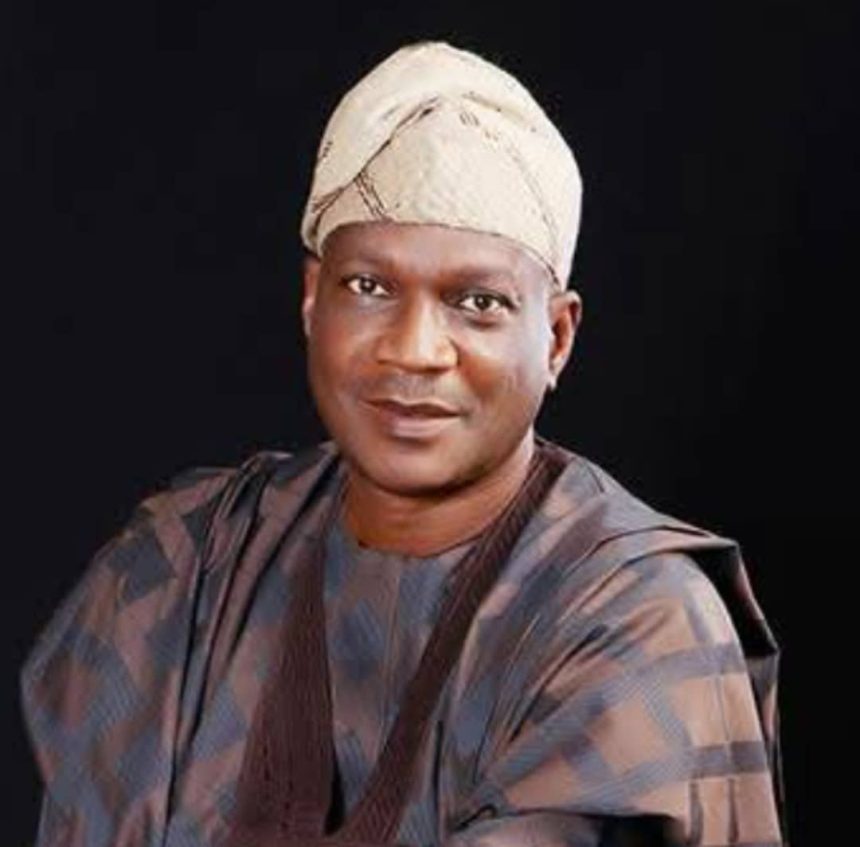
Hon. Tasir Wale Raji’s time in the House of Representatives reflects the complex realities of legislative service in Nigeria, where expectations are high, resources are limited, and public judgment is often shaped as much by perception as by performance.
EDITOR’S PICK
- Childhood Friend Allegedly Kills Europe-based Returnee in Edo Community
- NJC Screens Out 34 Judge Nominees Over Integrity Issues
- FG Says Sokoto Security Operation Strengthens Economy
His tenure has attracted both praise and criticism, making it necessary to examine his record beyond partisan loyalty or campaign sentiment.
One of the defining features of Wale Raji’s legislative journey is his institutional relevance. As Chairman of the House Committee on Livestock Development, he occupies a strategic national position in a sector central to food security, rural livelihoods, and farmer–herder relations.
This role has placed Epe Federal Constituency on a platform of influence within the National Assembly, ensuring the area is not politically peripheral.
Such positions are not attained overnight; they are built through experience, consistency, and internal confidence among lawmakers.
Within the legislature, Wale Raji has maintained a reputation for stability and discipline. He is not known for absenteeism or legislative theatrics, but for steady committee engagement, cross-party collaboration, and participation in oversight functions.
This approach has helped consolidate continuity in representation and reinforced the credibility of the ruling party at the constituency level.
AIn a political environment where frequent turnover often resets influence, this stability carries practical value.
At the grassroots, his interventions are visible across communities in Epe Federal Constituency, including Epe, Eredo, Ikosi-Ejinrin, Mojoda, Odomola, Poka, Ilara, Itoikin axis and surrounding towns.
These interventions span educational support, classroom renovation, learning materials, electrification assistance, road rehabilitation, and community facilities.
Beyond infrastructure, empowerment programmes targeting youths, women, widows, artisans, and cooperatives have provided economic relief, particularly during periods of rising unemployment and inflation.
Accessibility has also been one of his defining strengths. Wale Raji maintains regular engagement with traditional rulers, youth leaders, women groups, party stakeholders, and community associations.
This sustained interaction has helped preserve trust between representative and constituents and has contributed to the continued electoral strength of the APC in the constituency.
However, public dissatisfaction has not been absent. Some constituents argue that while projects exist, they are often scattered and lack the scale required to produce transformative impact.
Others express concern over communication gaps, noting that legislative achievements, motions, and committee activities are not always clearly conveyed to the grassroots, creating a perception of underperformance even where work is ongoing.
Youth groups and civil voices have occasionally questioned the inclusiveness of empowerment initiatives, calling for broader participation and greater transparency in beneficiary selection.
There is also recurring criticism regarding the limited presence of large-scale federal infrastructure projects such as major road networks, healthcare facilities, or coastal development initiatives, especially given Epe’s strategic position within Lagos State.
A notable shortcoming of Wale Raji’s tenure is the absence of a single landmark project that clearly defines his legislative years. While multiple interventions are evident, critics argue that none stands out as a signature legacy achievement.
Additionally, expectations surrounding his committee chairmanship have not always translated into visible local advantages, particularly in agricultural and livestock-related development within the constituency.
Yet, in assessing his record, it is important to acknowledge what he has avoided. His tenure has been free of scandal, party disloyalty, or prolonged detachment from constituents. He has demonstrated political maturity, administrative discipline, and a measured legislative style that prioritises continuity over populism.
Overall, Hon. Tasir Wale Raji’s performance can be described as solid, steady, and experience-driven rather than dramatic. The public debate surrounding his representation is less about failure and more about whether his incremental approach aligns with the evolving expectations of his constituents.
As discussions toward 2027 intensify, the central question remains whether Epe Federal Constituency prefers continuity refined by lessons learnt or a complete reset with uncertain outcomes.
FURTHER READING
- Orijeru of Igbooye Confers Jagunoba, Yeye Jagunoba, Gbobaniyi Titles at Coronation Anniversary
- NELFUND Reduces Tertiary School Dropout — Board Member
- Insecurity Worsening Impact on Women, Children — Funmi Falana